Pentecost 8: 19 July 2026 (Year A)

Navigate Two Worlds

Welcome and Thanks for your Visit!

Two Worlds is a digital ministry space featuring the weekly Revised Common Lectionary readings and a brief homily, supported by images, music, and the ELCA’s weekly commemorations. The blog is part of the adult education program at ELC in Black River Falls, Wisconsin.

Note: Image and lay-out tends to land better on a bigger screen.

The excerpt to the right is from Warren’s book, What Grows in Weary Lands: On Christian Resilience (2026). It is an excellent book, and timely!

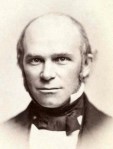
Tish Harrison Warren

“I’ve come to think that this phrase cheerful seriousness is what it looks like to be a resilient people. This is who the church is meant to be. We are a serious people. We do not pretend that the darkness is any less dark than it truly is. We do not presume that with enough money, technology, fame, or power, we would avoid trouble, death persecution, or pain. We do not act as if the problems in the world or our own lives are easy to solve. We take our relationships with our neighbors and with God seriously. And yet, as Jesus told his disciples to be, we remain, intentionally and authentically, ‘of good cheer.’ The reason Jesus gave his followers for remaining cheerful was not a promise that if they did their duty, all things would go their way or that they would not grow weary. Instead, he promises that ‘in the world you will have tribulation,’ yet we can rest in knowing that he has ‘overcome the world.’ The hope that Jesus has overcome the world is what orients our perseverance. It is what fuels our resilience.”

What is the Revised Common Lectionary?

The Revised Common Lectionary grew out of late‑20th‑century ecumenical work, especially the Consultation on Common Texts, which wanted churches to share a common, three‑year rhythm of Scripture shaped by the seasons of the church year. Each Sunday’s readings are meant to speak to one another: the Old Testament reading sets the theme, the psalm responds to that reading, the epistle widens the theological frame, and the Gospel anchors the day. The RCL also offers alternative first readings — usually a choice between a semi‑continuous Old Testament track that moves through major narratives and a thematic track that ties more directly to the Gospel. In the ELW, you see this in the paired options for the first reading and psalm, giving congregations the flexibility to follow the unfolding Old Testament story or lean into the Sunday’s central theme. You will note I am including an alternative reading this week.

Pentecost 8 (Year A)

First Reading:

Isaiah 44: 6-8

Alternate First Reading:
Genesis 28: 10-19a

Psalm 86: 11-17

Second Reading (Epistle)

Romans 8: 12-25

Gospel:

Matthew 13: 24-30, 36-43


Readings are Linked


Common Themes This Week

Across these readings, God’s people are reminded that the Lord alone is God, the one who speaks truth and remains faithful even when circumstances appear uncertain or unfinished. Whether through Jacob’s dream at Bethel or Isaiah’s proclamation, God reveals a presence that is both near and sustaining, guiding the faithful in the midst of vulnerability. Paul deepens this theme by describing life in the Spirit as a movement from fear to hope-filled endurance, trusting that creation itself is being renewed. Jesus’ parable of the wheat and weeds reinforces that God’s kingdom grows quietly and persistently, calling believers to patience, confidence, and steadfast trust in God’s final justice.

Spanish philosopher Ortega y Gasset once wrote, “Tell me the landscape in which you live, and I will tell you who you are.” I suspect many reading this feel that truth in the upper Great Lakes region where we live, where the scenery can stop you mid‑stride. This week’s story of Jacob’s dream brought that quote back to me — and with it the power of sacred spaces in our lives. One of mine came far from here: a late‑1970s hike over the Continental Divide on a cool Colorado morning. Out of nowhere, my father — ever the romantic — recited Psalm 121. The moment stunned me. The air, the mountains, the cadence of the psalm — it all felt charged. I honestly sensed God’s presence. Landscapes shape us. Sacred spaces shape us. They become part of our spiritual autobiography.

I’ve been thinking about this especially after reading Heidi Haverkamp’s reflection on the Genesis 28 text in the July edition of The Christian Century (page 26). She reminds us that we have relationships with places — just as we do with people. Certain landscapes, certain buildings, certain corners of the world carry a weight for us not because they are universally holier, but because they are woven into our story. They are where we encountered God, or hope, or grief, or calling. They are where something in us shifted. Jacob marks his encounter with God by naming the place Beth‑El — the house of God. Later in life, after wrestling with the mysterious figure who renames him Israel, he doesn’t mark that ground at all. Not every encounter becomes a monument. But some do. Some need to.

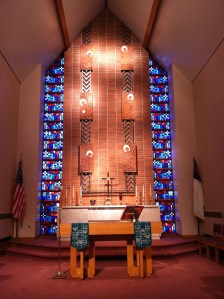
And that brings me to our own worship space at ELC in Black River Falls. When you look up at the carved structure above the altar, it’s easy to see why so many have called it Jacob’s Ladder — a visual echo of that Genesis story. The whole front piece draws the eye upward. Its tiered panels, haloed figures, and words like “ADORATION” and “PRAY” create a sense of movement from earth toward heaven, a kind of worship rising toward God. Whether the artist intended Jacob’s Ladder, the heavenly liturgy, or something else entirely, the effect is the same: the space feels sacred. Not because wood, brick, or stained glass are holier than other materials, but because of what has happened here. Baptisms. Funerals. Communion. Singing. Silence. Prayer. Community. As with so many places of worship, this place has shaped thousands of people.

Haverkamp reminds us that sacred places can become idols if we cling too tightly. But she also says they can be portals to the Spirit — “gates of heaven and houses of the holy.” Not because God is confined here, but because we are. We’re embodied creatures. We live in landscapes. Like our spiritual ancestors, we need places that help us remember who we are and whose we are.

So this week, as we read Jacob’s story again, I invite you to consider the landscapes that have shaped your faith. The places — wild or ordinary, ancient or recent — where you have sensed God’s presence. And I invite you to give thanks for this place, too. Not as the only gate of heaven, but as one of the gates through which God has chosen to meet us. May we honor these places without owning them. May we cherish them without clinging. And may we continue to discover, in the landscapes of our lives, the God who still speaks, still blesses, and still calls us by name.

Soli Deo Gloria.

Dream of Jacob

Murillo’s Dream of Jacob becomes even more interesting when you remember who painted it. Bartolomé Esteban Murillo (1617–1682) spent most of his life in Seville, creating warm, devotional images that felt closer to everyday experience than the high drama of other Baroque painters. You see that instinct here: Jacob isn’t posed like a hero, just a tired traveler asleep under a tree, while the ladder rises behind him in a soft glow and angels move with an easy, almost casual grace. Murillo’s gentle light and calm landscape fit the spiritual mood of 17th‑century Spanish art, which often aimed to make holiness feel intimate and accessible. The whole scene suggests that God’s presence doesn’t always arrive with spectacle — sometimes it slips quietly into the edges of an ordinary moment, right where a weary man lays his head.

Stephen Paulus
(1949-2014)

Brilliant composer Stephen Paulus wrote Pilgrim’s Hymn in 1995 as part of his larger work The Three Hermits, but the anthem quickly stepped out on its own. It’s one of those pieces that feels both simple and profound — a short prayer wrapped in Paulus’ warm, unmistakable harmonic language. The text leans straight into the mystery of God’s nearness: God hears before we speak, knows before we ask, and meets us in the quiet places where words fall short.

That line — “Even before we call on Your name… You hear our prayer” — lands right in the center of this week’s readings. Isaiah reminds us that God alone is God; Jacob wakes to discover holiness right under his head; the psalmist asks to be taught God’s way; Paul talks about hope that carries us through the groaning; and Jesus’ parable nudges us toward patience while God does the slow work of sorting wheat from weeds. Paulus’ text feels like it could have been lifted straight from this set of scriptures. It’s a gentle way of saying what the lectionary keeps repeating: God is already present, already listening, already working in the places we barely understand.

I hope you enjoy this excellent version from the Minnesota Choral Artists!

Lyrics

Even before we call on Your name
To ask You, O God
When we seek for the words to glorify You
You hear our prayer
Unceasing love, O unceasing love
Surpassing all we know

Glory to the Father
And to the Son
And to the Holy Spirit

Even with the darkness sealing us in
We breathe Your name
And through all the days that follow so fast
We trust in You
Endless Your grace, O endless Your grace
Beyond all mortal dream

Both now and forever
And unto ages and ages
Amen


The Minnesota Choral Artists, led by Matthew Culloton, bring a warm, polished sound and a knack for smart, engaging programming. Under Matthew’s direction — and yes, he’s the brother of Michael Culloton, who conducts the Concordia Choir — the ensemble sings with clarity, heart, and real musical intention. Their performances balance craft and connection, offering audiences choral music that feels both finely shaped and deeply human.

Visit their website for more information!

Note: The ELCA commemorates a wide range of Christians throughout the year as a way of remembering that God has worked through ordinary people in every age. These commemorations — drawn from Scripture, the early church, the Reformation, and more recent history — invite us to see faith lived out in many different vocations and cultures. They aren’t about elevating “heroes,” but about widening our sense of the communion of saints and letting their witness encourage our own. In marking these days, the church pauses to give thanks, to learn, and to be reminded that the Holy Spirit continues to shape faithful lives in every generation.

You will find the full listing of them in the front of the ELW. Explore any via the links provided.

Monday 6 July: Bartolome de Las Casas, missionary to the Indies (d. 1566)

Bartolomé de Las Casas (1484–1566) was a Spanish Dominican friar who became one of the earliest and most forceful Christian advocates for the rights and dignity of Indigenous peoples in the Americas. Originally a participant in the colonial system, he experienced a profound conversion of conscience that led him to renounce his encomienda, enter the Dominican Order, and devote his life to exposing the brutality of Spanish conquest. Through writings such as A Short Account of the Destruction of the Indies and persistent petitions to the Spanish crown, he argued that Indigenous peoples were fully human, capable of reason and faith, and entitled to justice — positions that challenged both political power and prevailing theological assumptions. The ELCA commemorates him because his witness embodies a Lutheran commitment to neighbor‑love, justice, and repentance, and because his voice continues to call the church toward solidarity with oppressed peoples and honest reckoning with the legacy of colonization.

The accompanying painting is “Fray Bartolomé de las Casas” (1875) by the Mexican artist Félix Parra, and it hangs in the Museo Nacional de Arte in Mexico City. Parra created it during a period when Mexican intellectuals were re‑examining the legacy of Spanish colonization, and the work reflects that historical moment. Las Casas is shown as a solemn, compassionate defender of Indigenous peoples, a visual interpretation of his lifelong struggle against the violence of the conquest. Parra’s style blends academic realism with moral drama: the friar stands at the center, often depicted shielding or advocating for Indigenous victims, making the painting both a tribute and a critique of the complex nature of colonial history.

Living Lutheran is the flagship magazine of the Evangelical Lutheran Church in America, offering stories, reflections, and reporting that explore how faith is lived out in daily life. It highlights the people, ministries, and global connections of the ELCA while engaging readers with thoughtful articles on theology, discipleship, justice, and contemporary issues. Designed to inform and inspire, the magazine serves as a gathering place for the diverse voices and experiences that shape Lutheran life today.

Visit the Living Lutheran Magazine Website

If you are seeking a church home or want to participate in our weekly on-line worship, subscribe to our YouTube Channel. All are welcome!

The Henri Nouwen Society

Pentecost 6: 5 July 2026 (Year A)

As we celebrate the 250th anniversary of the Declaration of Independence this week, Theodore Parker (1810–1860) offers a fascinating voice from our past. A Unitarian minister and abolitionist, Parker was one of the most outspoken reformers of his time. Along with others associated with Transcendentalism in New England (think Emerson, Thoreau, and Fuller), he believed deeply in human equality and used his pulpit to challenge slavery, racism, and injustice long before the Civil War, including the dispossession of Indigenous people.

In an 1850 speech echoing paragraph two of the Declaration, Parker described what he called “the American Idea” — the belief that every person has God‑given rights, and that a true democracy must protect those rights for all people. He defined democracy as, “A government of all the people, by all the people, for all the people” (sound familiar?). He argued that America succeeds when it follows justice, equality, and freedom, and fails when it betrays those principles. Because of this, Parker insisted that slavery violated the nation’s core ideals. Parker taught that America is always a work in progress — a country that must keep striving to live up to its own promises. His ideas later influenced major leaders, including Abraham Lincoln, who directly used Parker’s phrasing in the Gettysburg Address of November 1863.

Navigate Two Worlds Here

Common Themes This Week

The readings for Pentecost 6 circle around God’s gracious character and the human struggle to live faithfully within that grace. Zechariah and the psalmist both proclaim a God who comes in compassion, lifting up those who are bowed down and offering prisoners a return to hope. Paul names the inner conflict that keeps people from doing the good they desire, pointing to God as the only source of rescue. Jesus then invites the weary and burdened into his rest, revealing that divine gentleness is the true path to renewal and life.

Pentecost 6 (Year A)

First Reading:

Zechariah 9: 9-12

Psalm 145: 8-14

Second Reading (Epistle)

Romans 7: 15-25a

Gospel:

Matthew 11: 16-19, 25-30


Readings are Linked

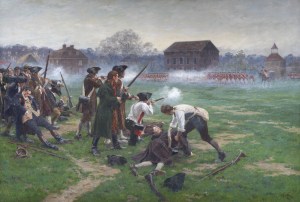
The Battle of Lexington
William Barnes Wollen (1857-1936)

My fascination with history started with the American Revolution — it grabbed my imagination early in life and never really let go. As we mark 250 years since our founding, I’ve been thinking again about what it means to belong to a democratic republic. I grew up loving our country in an honest way—grateful for its promise, clear‑eyed about its failures, proud yet humbled by the work still unfinished. For nearly five decades I’ve tried to help young people see their own lives inside that larger American story. The Declaration’s claim that all people are created equal still stands as a challenge before us, and the work of “liberty and justice for all” remains a calling worth pursuing.

Patriotism’s unruly sibling — politics — has also been on my mind this week, stirred in part by the ancient poetry of Zechariah, the first reading. The prophets lived through seismic political upheaval, speaking warnings and hope into the trauma of the Babylonian Exile. Zechariah wrote after the Persian king Cyrus allowed the Jewish people to return home, though many stayed behind because Jerusalem lay in ruins and the future looked bleak. To those who did return, his vision of a renewed nation and a humble Messiah riding into Jerusalem on a donkey must have sounded absurd — nothing like the power politics they knew. They longed for strength; Zechariah pointed to humility. Jesus later fulfilled that vision and overturned every assumption about power (Matthew 21:2–7; John 12:14–15).

Protestant Theologian Karl Paul Reinhold Niebuhr (1892-1971)

That ancient and frustrating tension between power and humility echoes in modern political thought as well, especially in the work of Reinhold Niebuhr. I first encountered Niebuhr in college, and his articulation of Christian Realism has shaped my politics ever since. Niebuhr’s clear-eyed view of human nature offers a bracing critique of political life — one that feels especially relevant as we approach the nation’s Semi‑quincentennial. His reminder that “the sad duty of politics is to establish justice in a sinful world” exposes both our limits and the danger of chasing power. It also punctures the absolutism and hubris that so often dominate our political climate, especially in campaign seasons. Niebuhr’s other insight — that “democracy is finding proximate solutions to insoluble problems” — keeps me grounded. It calls us back to humility, patience, and the slow, necessary work of the common good. Easy answers rarely exist, and Niebuhr never pretended they did. His realism continues to steady my political instincts and remind me what democratic citizenship requires.

Politics frustrated Jesus too. He moved within the shadow of the Roman Empire and navigated the demands of both imperial officials and religious authorities. In this week’s Gospel, you can hear his exasperation as he critiques the Pharisees for dismissing both John the Baptist and him — each for opposite reasons (Matthew 11:16–19). He thanks God for revealing truth not to the self‑assured “wise and intelligent,” but to those open enough to receive it (verses 25–26). And then come those beautiful, restorative words in verses 27–29 — worth lingering over. Jesus continues to reveal himself, sometimes boldly, sometimes quietly, offering rest for our souls amid the turmoil of this life. May we stay the course.

Soli Deo Gloria.

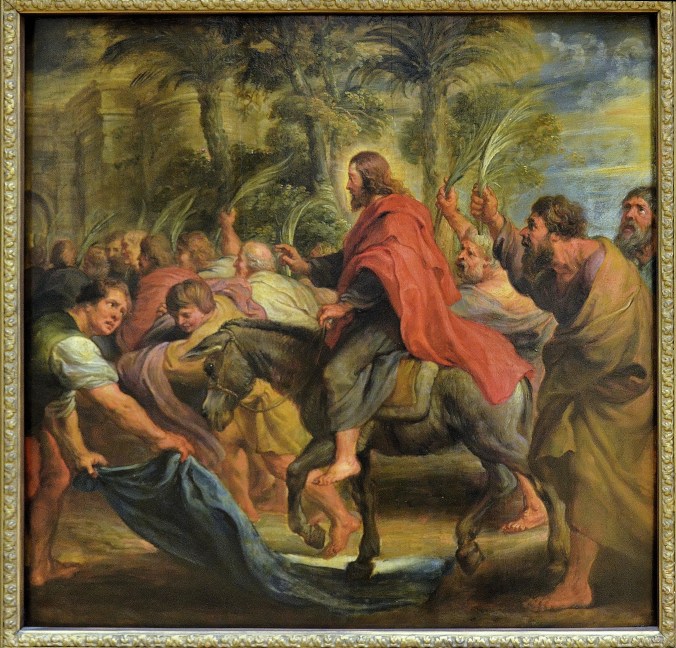
Christ Enters Jerusalem (c. 1632) by Peter Paul Rubens (1577–1640)

Rubens’ Christ Enters Jerusalem feels almost cinematic. He pulls you right into the swirl of Palm Sunday — Jesus riding a humble donkey while the crowd surges around him with energy and expectation. Christ stays calm at the center, a steady presence in the middle of all that motion, which sharpens the contrast between his quiet authority and the crowd’s excitement. The city rises behind him like a backdrop, hinting at the political tension waiting inside those walls. Rubens’ bold color and muscular figures make the moment feel alive, but they also underline the point: this “king” enters without force, choosing humility in a world obsessed with power.

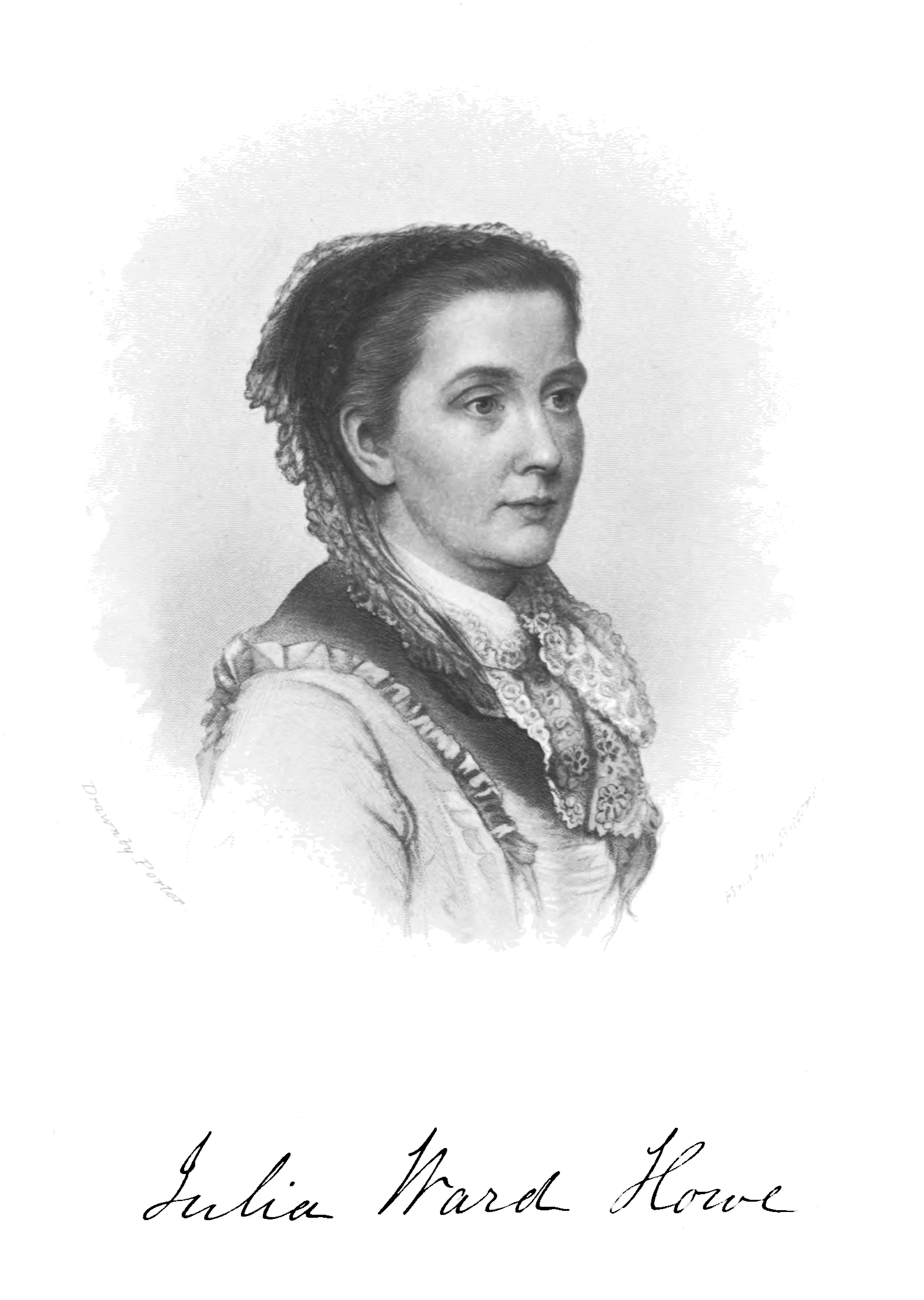
The Battle Hymn of the Republic has long held a singular place in American civic life, rising from its Civil War origins to become one of the nation’s most recognizable patriotic songs. Julia Ward Howe (1819–1910) wrote the text in late 1861 after hearing Union troops sing the rough soldiers’ chorus John Brown’s Body. A committed Unitarian with strong abolitionist convictions, Howe carried a moral vision shaped by liberal Protestant theology and by the reform movements that animated her adult life. That night, she awoke with lines “singing” in her head—a moment she later described as a kind of divine prompting. Out of that experience came a new text, steeped in biblical imagery and ethical urgency, framing the Union cause as a struggle for justice rather than mere military victory.

Published in early 1862, Howe’s hymn quickly became a cultural touchstone, sung in camps, churches, and public gatherings as a statement of national purpose. Nearly a century later, Joan Baez revived and reshaped it during the civil rights movement, slowing its tempo and softening its martial edge to foreground its moral vision. In her hands, The Battle Hymn became less a call to arms and more a plea for righteousness and nonviolent social change—proof that a familiar national song can be reinterpreted to meet the conscience of a new era.

The hymn appears in the ELW (890) and includes verses 1, 4, and 5 of Howe’s original poem.

Lyrics

Mine eyes have seen the glory of the coming of the Lord:
He is trampling out the vintage where the grapes of wrath are stored;
He hath loosed the fateful lightnings of His terrible swift sword:
His truth is marching on.


Glory, glory, hallelujah!
His truth is marching on.

I have seen Him in the watch-fires of a hundred circling camps;
They have builded Him an altar in the evening dews and damps:
I can read His righteous sentence by the dim and flaring lamps:
His day is marching on.

I have read a fiery gospel writ in burnished rows of steel:
“As ye deal with my contemners, so with you my grace shall deal;
Let the Hero, born of woman, crush the serpent with his heel,
Since God is marching on.”

He has sounded forth the trumpet that shall never call retreat:
He is sifting out the hearts of men before His judgement seat:
Oh, be swift, my soul, to answer Him! be jubilant my feet!
Our God is marching on!


In the beauty of the lilies Christ was born across the sea,
With a glory in His bosom that transfigures you and me;
As he died to make men holy, let us die to make men free,
While God is marching on.
Chorus—Glory, glory, hallelujah,
While God is marching on.

Joan Baez in 2016 (b. 1941)

Note: The ELCA commemorates a wide range of Christians throughout the year as a way of remembering that God has worked through ordinary people in every age. These commemorations — drawn from Scripture, the early church, the Reformation, and more recent history — invite us to see faith lived out in many different vocations and cultures. They aren’t about elevating “heroes,” but about widening our sense of the communion of saints and letting their witness encourage our own. In marking these days, the church pauses to give thanks, to learn, and to be reminded that the Holy Spirit continues to shape faithful lives in every generation.

You will find the full listing of them in the front of the ELW. Explore any via the links provided.

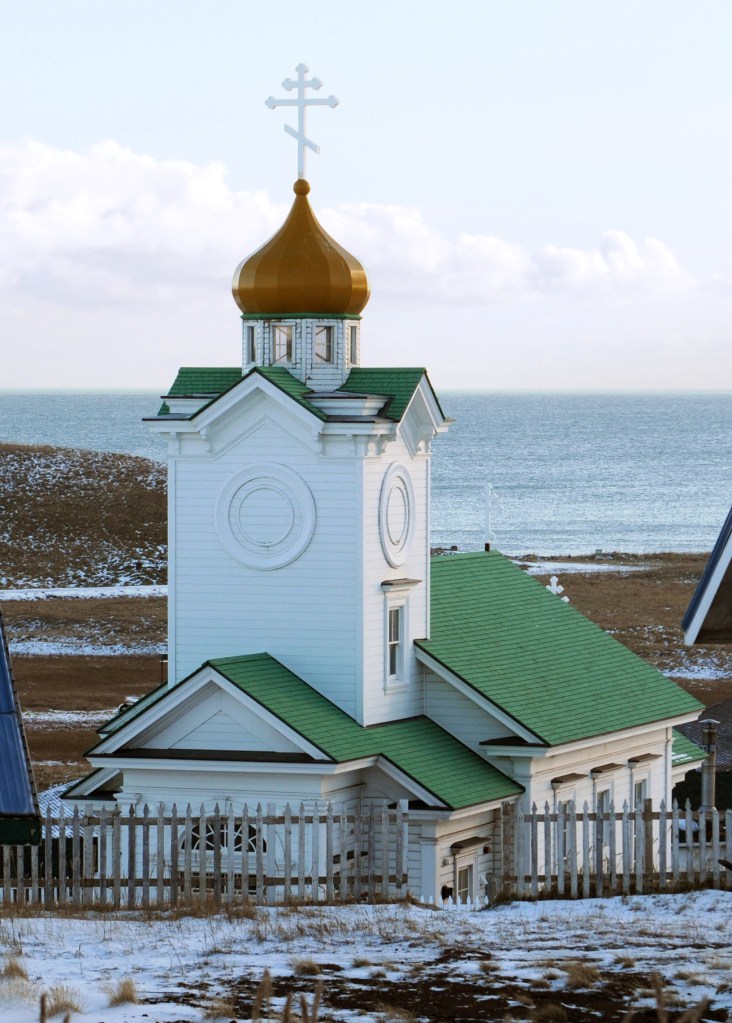
Saints Peter and Paul Russian Orthodox Church,
St. Paul Island, Alaska

Monday 29 June
PETER and PAUL, APOSTLES

Wednesday 1 July

Catherine Winkworth (d. 1878), John Mason Neale (d. 1866); hymn translators

Friday 3 July
THOMAS, APOSTLE

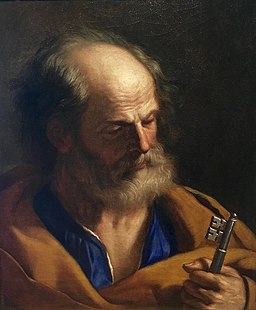
Saint Peter by Guercino
(1591–1666)

Living Lutheran is the flagship magazine of the Evangelical Lutheran Church in America, offering stories, reflections, and reporting that explore how faith is lived out in daily life. It highlights the people, ministries, and global connections of the ELCA while engaging readers with thoughtful articles on theology, discipleship, justice, and contemporary issues. Designed to inform and inspire, the magazine serves as a gathering place for the diverse voices and experiences that shape Lutheran life today.

Visit the Living Lutheran Magazine Website

If you are seeking a church home or want to participate in our weekly on-line worship, subscribe to our YouTube Channel. All are welcome!

ELCA Witness in Society

Pentecost 5: 28 June 2026 (Year A)

Navigate Two Worlds Here

Welcome and Thanks for your Visit!

Two Worlds is a digital ministry space featuring the weekly Revised Common Lectionary readings and a brief homily, supported by images, music, and the ELCA’s weekly commemorations. Visuals come primarily from Wikimedia Commons, and I utilize Copilot (Microsoft A.I. assistant) for both research and editing. The blog reflects ongoing dialogue with Pastor Jen Hatleli of ELC in Black River Falls and was first prompted by a 2023 Bible Study that set this work in motion.

From Tish Harrison Warren
(Anglican priest and author)

“The world-renowned cellist Pablo Casals was asked why he continued to practice his instrument four or five hours a day at eighty-three years old. ‘Because I think I am making progress,’ he replied. To devote oneself fully to any craft requires the effort of a lifetime. As long as there is breath in you, my husband reminds me when I’m most discouraged, God is not finished with you — his work continues in and through you.”

Luther and the Psalms

Luther loved the Psalms, first lecturing on them in 1513–1516. His immersion in the Psalms certainly impacted the events of 1517. After the Ninety-Five Theses, Luther returned to the Psalms again and again. He started a practice of reading the Psalms through the day at seven designated times. This enabled him to read through the Psalter in two weeks. He kept disciplined at that practice throughout most of his life. He read the Psalms hundreds of times.

Stephen J. Nichols

Tabletalk Magazine
(September 2024)

Common Themes This Week

The readings for 5 Pentecost lean hard into the theme of true allegiance — what it looks like to stand with God when competing voices promise easier paths. Jeremiah exposes the tension between comforting falsehoods and the costly truth, while Psalm 89 anchors the community in God’s steadfast love and faithfulness as the only reliable ground. Paul pushes this further by insisting that real freedom comes not from doing whatever we want but from offering ourselves to God in a way that reshapes our desires and our actions. Jesus then brings it home by teaching that receiving his messengers — and offering even the smallest act of mercy — reveals a life aligned with God’s kingdom, where faithfulness is measured in both loyalty and hospitality.

Pentecost 5 (Year A)

First Reading:

Jeremiah 28: 5-9

Psalm 89: 1-4, 15-18

Second Reading (Epistle)

Romans 6: 12-23

Gospel:

Matthew 10: 40-42


Readings are Linked

When the Lectionary drops us into the prophets, I often feel like I’m back in college, pounding on the glass while my basketball teammates carried on conversations I couldn’t follow. “Let me in!” was our running joke, and honestly, I still feel that way when I hit certain Old Testament passages. This week’s reading from Jeremiah — his clash with the false prophet Hananiah — had me tapping the glass again.

First, some background. The prophetic books are dense with history and mystery. Prophets weren’t fortune‑tellers; they were God’s messengers, calling out idolatry, summoning people to repentance, and insisting on justice. Their writings stretch across three centuries (roughly 760 – 460 BCE), framed by Israel’s exile and eventual restoration. Jeremiah stands among the four Major Prophets (Isaiah, Ezekiel, and Daniel are the other three), while twelve others form the Minor Prophets (Hosea, Joel, Amos, Obadiah, Jonah, Micah, Nahum, Habakkuk, Zephaniah, Haggai, Zechariah, and Malach). Together they form a chorus of warning, lament, and hope.

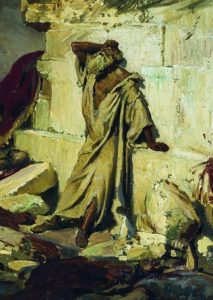
“Cry of prophet Jeremiah on the Ruins of Jerusalem” by Ilya Repin (1870)
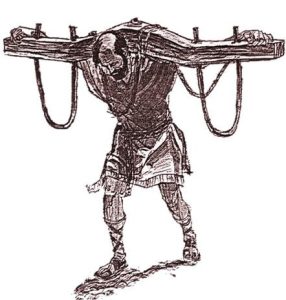
The Yoke of Jeremiah

Jeremiah himself lived through seismic upheaval: the fall of Assyria, the rise of Babylon, and the brutal deportations known as the Babylonian Captivity. Nebuchadrezzar destroyed Solomon’s temple in Jerusalem (586 BCE), the heart of Israel’s spiritual life. Jeremiah, called by God before birth, interpreted these events as the consequence of Israel’s unfaithfulness. His message isolated him, yet he stayed faithful to the call. That’s the backdrop for this week’s tense exchange. In Jeremiah 28, the year is 593 BCE. King Zedekiah sits on a shaky throne. Hananiah steps forward with a message everyone wants to hear: the exile will end in two years, Babylon’s power will crumble, and all will be well. Jeremiah responds with what sounds like dry, prophetic sarcasm — “Amen… may the Lord do so” — but he doesn’t buy it. Then comes the dramatic moment: Hananiah grabs the wooden yoke Jeremiah is wearing, breaks it, and declares that God will shatter Babylon the same way. Jeremiah walks away, but God sends him back with a hard truth: Hananiah has spoken rebellion, not revelation — his words were comforting, but false. Within months, Hananiah is dead.

So what do we do with this strange, ancient confrontation? What does it say to us now? First, Jeremiah’s message still resonates. He calls us to keep God first, to reject the idols we craft — status, certainty, political identity, even religious performance. He calls us to repentance. He calls us to love our neighbors, pursue justice, and refuse the easy path of self‑deception. Jesus himself echoes Jeremiah when he overturns the moneychangers’ tables, quoting Jeremiah 7:11. Second, the story warns us about false prophets — those who tell people exactly what they want to hear. Hananiah offered comfort without truth, reassurance without repentance. We swim in a digital world thick with misinformation, half‑truths, and voices claiming moral or spiritual authority. Some even blend religious language with political ambition, a modern form of idolatry. Discernment isn’t optional; it’s a spiritual discipline. And finally, Jeremiah reminds us that the prophets were always pointing forward. They glimpsed the coming Messiah long before Bethlehem. That thread runs straight into this week’s Gospel, where Jesus speaks across time: “Whoever welcomes you welcomes me, and whoever welcomes me welcomes the one who sent me.” The same God who breathed through Jeremiah breathes through Christ — and still breathes through us 2,600 years later.

Soli Deo Gloria.

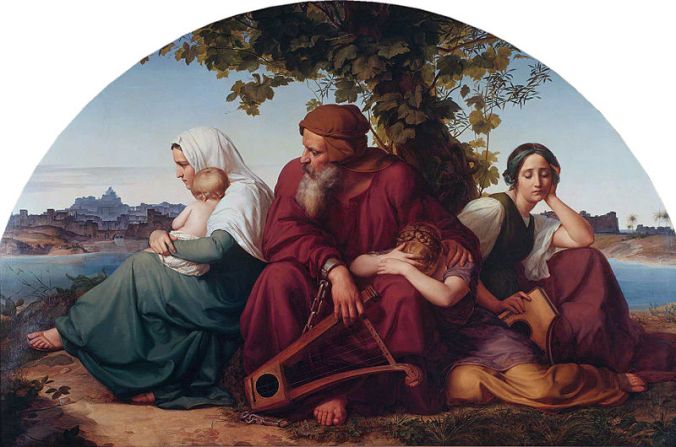
“Jews Mourning the Babylonian Exile” by Bendemann, 1832

Eduard Bendemann’s Jews Mourning the Babylonian Exile (1832) captures a sad moment in history — a group of Judean exiles slumped along the banks of the Euphrates, their harps hanging unused — an unmistakable nod to Psalm 137’s “How can we sing the Lord’s song in a foreign land.” Bendemann was in his early twenties when he painted it, a German artist of Jewish heritage working in the Romantic era, drawn to big emotional themes and stories of a people pushed to the edge. You can see that sensibility here: the muted colors, the stillness, the way every figure seems caught between despair and stubborn hope. The painting helped launch his career, and it also reflects a 19th‑century fascination with the Hebrew Scriptures as a mirror for national identity, suffering, and resilience. It’s a deeply human scene — ancient grief rendered by a young artist who understood something about longing and loss.

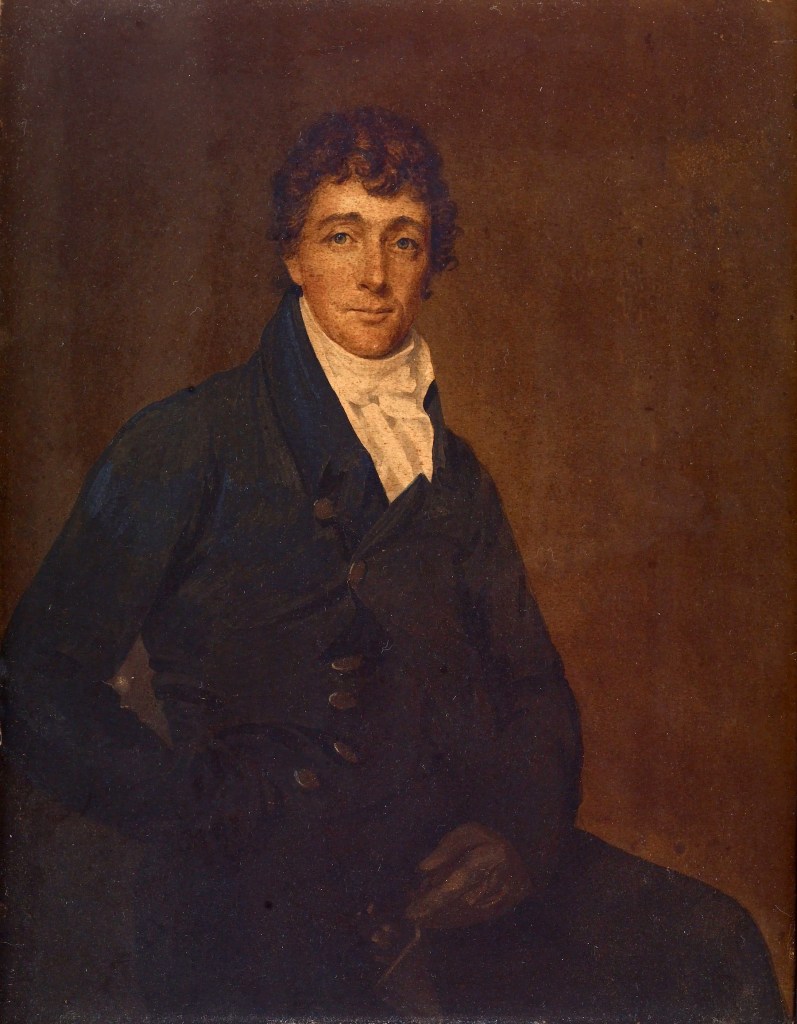
Francis Scott Key (1779-1843)
by Joseph Wood

The backstory of hymns is often fascinating and offers context that enlivens our hearing or singing. Francis Scott Key’s legacy is a complicated one. A devout Christian best known for The Star‑Spangled Banner, he also wrote hymns, including Before You, Lord, We Bow, composed in 1812 amid a young nation’s turmoil. The hymn reveals a different side of Key — less patriotic triumph, more humility and repentance — yet, like many of his generation, his life held deep contradictions: he enslaved people and defended slavery in court even as he spoke of moral responsibility and national accountability before God.

As we approach the 250th anniversary of our nation’s birth and hear this hymn from the ELW’s “National Songs” section (893), it helps to remember that Key wasn’t offering a victory song but a prayer. Its sturdy DARWALL tune carries a simple truth: a nation stands healthiest when it bows before God, not when it exalts itself. (Note: DARWALL’S 148th refers to a jubilant hymn tune written in 1770 by the English composer John Darwall. He originally composed it for the metrical setting of Psalm 148). In our fractured public moment of 2026, the hymn invites us to hold our love of country with open hands, seeking God’s guidance, correction, and renewal for the sake of our neighbors and the common good.

Lyrics

1. Before You, Lord, we bow,
Our God who reigns above
And rules the world below,
Boundless in pow’r and love.
Our thanks we bring
In joy and praise,
Our hearts we raise
To You, our King!

**2. The nation You have blest
May well Your love declare,
From foes and fears at rest,
Protected by Your care.
For this bright day,
For this fair land–
Gifts of Your hand–
Our thanks we pay.


3. May ev’ry mountain height,
Each vale and forest green,
Shine in Your Word’s pure light,
And its rich fruits be seen!
May ev’ry tongue
Be tuned to praise
And join to raise
A grateful song.

4. Earth, hear your Maker’s voice;
Your great Redeemer own;
Believe, obey, rejoice,
And worship Him alone.
Cast down your pride,
Your sin deplore,
And bow before
The Crucified.

5. And when in pow’r He comes,
Oh, may our native land
From all its rending tombs
Send forth a glorious band,
A countless throng,
With joy to sing
To heav’n’s high King
Salvation’s song!

** Verse 2 is not included in the ELW version of the hymn.

Posted simply by “Ben” on YouTube, I cannot identify this exceptional organist. I searched for various versions of this hymn and this one stood out to me, in part, because of the variations offered within the performance.

Enjoy singing along, although you may want to warn others in your midst, if necessary!

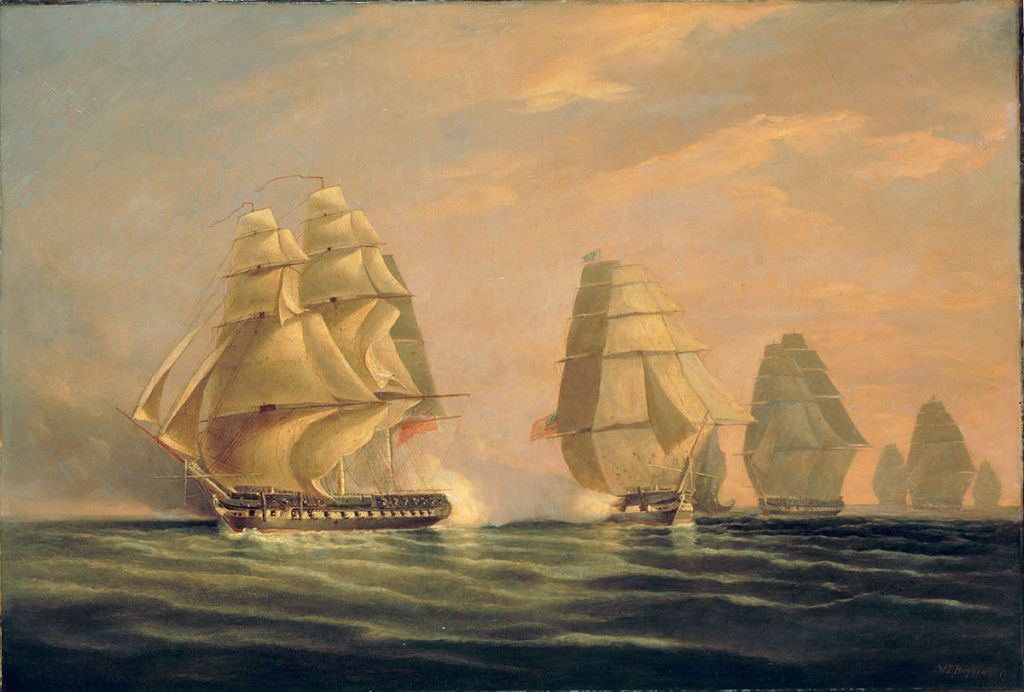
The first naval battle of the War of 1812 (23 June) as depicted by the artist William James Huggins. The HMS Belvidera encountered the USS President and USS United States, along with the sloops Hornet and Argos. The engagement occurred off the northeast coach near New York.

Note: The ELCA commemorates a wide range of Christians throughout the year as a way of remembering that God has worked through ordinary people in every age. These commemorations — drawn from Scripture, the early church, the Reformation, and more recent history — invite us to see faith lived out in many different vocations and cultures. They aren’t about elevating “heroes,” but about widening our sense of the communion of saints and letting their witness encourage our own. In marking these days, the church pauses to give thanks, to learn, and to be reminded that the Holy Spirit continues to shape faithful lives in every generation.

You will find the full listing of them in the front of the ELW. Explore any via the links provided.

Living Lutheran is the flagship magazine of the Evangelical Lutheran Church in America, offering stories, reflections, and reporting that explore how faith is lived out in daily life. It highlights the people, ministries, and global connections of the ELCA while engaging readers with thoughtful articles on theology, discipleship, justice, and contemporary issues. Designed to inform and inspire, the magazine serves as a gathering place for the diverse voices and experiences that shape Lutheran life today.

Visit the Living Lutheran Magazine Website

If you are seeking a church home or want to participate in our weekly on-line worship, subscribe to our YouTube Channel. All are welcome!

Global Refuge and World Refugee Day

Global Refuge — formerly Lutheran Immigration and Refugee Service — carries forward an 85‑year legacy of welcome that resonates powerfully on World Refugee Day, honoring those forced to fell conflict or persecution (observed each year on 20 June). Since 1939, the organization has walked alongside more than 800,000 newcomers, offering resources, guidance, and a soft place to land as they rebuild their lives in the United States. Their work unfolds against the backdrop of a world in which at least 41.6 million people are refugees and more than 117 million are forcibly displaced worldwide, a reminder of the immense human need that persists (hard to wrap my brain around those numbers). The mission of Global Refuge stands as a testament to compassion in action — helping new neighbors reimagine what’s possible and ensuring that welcome remains a lived, daily commitment.

Visit the Global Refuge Website