Navigate the Blog Here
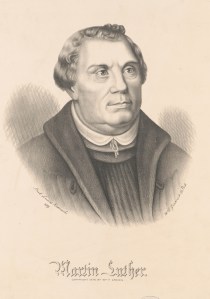
Luther and the lectio divina
Luther’s approach to lectio divina grows out of the Augustinian conviction that Scripture is understood only through the illumination of the Holy Spirit, received in humble prayer.
In the monastic tradition, lectio divina developed as a four‑step path — reading, meditation, prayer, and contemplation — aimed at drawing the believer into quiet union with God. Luther retained the early Augustinian emphasis on oratio and meditatio, but he reshaped the practice by replacing contemplatio with tentatio, the spiritual struggle that arises when God’s Word confronts human weakness.
For Luther, this struggle is not a distraction from devotion but the very arena in which the Word becomes alive and formative. His adaptation transforms lectio divina from a contemplative ascent into a cross‑shaped encounter where Scripture, prayer, and trial work together to shape faith.
Two Worlds is a digital ministry space that shares the RCL readings, a brief homily, and supporting images, music, and ELCA commemorations. The blog is authored by Paul Rykken in consultation with Pastor Jen Hatleli of Evangelical Lutheran Church in Black River Falls, Wisconsin. The blog lands more naturally on a larger screen. Also, hyperlinks are included for further information — they are bolded and italicized.
Pentecost 19 Readings
Isaiah 5: 1-7
Psalm 80: 7-15
Philippians 3: 4b-14
Matthew 21: 33-46
Readings are Linked
Common Themes and Connections
Isaiah and the psalmist both use the image of a vineyard to name God’s longing for a people who bear good fruit, and the grief that comes when they do not. Jesus picks up that same vineyard theme in Matthew, sharpening it into a parable about leaders who resist God’s purposes and reject the very One sent to restore them. Paul, meanwhile, reminds us that genuine righteousness doesn’t come from pedigree or achievement but from knowing Christ and pressing on toward the life God intends. Taken together, the readings trace a movement from God’s hope, to human resistance, to the call for a renewed, Christ‑shaped way of living. Pentecost 19 invites us to hear these texts as a summons to bear fruit that reflects God’s justice, mercy, and steadfast love.
Image of the Week
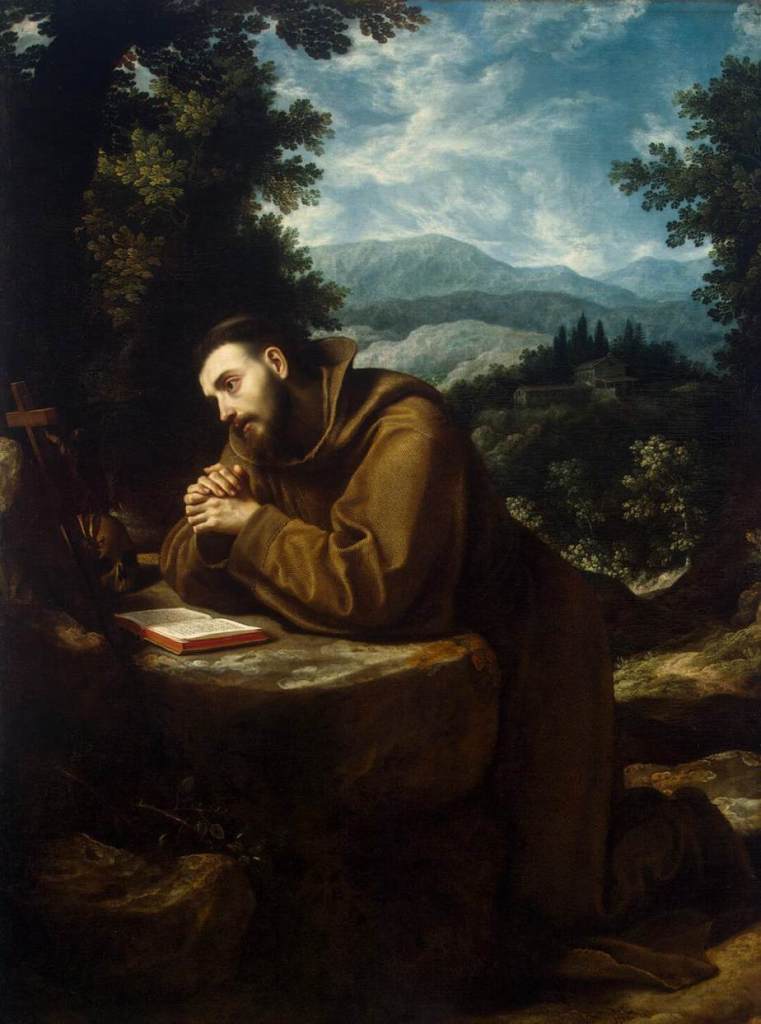
St. Francis is shown here in simple, steady prayer — kneeling before a small wooden cross with an open book at his side and the quiet landscape stretching behind him. Instead of dramatizing the stigmata — the tradition that Francis received the wounds of Christ late in life — Cigoli focuses on the kind of everyday devotion that made Francis receptive to grace in the first place.
The artist, Ludovico Cardi (whom we know as Cigoli, after his Tuscan hometown), brings together the clarity of his Florentine training and a warmer Baroque naturalism, especially in the soft modeling of Francis’s face and the gentle light across the hills. It’s a picture of holiness rooted in humility and attentiveness rather than spectacle. As we mark St. Francis on 4 October (Pentecost 19) this year, the painting feels like an invitation to let quiet, faithful practices shape us too.
You can read more about the artist here!
Five-Minute Homily: Pentecost 19
“Faithfulness in a High‑Tech Landscape”

Artificial Intelligence has dominated the news lately — not only because of what it can generate, but because of the massive data‑center buildouts now reshaping communities, economies, and landscapes. We’re watching a live debate over power grids, water use, land stewardship, and the cost of feeding these systems. Like most thorny issues, it is complex.
The image beside us — an AI‑generated guess at what Jesus may have looked like based on ancient Middle Eastern features — drops us right into the tension of this moment. It shows how these tools can illuminate something we’ve wondered about for centuries, yet it also reminds us how easily technology can shape, or even distort, what we think we see. And underneath all that, it nudges us back to a very human question: how do we see clearly, make wise sense of the world around us, and stay grounded in the life God has entrusted to us?
Jesus, the master teacher, still speaks across time, and his use of story — often allegory — cuts straight to the heart. In this week’s Gospel, he responds to religious leaders who have just challenged his authority. They bristle at his popularity, his freedom, his refusal to stay within their lines. So he tells a parable that echoes Isaiah 5, exposing the disobedience of those who should know better and the consequences that follow. A landowner plants a vineyard, protects it, and watches it flourish. He leases it to tenants. When he sends servants to collect his share, the tenants kill them. He sends more; they meet the same fate. Finally — naively, it seems — he sends his son, assuming they will respect him. Instead, they murder him to seize the inheritance. It is a brutal story.
Jesus then turns the parable back on his listeners. Beginning in verse 40, he leads the elders into the chilling realization that he is talking about them. His citation of Psalm 118 cuts straight to their scriptural pride, and by verse 46 we glimpse their simmering response.
How do we hear this today? It’s easy to treat the story as a rebuke aimed at ancient leaders who rejected Christ. But that reading is too small. Jesus speaks to us as well. We must examine our own hearts. How do we respond to him? How do we tend the vineyard entrusted to our care — our land, our communities, our choices, our faith?
Soli Deo Gloria!
Musical Reflection

In my quest to find music that speaks to tenets of Christianity, Coldplay’s “Fix You” comes to mind. Written by Chris Martin (b. 1977) as a song of comfort after the death of his wife’s father, the song offers a fitting echo to this week’s readings. Isaiah and Matthew confront the vineyard’s failure to bear fruit, Psalm 80 pleads for restoration, and Philippians urges us to press forward in hope. The song traces that same movement — from quiet lament to a rising, communal resolve — capturing the longing for healing and renewal at the heart of these texts.
The cover of the song I included here comes from the Stellanbosch University Choir (South Africa). Regular blog followers know that this choir is a real favorite of mine! I hope you enjoy their version and the song’s powerful mesage.
The Stellenbosch University Choir is widely regarded as one of the finest collegiate choirs in the world, celebrated for its luminous blend, technical precision, and emotionally charged performances. Founded in 1936, it is the oldest university choir in South Africa, drawing about a hundred students from across the university each year. Under the long‑time direction of André van der Merwe, the ensemble has developed a distinctive sound that weaves classical clarity with the rhythmic vitality and multilingual richness of South African musical traditions. Their artistry has earned them sustained international acclaim, including years at the top of the Interkultur world rankings, and their performances—whether sacred works, folk songs, or contemporary compositions—carry a depth and immediacy that make the choir a powerful cultural ambassador.
Visit Their Website Here!
Lyrics
When you try your best, but you don’t succeed
When you get what you want, but not what you need
When you feel so tired, but you can’t sleep
Stuck in reverse
And the tears come streaming down your face
When you lose something you can’t replace
When you love someone, but it goes to waste
Could it be worse?
Lights will guide you home
And ignite your bones
And I will try to fix you
And high up above or down below
When you’re too in love to let it go
But if you never try, you’ll never know
Just what you’re worth
Lights will guide you home
And ignite your bones
And I will try to fix you
Tears stream down your face
When you lose something you cannot replace
Tears stream down your face
And I
Tears stream down your face
I promise you I will learn from my mistakes
Tears stream down your face
And I
Lights will guide you home
And ignite your bones
And I will try to fix you
Who Are We Commemorating This Week?
Note: The ELCA commemorates a wide range of Christians throughout the year as a way of remembering that God has worked through ordinary people in every age. These commemorations — drawn from Scripture, the early church, the Reformation, and more recent history — invite us to see faith lived out in many different vocations and cultures. They aren’t about elevating “heroes,” but about widening our sense of the communion of saints and letting their witness encourage our own. In marking these days, the church pauses to give thanks, to learn, and to be reminded that the Holy Spirit continues to shape faithful lives in every generation.
Commemorations: Week of 28 September
Tuesday 29 September
MICHAEL AND ALL ANGELS
Wednesday 30 September
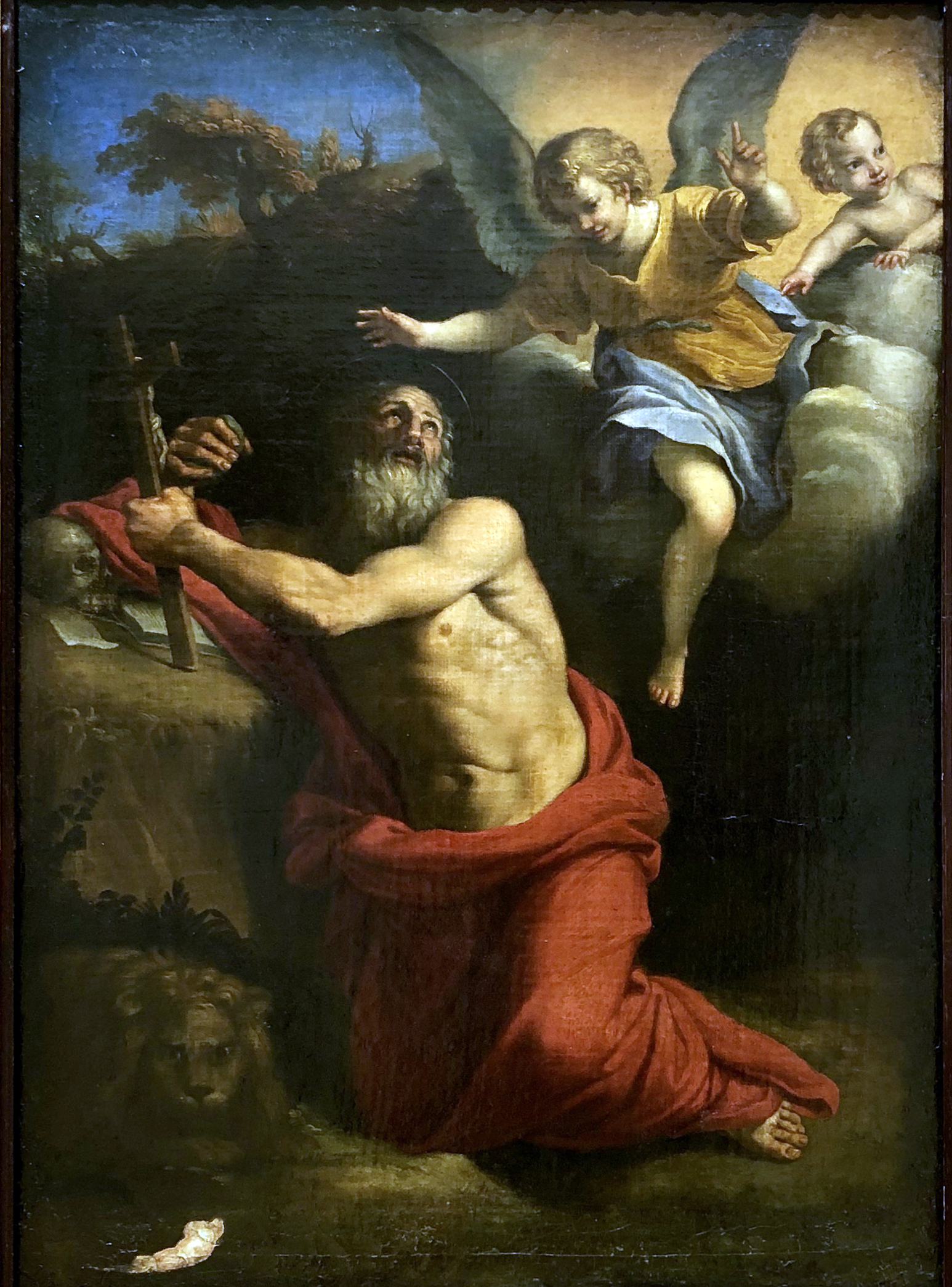
Jerome, translator, teacher (d. 420)
Sunday 4 October
Francis of Assisi, renewer of the church
(d. 1226)
Theodor Fliedner, renewer of society
(d. 1864)
(1581-1641)
Digital Ministry and Beyond
Sacred History: Reredos
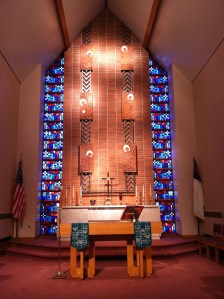
If you’ve ever wondered about the carved structure behind our altar—or how our sanctuary came to look and feel the way it does—I’ve put together a story you might enjoy. It traces the origins of our reredos, Jacob’s Ladder, and introduces the remarkable people who shaped our worship space: a Marine‑pilot‑turned‑architect, a Scandinavian sculptor with a pastor’s imagination, and the local carpenter who guided the sanctuary’s construction. You’ll also learn the moving story behind the stained‑glass windows dedicated just days before a hometown soldier was laid to rest. It’s a rich, very human history, and it might change the way you see the space we gather in each week.
The Full Paper is Linked Here!
Faithful Conversations
We’ve spent the past year at ELC discerning how best to offer adult study in a way that’s both flexible and consistent, and we’ve settled on a simple rhythm: a weekly gathering called Faithful Conversations, held every Sunday from 11:00 to 11:45 a.m. This dedicated space will offer a rotating mix of opportunities—lectionary discussion, Lutheran theology, spiritual disciplines, and congregational history—open to anyone at any time, with no prior knowledge needed and no pressure to read or share.
To launch this renewed approach, we began a five‑week study of Michael Foss’s Real Faith for Real Life (September 27–October 25), a practical and relevant exploration of Christian discipleship. I will be leading the sessions.
ALL ARE WELCOME!
