Update: Where Are We?
The Revised Common Lectionary (RCL) is a three-year cycle of Scripture readings used by many Christian churches, guiding congregations through much of the Bible over the course of Years A, B, and C. On November 8, 2026, we are in Year A and nearing the end of the long Pentecost season. This Sunday is the Twenty-Fourth Sunday after Pentecost, just two weeks before Christ the King Sunday and three weeks before the beginning of a new church year with Advent. As the church year draws to a close, the lectionary’s readings increasingly focus on themes of wisdom, perseverance, accountability, and God’s promised future.
Two Worlds is a digital ministry space that shares the RCL readings, a brief homily, and supporting images, music, and ELCA commemorations. The blog is authored by Paul Rykken in consultation with Pastor Jen Hatleli of Evangelical Lutheran Church in Black River Falls, Wisconsin (ELCA). The blog lands more naturally on a larger screen. Also, hyperlinks are included for further information — they are bolded and italicized.
Navigate the Blog Here
Readings for Pentecost 24
Amos 5: 18-24
Psalm 70
1 Thessalonians 4: 13-18
Matthew 25: 1-13
Readings are Linked
Luther and the lectio divina
Luther’s approach to lectio divina begins with the Augustinian conviction that Scripture is understood through the Holy Spirit and received in humble prayer. While the monastic tradition described four movements of reading, meditation, prayer, and contemplation, Luther reshaped the practice around oratio (prayer), meditatio (meditation), and tentatio (spiritual struggle). Rather than seeking contemplative ascent, Luther saw the Christian life as a cross-shaped encounter in which God’s Word meets us amid trial, testing, and weakness, forming faith through the struggle.
A Question to Consider?
The readings for Pentecost 24 challenge me to ponder WHY we spend so little time in the ELCA on Christ’s second coming (or am I “off” in that assessment?). It is clearly central to our theology, as noted in our public recitation of the Apostles’ Creed each Sunday (“he is seated at the right hand of the Father, and he will come to judge the living and the dead”). Further, we have Christ’s clear language on the matter (note Luke 17:22-24, among other passages). We live with the anticipation of the Second Coming! Let’s think about this as we walk through this week’s readings. I will offer some thoughts on the Thessalonians passage in my homily this week.
Image and Poem of the Week
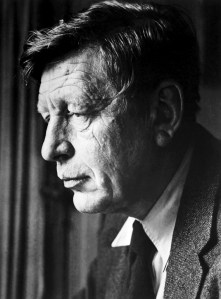
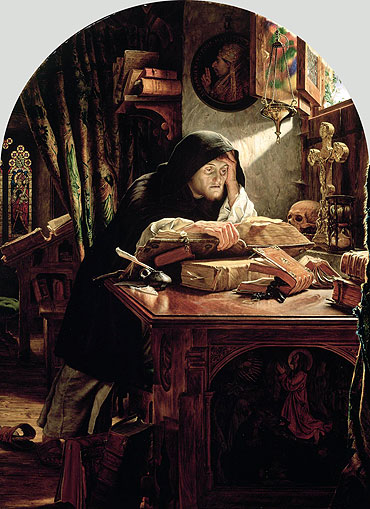
This week, two very different works found their way onto my radar screen and seemed to belong together: W.H. Auden’s poem and Joseph Noël Paton’s 1861 painting Luther at Erfurt. Both capture a man caught in the midst of profound spiritual struggle. As we continue exploring Luther’s legacy, I am reminded that the Reformer was not simply a theologian or church leader, but a person who spent much of his life wrestling with questions of sin, grace, judgment, and faith. Paton’s painting portrays a young Luther at a decisive moment of crisis and contemplation, while Auden’s wartime poem probes the inner conflicts and anxieties that haunt the human spirit. Though separated by centuries and created in very different contexts, the two works speak to the same enduring reality: the struggle to find meaning, certainty, and hope amid life’s deepest uncertainties. Auden’s poem, written during the turmoil of World War II, especially stopped me in my tracks, and I find myself still wrestling with its final line, highlighted below, which seems to linger as both a question and a challenge.
Luther
With conscience cocked to listen for the thunder,
He saw the Devil busy in the wind,
Over the chiming steeples and then under
The doors of nuns and doctors who had sinned.
What apparatus could stave off disaster
Or cut the brambles of man’s error down?
Flesh was a silent dog that bites its master,
World a still pond in which its children drown.
The fuse of Judgement spluttered in his head:
“Lord smoke these honeyed insects from their hives.
All Works, Great Men, Societies are bad.
The Just shall live by Faith…” he cried in dread.
And men and women of the world were glad,
Who’d never cared or trembled in their lives.
The Painting
Painted in 1861 by Scottish artist Joseph Noël Paton, Luther at Erfurt portrays the young Martin Luther during his years as an Augustinian monk, studying Scripture and wrestling with spiritual questions before the Reformation began. Paton fills the room with symbols of faith, learning, and mortality, while the dawn light breaking into the scene suggests Luther’s growing understanding of the Gospel and the doctrine of justification by faith. Rather than depicting a dramatic public event, the painting focuses on Luther’s inner struggle and spiritual awakening, emphasizing that the Reformation began with a search for truth in God’s Word before it became a movement that transformed church and society.
Five-Minute Homily: Pentecost 24
Title: Living Between Promise and Mystery
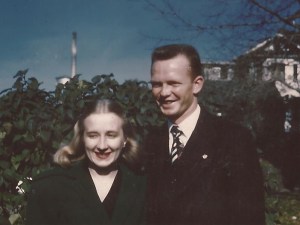
My father was a gracious individual but could be blunt at times. Just days before his death in 2013, I asked him if he expected to see Cathy (his wife of 64 years who died 7 months ahead of him) when he died. It wasn’t unusual for me to ask such questions of him, since we often talked theology. My question was prompted, in part, by the comments people make when a loved one journeys on, and especially the notion that they have now joined their departed loved ones in heaven. In clear language, Unk (my father) responded to me by asserting that “that’s not what our theology tells us — those that have gone before us are at rest and will rise when Christ returns.” I recall being a bit taken aback by his comments and asked him if that is what he truly believed — it seemed less than comforting. Then he winked at me and said, “you know, sometimes we tell ourselves things just to feel better, but death remains a great mystery.” It was a conversation I never forgot.
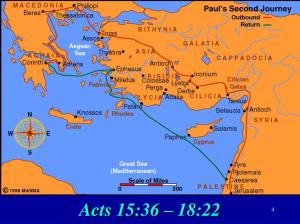
So what are we to make of Christ’s return? Paul’s words in 1 Thessalonians help, but only when we read them in context. Most scholars consider 1 Thessalonians the oldest book in the New Testament, written around twenty years after Jesus’ crucifixion. During his second missionary journey, Paul traveled to the Macedonian city of Thessalonica. Later, he and his companions, Silvanus and Timothy, wrote to encourage the young Christian community and address questions that had arisen since their visit. One concern stood above the rest: What happens to believers who die before Christ returns? Paul assures them that they have nothing to fear. Those who have died in Christ will share fully in God’s promised future. When Christ returns, the dead will be raised, the living will join them, and all will be with the Lord forever. His purpose is not to satisfy curiosity about the end times but to comfort anxious believers with hope.
Three observations are worth noting. First, the death and resurrection of Jesus have challenged believers from the beginning. In the early centuries of the church, some groups, known as Docetists, argued that Jesus only seemed to suffer and die because divinity could not truly endure human weakness. The Apostles’ Creed emerged, in part, as a response to such claims, affirming that Jesus was fully human and fully divine, that he truly suffered, died, and rose again. Second, Paul appears to expect Christ’s return within his own lifetime. Many first-generation Christians shared that expectation. Some who heard Paul’s words may even have witnessed Jesus’ crucifixion or encountered the risen Christ. The return of Christ was not a distant doctrine to them. It was an imminent hope.
Third, perhaps one reason Lutherans spend relatively little time speculating about the Second Coming is that Scripture itself cautions us against prediction. Jesus says plainly, “About that day and hour no one knows, neither the angels of heaven, nor the Son, but only the Father” (Matthew 24:36). Luther himself remained skeptical of elaborate end-times speculation. Rather than calculating dates, he directed believers back to Christ’s promises. And that may be the heart of the matter. The Christian faith does not remove every mystery surrounding death. It never has. Yet it gives us a promise: Christ died, Christ rose, and Christ will come again. That promise does not invite us to withdraw from the world while we await heaven. It calls us to live faithfully here and now.
Barbara Rossing expresses it beautifully. The first Christians believed they lived on the edge of history, yet they responded not with fear but with love. They worshiped, cared for the poor, welcomed strangers, visited prisoners, shared meals, and built communities shaped by hope. Their expectation of Christ’s coming moved them deeper into the world, not away from it. The same is true for us. To await Christ’s return is not to stare at the sky. It is to love our neighbors, seek justice, extend mercy, and pray with confidence: “Thy kingdom come, thy will be done, on earth as it is in heaven.” God’s future belongs to God. Our calling is to live the Gospel today.
Soli Deo Gloria!
Musical Reflection: “Take Me Out to the Ballgame“
You may think it odd that I’m highlighting this song in this space, but let me explain. Beyond the fact that I have been a passionate baseball fan for more than sixty years — and that the Milwaukee Brewers are now World Champs — there is some great history connected to this familiar song.
At the beginning of the twentieth century, many Protestant Christians were rethinking the place of recreation in American life. While churches continued to stress moral discipline and personal responsibility, organizations such as the YMCA increasingly promoted athletics and leisure activities as positive forces for building character, strengthening community, and improving physical health. Baseball came to embody these ideals, earning a reputation as a wholesome pastime that families could enjoy together. It was in this setting that lyricist Jack Norworth and composer Albert Von Tilzer wrote “Take Me Out to the Ball Game” in 1908. What makes the song especially interesting is that its central character is not a young man but Katie Casey, a young woman whose passion for baseball outweighs any interest in the theater or other conventional entertainments. At a time when public sporting culture was still largely shaped by men, Katie’s enthusiasm reflected the growing popularity of baseball among women and suggested broader changes taking place in American society. More than a catchy tune, the song captures a moment when recreation was increasingly viewed, even by many Protestant Christians, as a worthwhile and community-building part of a well-lived life.
The version offered here comes from jazz pianist Larry Goldings and captures that sense of joy derived from the great game of baseball. We, of course, only sing the chorus, but I included the original lyrics here. Relax and enjoy.
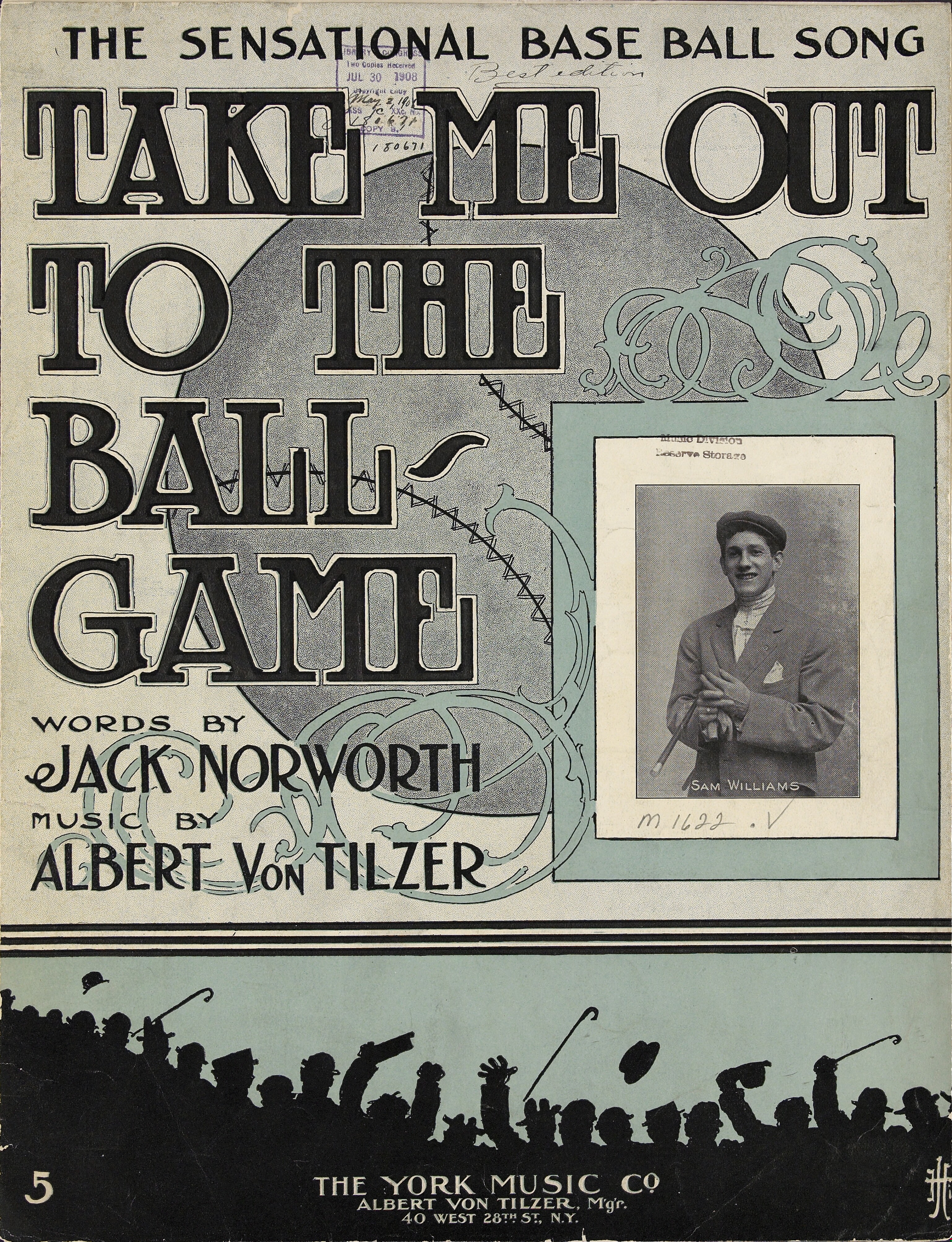
Lyrics
Katie Casey was base ball mad.
Had the fever and had it bad;
Just to root for the home town crew,
Ev’ry sou Katie blew.
On a Saturday, her young beau
Called to see if she’d like to go,
To see a show but Miss Kate said,
“No, I’ll tell you what you can do.”
“Take me out to the ball game,
Take me out with the crowd.
Buy me some peanuts and cracker jack,
I don’t care if I never get back,
Let me root, root, root for the home team,
If they don’t win it’s a shame.
For it’s one, two, three strikes, you’re out,
At the old ball game.”
Katie Casey saw all the games,
Knew the players by their first names;
Told the umpire he was wrong,
All along good and strong.
When the score was just two to two,
Katie Casey knew what to do,
Just to cheer up the boys she knew,
She made the gang sing this song:
“Take me out to the ball game,
Take me out with the crowd.
Buy me some peanuts and cracker jack,
I don’t care if I never get back,
Let me root, root, root for the home team,
If they don’t win it’s a shame.
For it’s one, two, three strikes, you’re out,
At the old ball game.”
Who Are We Commemorating This Week?
Note: The ELCA commemorates a wide range of Christians throughout the year as a way of remembering that God has worked through ordinary people in every age. These commemorations — drawn from Scripture, the early church, the Reformation, and more recent history — invite us to see faith lived out in many different vocations and cultures. They aren’t about elevating “heroes,” but about widening our sense of the communion of saints and letting their witness encourage our own. In marking these days, the church pauses to give thanks, to learn, and to be reminded that the Holy Spirit continues to shape faithful lives in every generation.
You will find the full listing of them in the front of the ELW.
Week of 2 November
Tuesday 3 November
Martin de Porres, renewer of society (d. 1639)
(Information is linked)
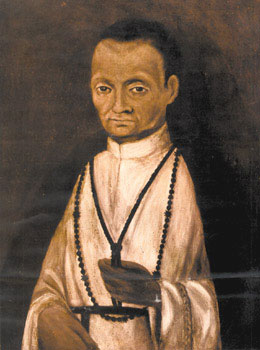
(1589-1649)
Saturday 7 November
John Christian Frederick Heyer (d. 1873)
Bartholomaeus Ziegenbalg (d. 1719)
Ludwig Nommensen (d. 1918), missionaries
On November 7, the ELCA remembers three Lutheran missionaries who carried the gospel far beyond their own homelands. Bartholomäus Ziegenbalg helped launch Lutheran mission work in India, John Christian Frederick Heyer became the first Lutheran missionary sent from North America, and Ludwig Ingwer Nommensen shared the faith among the Batak people of Sumatra, where the church continues to thrive today. Their stories remind us that the mission of the church has always reached across languages, cultures, and borders, trusting that God’s good news is for all people.
Going Beyond
Faithful Conversations:
“Luther’s Living Legacy”
Faithful Conversations — adult study at ELC — meets each Sunday from 11:00-11:45 in the church sanctuary.
We are in the midst of two-part exploration of Martin Luther — we had our first session on 1 November. Due to schedule conflicts, we will do our second session on 15 November.
David Brooks:
How to Know a Person

(b. 1961)
David Brooks is a journalist and longtime New York Times columnist who often writes about character, community, and the relationships that give life meaning. In How to Know a Person — a terrific book — he argues that one of the most important skills we can develop is learning to truly see and understand other people. Through practical advice and stories, Brooks encourages readers to listen more carefully, ask better questions, and build deeper connections in a culture where many people feel overlooked or alone. The book is ultimately a hopeful guide to becoming more attentive, empathetic, and human in our everyday relationships.
Listen to this short discussion of that here!
