Navigate Two Worlds
- Pentecost 7 Readings
- Five-Minute Homily
- Image of the Week
- Musical Reflection
- ELCA Commemorations
- Going Beyond
Welcome and Thanks for your Visit!
Two Worlds is a digital ministry space featuring the weekly Revised Common Lectionary readings and a brief homily, supported by images, music, and the ELCA’s weekly commemorations. The blog reflects ongoing dialogue with Pastor Jen Hatleli of ELC in Black River Falls and was first prompted by a 2023 Bible Study that set this work in motion. I do include links for further information, as noted. Images are primarily from Wikimedia Commons, and I utilize Co-Pilot for some research and editing.
Note: Image and lay-out tends to land better on a bigger screen.
Taking the Long View
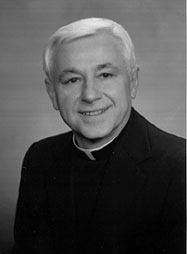
(1937-2004)
“It helps, now and then, to step back and take a long view. The kingdom is not only beyond our efforts, it is even beyond our vision. We accomplish in our lifetime only a tiny fraction of the magnificent enterprise that is God’s work. Nothing we do is complete, which is a way of saying that the Kingdom always lies beyond us. No statement says all that could be said. No prayer fully expresses our faith. No confession brings perfection. No pastoral visit brings wholeness. No program accomplishes the Church’s mission. No set of goals and objectives includes everything. This is what we are about.
We plant the seeds that one day will grow. We water seeds already planted, knowing that they hold future promise. We lay foundations that will need further development. We provide yeast that produces far beyond our capabilities. We cannot do everything, and there is a sense of liberation in realizing that. This enables us to do something, and to do it very well. It may be incomplete, but it is a beginning, a step along the way, an opportunity for the Lord’s grace to enter and do the rest. We may never see the end results, but that is the difference between the master builder and the worker. We are workers, not master builders; ministers, not messiahs. We are prophets of a future not our own.“
Source: Often called the “Romero Prayer,” this text actually comes from Fr. Ken Untener, who wrote it in 1979 for Cardinal John Dearden to use in a homily for deceased priests in Detroit. Its later association with Oscar Romero arose only through repeated misattribution, even though the themes resonate deeply with Romero’s witness.
For further background on the “Romero Prayer,” VISIT THIS WEBSITE.
Pentecost 7 Readings
Pentecost 7 (Year A)
First Reading:
Isaiah 55: 10-13
Psalm 65:(1-8) 9-13
Second Reading (Epistle)
Romans 8: 1-11
Gospel:
Matthew 13: 1-9, 18-23
Readings are Linked
Common Themes
The readings for Pentecost 7 gather around the promise that God’s word is both effective and life‑giving, accomplishing what God intends. Isaiah and the psalm celebrate a Creator whose generosity renews the earth, mirroring Jesus’ parable of the sower where the seed of the word takes root and bears fruit in receptive hearts. Paul’s assurance in Romans that the Spirit brings freedom and new life underscores this same movement from barrenness to flourishing. Together, the texts invite trust in God’s transforming work, which turns desolation into joy and cultivates lives shaped by the Spirit.
GIVE THIS A TRY!
The Four-Question Approach
What is something NEW you learned?
What is something that made you REFLECT?
What is something you can connect to PRIOR KNOWEDGE?
What is something you would like to FURTHER DISCUSS?
Five-Minute Homily
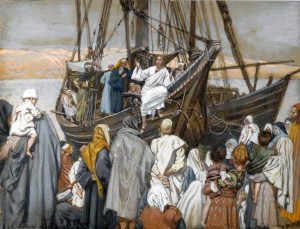
Stories sit at the center of our humanity. I learned that from my father, Thor — many called him by his nickname, “Unk” — who was both a storyteller and active listener. He used to say, “Everyone has a story to tell, and they’re just waiting for someone to take the time to listen.” In a polarized world, that simple truth still matters. We often stop listening long before we understand the stories of “the others” in our midst. Jesus understood the power of stories, which is why parables anchor his teaching. The Gospels record more than forty of them — short, vivid narratives that slip past argument and speak to the heart. Seven appear in all three Synoptic Gospels, including today’s parable of the sower. Matthew sets the scene: Jesus steps into a boat, pushes out from shore, and teaches the crowds lining the lake. From that floating pulpit he tells stories that reveal truth to those willing to hear and unsettle those convinced they already understand.
The parable itself is simple. The sower scatters seed everywhere — on the path where birds feast, on rocky ground where sprouts collapse, among thorns that choke, and finally into good soil that yields abundance. He knows all four outcomes, yet he scatters anyway. He doesn’t guard his supply or wait for perfect conditions. He gives freely, trusting the seed’s power. That is God’s love: abundant, unguarded, poured out in places we would never choose. Jesus embodies that same pattern, spending his ministry in thorny, rocky spaces — often among people dismissed as unlikely or unworthy. The sower’s radical generosity becomes our model: scatter love widely and trust God with the growth. Isaiah voiced the same truth centuries earlier: God’s word goes out like rain and snow, watering the earth and accomplishing its purpose. It does not return empty.
And that takes me back to the reflection offered by Fr. Ken Untener I cited earlier. His words remind us that our stories, our efforts, and our ministries unfold inside a much larger work of God. In Prophets of a Future Not Our Own, he insists that God’s purposes always exceed our vision. We plant seeds we may never see sprout. We build foundations others will complete. We offer small acts of grace that grow far beyond our reach. We are workers, not master builders; ministers, not messiahs. His reflection pairs perfectly with the parable of the sower: scatter love freely, listen deeply to the stories around you, and trust that God is already cultivating growth in places you cannot yet imagine.
Soli Deo Gloria.
The Bible Project (more information in “Going Beyond”) offers this fine video on how to read the parables of Jesus.
Image of the Week
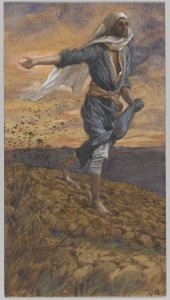
James Tissot (1836–1902) was a French artist who started out painting stylish Parisian life — lots of detail, lots of atmosphere. Later in life he had a deep religious turn and spent years traveling through the Middle East so he could paint the world of Jesus as accurately as possible. His biblical work has this documentary feel: careful textures, natural light, real landscapes and clothing.
The Sower fits that shift perfectly. Instead of an idealized figure, Tissot gives us a real farmer striding across rough ground, tossing seed with that practiced, sweeping motion. The scene feels dusty, sun‑soaked, and lived‑in. By grounding the parable in everyday labor, he helps us see the sower not as a symbol floating above real life, but as a flesh‑and‑blood picture of God’s generous, uncalculated grace.
Musical Reflection
Martin Luther wrote “Lord, Keep Us Steadfast in Your Word” in 1541, when the Reformation faced pressure from both the advancing Ottoman Empire and political forces within Europe. He first titled it “A Children’s Hymn to be Sung Against the Two Arch‑Enemies of Christ and His Holy Church,” a name that shows just how fiercely he believed the gospel needed protection in a volatile age (that title sounds so much like Luther!). The hymn calls on God to guard the church’s preaching and strengthen Christ’s people so the word can take root, grow, and bear fruit. In that way, it mirrors the Parable of the Sower: Luther urges the church to become good soil where God’s word can flourish despite every threat that tries to choke it out.
The version posted here makes me feel like I’m hearing it in the 16th Century! I hope you enjoy this interpretation.

(1483-1546)
The Quintessence Ensemble is made up of three sisters — Miriam, Hannah, and Abigail Cacciacarro — who perform together as a violin‑cello‑violin trio. Each brings a strong musical background shaped by years of study, performance, and advanced Royal Conservatory of Music training. Their playing reflects both technical discipline and a deep family connection, giving their ensemble a warm, unified sound. Together, they share a commitment to growing as musicians and bringing thoughtful, expressive chamber music to a wide range of audiences.
Visit the Quintessence Ensemble Website
Lyrics
1 Lord, keep us steadfast in your Word;
curb those who by deceit or sword
would seek to overthrow your Son
and to destroy what he has done.
2 Lord Jesus Christ, your pow’r make known,
for you are Lord of lords alone;
defend your Christendom that we
may sing your praise eternally.
3 O Comforter of priceless worth,
send peace and unity on earth;
support us in our final strife
and lead us out of death to life.
ELCA Commemorations
Note: The ELCA commemorates a wide range of Christians throughout the year as a way of remembering that God has worked through ordinary people in every age. These commemorations — drawn from Scripture, the early church, the Reformation, and more recent history — invite us to see faith lived out in many different vocations and cultures. They aren’t about elevating “heroes,” but about widening our sense of the communion of saints and letting their witness encourage our own. In marking these days, the church pauses to give thanks, to learn, and to be reminded that the Holy Spirit continues to shape faithful lives in every generation.
You will find the full listing of them in the front of the ELW. Explore any via the links provided.
Monday 6 July
Jan Hus, martryr
(d. 1415)
Saturday 11 July
Benedict of Nursia, Abbott of Monte Casino
(d. 540)
Sunday 12 July
Nathan Soderblom, Bishop of Uppsala
(d. 1931)
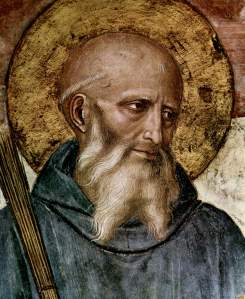
St. Benedict of Nursia (c. 480–547) shaped Western Christianity in ways still felt today. Born in central Italy, he left the chaos of Rome as a young man to seek a life of prayer and stability. What emerged from that search was the Rule of St. Benedict — a simple, practical guide for communal life built on prayer, work, humility, and hospitality. Benedict didn’t set out to found a movement, but his Rule became the backbone of Western monasticism for centuries. His legacy is steady and quiet: a vision of Christian life rooted in balance, community, and a deep trust that God meets us in ordinary rhythms of prayer and daily work.
Going Beyond
Explore Living Lutheran
Living Lutheran is the flagship magazine of the Evangelical Lutheran Church in America, offering stories, reflections, and reporting that explore how faith is lived out in daily life. It highlights the people, ministries, and global connections of the ELCA while engaging readers with thoughtful articles on theology, discipleship, justice, and contemporary issues. Designed to inform and inspire, the magazine serves as a gathering place for the diverse voices and experiences that shape Lutheran life today.
Visit the Living Lutheran Magazine Website
If you are seeking a church home or want to participate in our weekly on-line worship, subscribe to our YouTube Channel. All are welcome!
The Bible Project
The Bible Project is a nonprofit, crowdfunded organization founded by Tim Mackie (a biblical scholar) and Jon Collins (a filmmaker) to help people experience the Bible as a unified story that leads to Jesus. They produce short animated videos, podcasts, reading plans, and theme-based studies that explain biblical books, literary design, and major theological ideas in accessible, visual ways. You can use their resources alongside your own reading—watch a video before starting a new book, follow one of their reading plans, or explore a theme series to deepen understanding. Everything is free and designed to support both individual study and group learning.
