Navigate the Blog Here
Two Worlds is a digital ministry space that shares the RCL readings, a brief homily, and supporting images, music, and ELCA commemorations. The blog is authored by Paul Rykken in consultation with Pastor Jen Hatleli of Evangelical Lutheran Church in Black River Falls, Wisconsin (ELCA). The blog lands more naturally on a larger screen. Also, hyperlinks are included for further information — they are bolded and italicized.
The Wisdom of Evelyn Underhill
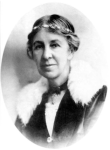
“We are the agents of the Creative Spirit in this world. Real advance in the spiritual life, then, means accepting this vocation with all it involves. Not merely turning over the pages of an engineering magazine and enjoying the pictures, but putting on overalls and getting on with the job. The real spiritual life must be horizontal as well as vertical; spread more and more as well as aspire more and more.”
From The Spiritual Life (2013)
Readings for All Saints Day
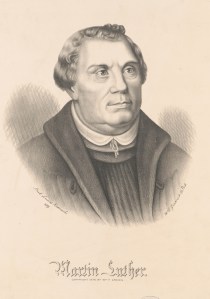
Luther and the lectio divina
Luther’s approach to lectio divina grows out of the Augustinian conviction that Scripture is understood only through the illumination of the Holy Spirit, received in humble prayer. In the monastic tradition, lectio divina developed as a four‑step path — reading, meditation, prayer, and contemplation — aimed at drawing the believer into quiet union with God. Luther retained the early Augustinian emphasis on oratio and meditatio, but he reshaped the practice by replacing contemplatio with tentatio, the spiritual struggle that arises when God’s Word confronts human weakness. For Luther, this struggle is not a distraction from devotion but the very arena in which the Word becomes alive and formative. His adaptation transforms lectio divina from a contemplative ascent into a cross‑shaped encounter where Scripture, prayer, and trial work together to shape faith.
Revelation 7: 9-17
Psalm 34: 1-10, 22
1 John 3: 1-3
Matthew 5: 1-12
Readings are Linked
Common Themes/ Connections
The readings for All Saints Day trace a single arc of hope grounded in God’s claim on a people who are both comforted in the present and promised a transformed future. Revelation offers a vision of a countless, multi‑ethnic multitude gathered in God’s presence, their suffering ended and their identity secured. Psalm 34 echoes that assurance by portraying God as the one who hears, delivers, and shelters the righteous in every trouble. First John deepens the theme by naming believers as God’s children now, even as they await the fuller revelation of what they will become. In Matthew’s Beatitudes, Jesus blesses the poor, the grieving, and the persecuted, declaring that God’s favor rests precisely on those who seem least powerful. Together, these texts affirm that the saints –past, present, and future — are defined not by perfection but by God’s steadfast care, their hope rooted in a promised joy that outlasts every trial.
Note: Next Sunday provides an example of how the ELCA and other churches that trace their heritage to the Protestant Reformation utilize different texts than those prescribed by the Revised Common Lectionary. Recall that the RCL is a guideline for churches, not a mandate, as such. For example, there is also something called the “Narrative Lectionary” and various preaching series that offer alternative texts (sidebar: the same can be said of the various liturgies available to us in the ELW).
Image of the Week
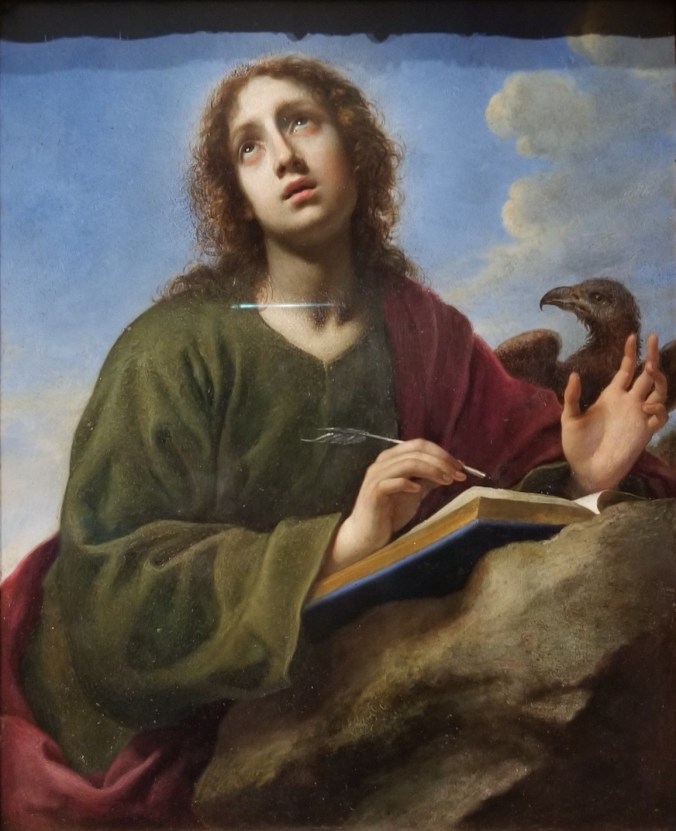
Italian Artist Carlo Dolci (1616-1686)
This painting shows Saint John the Evangelist in the act of writing the Book of Revelation after receiving a vision from God. Carlo Dolci captures the moment with great emotion, showing John looking upward in awe and inspiration as he records what he sees. The painting’s calm beauty, rich colors, and fine detail draw the viewer into a quiet moment of reflection and faith. Dolci, a Florentine artist known for his deeply religious subjects, was one of the most admired painters of seventeenth-century Italy. His work was especially valued for its delicate craftsmanship and spiritual intensity, qualities that are clearly evident in this moving portrayal of John receiving divine inspiration.
Five-Minute Homily: All Saints Day
Title: Simul Justus et Peccator: Both Saint and Sinner
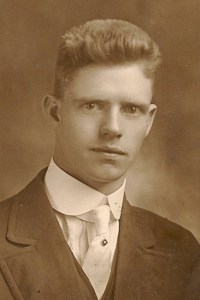
(1897-1945)
In his commentary on Romans, his favorite book of the Bible, Martin Luther articulated one of Lutheranism’s central convictions: in the Christian life, we are both sinner and saint. Writing and lecturing in Latin, Luther expressed it this way: simul justus et peccator; at once righteous and sinner. The readings appointed for this Sunday invite us to return to this bedrock truth. As I read today’s passage from Revelation, especially verses 13-14, I found myself thinking of one of the saints who shaped my own story: my grandfather, Thorvald Melvin Rykken. Let me explain.
Born in 1897 to Norwegian immigrant parents, TM attended Augsburg College in Minneapolis and then Luther Seminary in St. Paul. After his ordination, he spent eleven years as a mission pastor at Bethany Indian Mission in Wittenberg, Wisconsin, ministering among Ho-Chunk, Oneida, Menominee, Mohican, and other Native communities. In 1930, the Rykken family moved to Petersburg, North Dakota, where he served a cluster of parishes until his untimely death in 1945 at the age of forty-eight.
Although he died twelve years before I was born, my grandfather has never been absent from my life. During World War II, my father, Thorwald Ansgar Rykken, lost his role model while serving in the Italian Theater. The news of his father’s death reached him eight days after the funeral. That wound never fully healed. Perhaps because of that loss, he spent years introducing his “Pop” to me and my sisters through stories, photographs, and vivid impressions. Through those stories, I came to know something of the man. He was a maverick. He loved baseball. He laughed loudly and often. He was intensely patriotic, fiercely driven, and deeply committed to his calling. One story surfaced again and again. TM’s favorite poem, my father said, was Vachel Lindsay’s General William Booth Enters Heaven. He often quoted it and returned to it. The poem imagines the founder of the Salvation Army, that unconventional evangelist William Booth, standing at last before Jesus Christ. That glimpse into the imagination of the grandfather I never knew captivated me. Why did this poem matter so much to him? What did he see in Booth’s journey into heaven? The more I wondered, the more fascinated I became. Here is the poem.
I
Booth led boldly with his big bass drum —
(Are you washed in the blood of the Lamb?)
The Saints smiled gravely and they said: “He’s come.”
(Are you washed in the blood of the Lamb?)
Walking lepers followed, rank on rank,
Lurching bravoes from the ditches dank,
Drabs from the alleyways and drug fiends pale —
Minds still passion-ridden, soul-powers frail: —
Vermin-eaten saints with mouldy breath,
Unwashed legions with the ways of Death —
(Are you washed in the blood of the Lamb?)
Every slum had sent its half-a-score
The round world over. (Booth had groaned for more.)
Every banner that the wide world flies
Bloomed with glory and transcendent dyes.
Big-voiced lasses made their banjos bang,
Tranced, fanatical they shrieked and sang: —
“Are you washed in the blood of the Lamb?”
Hallelujah! It was queer to see
Bull-necked convicts with that land make free.
Loons with trumpets blowed a blare, blare, blare
On, on upward thro’ the golden air!
(Are you washed in the blood of the Lamb?)
II
Booth died blind and still by Faith he trod,
Eyes still dazzled by the ways of God.
Booth led boldly, and he looked the chief
Eagle countenance in sharp relief,
Beard a-flying, air of high command
Unabated in that holy land.
Jesus came from out the court-house door,
Stretched his hands above the passing poor.
Booth saw not, but led his queer ones there
Round and round the mighty court-house square.
Then in an instant all that blear review
Marched on spotless, clad in raiment new.
The lame were straightened, withered limbs uncurled
And blind eyes opened on a new, sweet world.
Drabs and vixens in a flash made whole!
Gone was the weasel-head, the snout, the jowl!
Sages and sibyls now, and athletes clean,
Rulers of empires, and of forests green!
The hosts were sandalled, and their wings were fire!
(Are you washed in the blood of the Lamb?)
But their noise played havoc with the angel-choir.
(Are you washed in the blood of the Lamb?)
O shout Salvation! It was good to see
Kings and Princes by the Lamb set free.
The banjos rattled and the tambourines
Jing-jing-jingled in the hands of Queens.
And when Booth halted by the curb for prayer
He saw his Master thro’ the flag-filled air.
Christ came gently with a robe and crown
For Booth the soldier, while the throng knelt down.
He saw King Jesus. They were face to face,
And he knelt a-weeping in that holy place.
Are you washed in the blood of the Lamb?
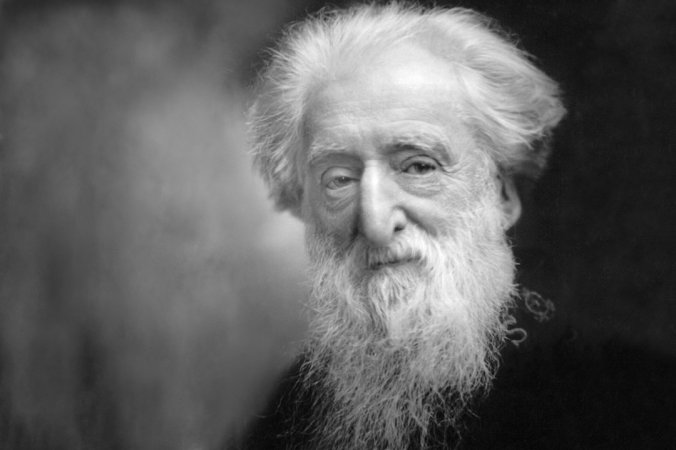
Founder of the Salvation Army
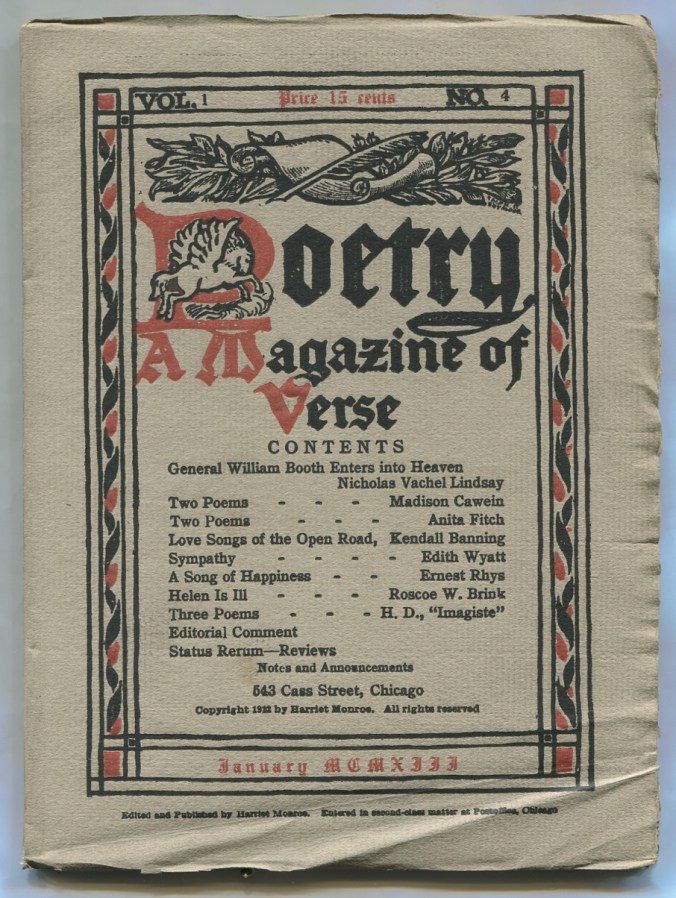
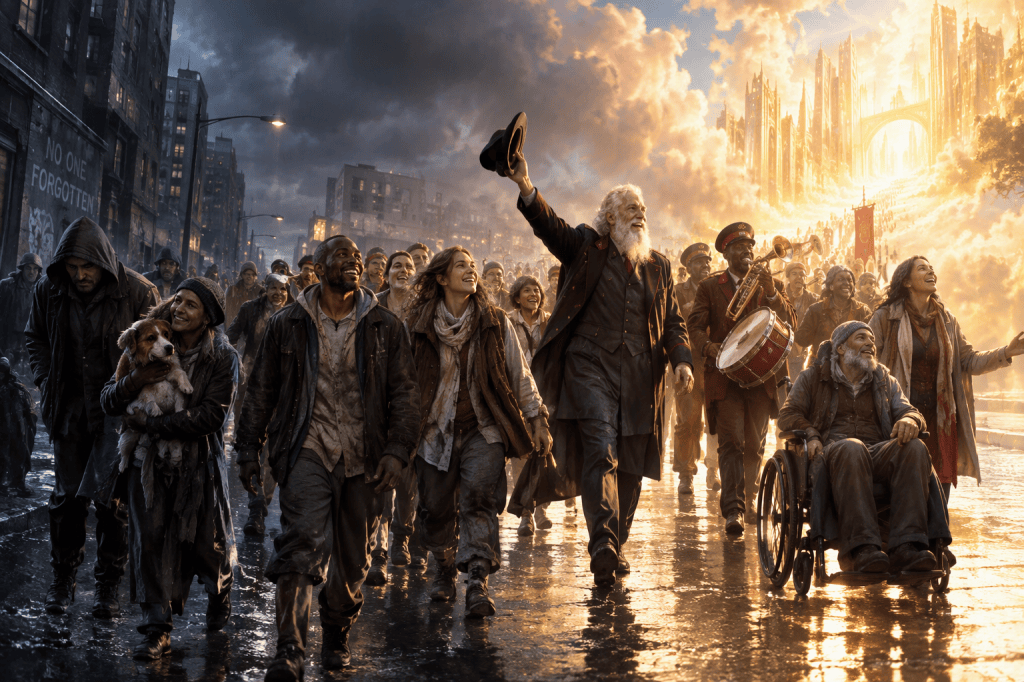
What to make of this poem? Clearly inspired by Booth’s recent death (1912), Lindsay anchors his poem in the 7th Chapter of Revelation and the Social Gospel Movement of the early 20th Century. And though written over a century ago, the rhythmic description of Booth and his band of broken souls entering heaven has a modern ring to it. My grandfather’s fascination with it helps me understand what drove him to mission work.
Finally, I suspect most of us have tried to imagine our future journey into the afterlife, the great mystery. The authors of Revelation and 1 John certainly did. Will we meet those saints that have gone before us there, in that place where “God will wipe away every tear” from our eyes . . . “where we will be like him, for we will see him as he is?” This remains our redeeming, liberating, and powerful hope! May we boldly share this message of salvation!
Soli Deo Gloria!
Musical Reflection: For All The Saints
Written in 1864 by Anglican priest and later bishop William Walsham How, For All the Saints was composed as a processional hymn for All Saints’ Day, celebrating the communion of saints across the ages. Rather than focusing only on the great heroes of the faith, the text honors all Christians who have faithfully run the race before us and now rest in God’s care. The hymn gained its enduring popularity when English composer Ralph Vaughan Williams paired it in 1906 with his majestic tune Sine Nomine (“without name”), written for The English Hymnal. The soaring melody, especially its triumphant “Alleluia” refrain, captures the hymn’s central vision: the Church on earth joined with the Church in heaven, all gathered around the victory of Christ. Today, For All the Saints remains one of the most beloved and powerful hymns for All Saints’ Day and Christian funerals alike, proclaiming that the faithful departed still belong to the one communion of saints.
The version offered here differs from the one included in the ELW (hymn 422). Sit back and enjoy this powerful hymn by this young men’s choir from Ghana in Africa.
Founded in 1876 in Cape Coast, Ghana, Mfantsipim School is a historic Methodist boys’ secondary school and is widely recognized as the first secondary school established in what was then the Gold Coast. Guided by a vision of academic excellence and character formation, the school has long played an important role in educating generations of leaders in Ghana and beyond. Commonly known as “Kwabotwe” after the hill on which its campus sits, Mfantsipim combines a strong academic tradition with a commitment to Christian values, service, and personal discipline, making it one of Ghana’s most respected and influential educational institutions.
Lyrics
For all the saints, who from their labors rest,
who thee by faith before the world confessed,
thy Name, O Jesus, be forever blessed.
Alleluia, Alleluia!
Thou wast their Rock, their Fortress and their Might;
thou, Lord, their Captain in the well fought fight;
thou, in the darkness drear, their one true Light.
Alleluia, Alleluia!
O may thy soldiers, faithful, true, and bold,
fight as the saints who nobly fought of old,
and win, with them the victor’s crown of gold.
Alleluia, Alleluia!
O blest communion, fellowship divine!
we feebly struggle, they in glory shine;
all are one in thee, for all are thine.1
Alleluia, Alleluia!
And when the strife is fierce, the warfare long,
steals on the ear the distant triumph song,
and hearts are brave, again, and arms are strong.
Alleluia, Alleluia!
The golden evening brightens in the west;
soon, soon to faithful warriors comes their rest;
sweet is the calm of paradise the blessed.
Alleluia, Alleluia!
But lo! there breaks a yet more glorious day;
the saints triumphant rise in bright array;
the King of glory passes on his way.
Alleluia, Alleluia!
From earth’s wide bounds, from ocean’s farthest coast,
through gates of pearl streams in the countless host,
and singing to Father, Son and Holy Ghost:
Alleluia, Alleluia!
Who Are We Commemorating This Week?
Note: The ELCA commemorates a wide range of Christians throughout the year as a way of remembering that God has worked through ordinary people in every age. These commemorations — drawn from Scripture, the early church, the Reformation, and more recent history — invite us to see faith lived out in many different vocations and cultures. They aren’t about elevating “heroes,” but about widening our sense of the communion of saints and letting their witness encourage our own. In marking these days, the church pauses to give thanks, to learn, and to be reminded that the Holy Spirit continues to shape faithful lives in every generation.
We have one commemoration this week. You will find the full listing of them in the front of the ELW.
Allhallowtide and Reformation Day
Each time we say the Lord’s Prayer and utter the phrase, “Hallowed be Thy Name,” we are referencing a word of Old English origin, meaning “to make holy.” Three days this week, collectively known as Allhallowtide, have deep roots in Christian history: All Hallows’ Eve (commonly referred to as Halloween), All Hallows’ (or All Saints) Day, and All Souls’ Day.
Those of us who share Lutheran heritage, of course, also recognize October 31st as the date in 1517 that Martin Luther posted his famous 95 Theses on that church door in Wittenberg, igniting a discussion that continues 509 years on. Some have long speculated that Luther chose that day because it would catch the attention of the common folk on the eve of All Saints’ Day, a day set aside to pray for those great examples of faith who have journeyed before us to our heavenly home. Though not verifiable, it is certain that Luther, an Augustinian monk, would have been well aware of the 8th Century origins of All Saints’ Day within the Catholic tradition. That said, isn’t it fascinating (and perhaps a bit troubling) that Halloween in 2026 is primarily a secular holiday, an evolution with a long and winding history? And, is it just me, or has Halloween grown exponentially in recent years, compared to my memories of it from childhood? As often happens, the origins get lost in the mists of time.
Week of 26 October
Monday 26 October
Philipp Nicolai (d. 1608);
Johann Heermann (d. 1647);
Paul Gerhardt (d. 1676; hymnwriters
Wednesday 28 October
SIMON AND JUDE, APOSTLES
Saturday 31 October
REFORMATION DAY
Going Beyond
Faithful Conversations:
Martin Luther and the Protestant Reformation
Would you like to brush up on your understanding of Martin Luther and the Protestant Reformation? Join Faithful Conversations for a two-session exploration of this pivotal movement in Christian history and the faith convictions that shaped it. No prior knowledge is necessary. I will lead the sessions on November 1 and November 8 in the ELC church sanctuary. Come learn, ask questions, and engage in thoughtful conversation as we reflect on the legacy of the Reformation and its continuing impact on the church today.
Check Out This Article from
The Christian Century

In Letting the Bible Read Us, Jennifer Kaalund argues that the greatest challenge in reading scripture is our tendency to make it support what we already believe rather than allowing it to challenge and transform us. Using examples from Thomas Jefferson, Frederick Douglass, Sojourner Truth, and Abraham Lincoln, she shows how the Bible can either be manipulated to reinforce personal and national agendas or used as a prophetic voice that exposes hypocrisy, calls for justice, and encourages humility. Her central question is whether we will continue to reshape scripture to fit our preferences or allow scripture to “read” us, revealing our blind spots and inviting us to become more faithful, just, and compassionate people.
