Where Are We in the Lectionary Calendar?
The Easter season now gives way to Pentecost, a moment rooted in our shared Judeo‑Christian story. In Judaism, Pentecost marked the Festival of Weeks — fifty days after Passover — celebrating the wheat harvest and God’s gift of the Torah. For Christians, Acts 2 turns that same fiftieth day into the Spirit’s arrival, when Jesus’ followers stepped into public witness and the Church took shape. That history still matters as we enter the Season of Pentecost, or Ordinary Time, which stretches across the entire second half of the Lectionary year until Advent begins Year B. This long green season focuses on growth, mission, and the Spirit‑shaped life of the church, and nearly every Sunday will draw us into Matthew’s Gospel, sharpening how we hear Jesus’ teaching and how we imagine discipleship in the world.
Thanks for your visit!
Two Worlds is a digital ministry space where I share the weekly Revised Common Lectionary readings and a brief homily with supporting images and music. As a nod to our history, I also include the ELCA’s commemorations for the week. Most images come from Wikimedia Commons, and I utilize Copilot for some aspects of the research and writing.
The project grows out of ongoing conversation with Pastor Jen Hatleli of ELC in Black River Falls — a dialogue first sparked by a 2023 Bible Study that set this whole thing in motion.
This Week’s Readings (Linked) and Themes
The Day of Pentecost
Acts 2: 1-21
Psalm 104: 24-34, 35b
1 Corinthians 12: 3b-13
John 20: 19-23
The readings for Pentecost all point to the Spirit breaking in and creating new life. Acts shows the Spirit empowering ordinary people to speak with courage, while Psalm 104 celebrates the Spirit as the breath that renews all creation. Paul reminds the Corinthians that this same Spirit binds diverse people into one body and equips them with gifts for the common good. In John’s Gospel, the risen Jesus breathes peace on his disciples and sends them into the world with Spirit‑given purpose. Together, these texts paint a picture of a church born in power, united in diversity, and sent out to embody God’s renewing work.
Luther’s Explanation of the Third Article
“I believe that I cannot by my own reason or strength believe in Jesus Christ, my Lord, or come to Him; but the Holy Spirit has called me by the Gospel, enlightened me with His gifts, sanctified and kept me in the true faith. In the same way, He calls, gathers, enlightens, and sanctifies the whole Christian church on earth, and keeps it with Jesus Christ in the one true faith. In this Christian church, He daily and richly forgives all my sins and the sins of all believers. On the Last Day, He will raise me and all the dead, and give eternal life to me and all believers in Christ. This is most certainly true.”

(1483-1546)
Three-Minute Homily: “Wind, Fire, and a Faith That Moves”
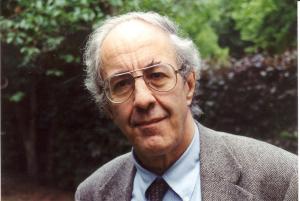
Henri Nouwen
(1932-1996)
“Without Pentecost, the Christ‑event—the life, death, and resurrection of Jesus—remains imprisoned in history as something to remember, think about, and reflect on. The Spirit of Jesus comes to dwell within us, so that we can become living Christs here and now.” (Henri Nouwen)
Nouwen’s words set the tone for this week’s readings and raise a fair question: do we give Pentecost the attention it deserves? Its roots reach back to the Jewish Festival of Weeks, fifty days after Passover, when pilgrims gathered in Jerusalem to give thanks for the wheat harvest. Coming ten days after the Ascension, Acts 2 places the disciples right in the middle of that festival — fearful, waiting, and then suddenly swept up in wind and fire as the Spirit pushes them into public witness. Their unexpected chorus of languages amazes and confuses the crowd until Peter steps forward with Joel’s promise and calls his listeners into a new life shaped by the risen Christ.
Pentecost matters because it fulfills Jesus’ promise of the Spirit — the One who calls, enlightens, and sustains us in faith. Every time we confess the Third Article of the Creed, we’re naming that dependence, and Luther reminds us that even faith itself is Spirit‑given, not self‑generated (note the Third Article reference above). Pentecost also announces that the Spirit breaks down the barriers we build — barriers of race, gender, culture, religion, and politics. The multilingual moment in Acts 2 makes that truth unmistakable: God pours out the Spirit on all flesh. The Spirit equips us to meet the world’s pain with courage, compassion, and hope.
Paul’s words in 1 Corinthians add one more layer: the Spirit shows up in countless ways, often quietly, often where we least expect it. Our task is to stay open, to look for those nudges, especially when they lead us beyond our comfort zones. God’s love holds us through every season, stronger than anything life can send our way. And in Nouwen’s language, Pentecost invites us to become “living Christs” here and now. Happy Pentecost, fellow travelers!
Soli Deo Gloria!
Image of the Week: St. Peter Preaching at Pentecost
“St. Peter Preaching at Pentecost,” painted by Benjamin West in 1785, captures the moment in Acts 2 when Peter steps forward to address the crowd after the coming of the Holy Spirit. West — raised in a devout Quaker family and later a central figure in British art and a founder of the Royal Academy — uses dramatic lighting and classical architecture to heighten the scene’s spiritual intensity. He places Peter at the center, raised above a diverse gathering whose faces register awe, curiosity, and conviction. The balanced, orderly composition reflects West’s Neoclassical style and his gift for turning biblical narratives into grand historical drama. The painting underscores Pentecost as the Church’s first public proclamation, a moment of Spirit‑driven clarity and courage.

Musical Meditation: “This Is My Song”
For the next several weeks, I plan to feature music drawn, in part, from the National Songs section of Evangelical Lutheran Worship (Hymns 887–893). As we approach the 250th anniversary of the Declaration of Independence, this feels like a fitting season to pause, listen, and reflect on our nation’s story—its beauty, its complexity, and the ongoing work of shaping a more just and generous common life. These hymns give us a way to hold together gratitude for our homeland with a wider, prayerful awareness of the world God loves.
This Is My Song is a perfect place to begin. It weaves together the work of two writers separated by a generation but united in their longing for peace. The first two stanzas were written in 1934 by Lloyd Stone, who set his gentle, interwar poem to Jean Sibelius’s Finlandia melody as a reminder that love for one’s homeland can stand alongside respect for the hopes and dreams of people in every nation. Several decades later, in the early 1960s, theologian Georgia Harkness contributed a third stanza that broadened the hymn into a prayer for global justice, freedom, and reconciliation. Together, these verses form a moving affirmation that the desire for peace is shared across borders and that God’s care embraces every land and every people.
Voices of Concinnity is a professional chamber ensemble based in Connecticut and known for its luminous blend, expressive clarity, and imaginative programming. Founded in 2018 under the direction of Sarah Kaufold, the ensemble is part of the Consonare Choral Community, an organization committed to expanding access to high‑quality choral artistry. Concinnity’s work spans early music to contemporary compositions, with a particular dedication to living composers and historically underrepresented voices. Their performances have earned national recognition for both musical excellence and artistic vision, offering audiences choral singing that is intimate, finely crafted, and deeply human.
Find Out More Here!
Lyrics
This is my song, Oh God of all the nations,
A song of peace for lands afar and mine.
This is my home, the country where my heart is;
Here are my hopes, my dreams, my sacred shrine.
But other hearts in other lands are beating.
With hopes and dreams as true and high as mine.
My country’s skies are bluer than the ocean,
And sunlight beams on cloverleaf and pine.
But other lands have sunlight too and clover,
And skies are everywhere as blue as mine.
O hear my song, Oh God of all the nations,
A song of peace for their land and for mine.
May truth and freedom come to every nation
May peace abound where strife as raged so long
That each may seek to love and build together
A world united, righting every wrong.
A world united in its love for freedom,
Proclaiming peace together in one song
ELCA Commemorations This Week
Note: The ELCA commemorates a wide range of Christians throughout the year as a way of remembering that God has worked through ordinary people in every age. These commemorations—drawn from Scripture, the early church, the Reformation, and more recent history—invite us to see faith lived out in many different vocations and cultures. They aren’t about elevating “heroes,” but about widening our sense of the communion of saints and letting their witness encourage our own. In marking these days, the church pauses to give thanks, to learn, and to be reminded that the Holy Spirit continues to shape faithful lives in every generation. You will find the full listing of them in the front of the ELW.
Monday 18 May
Erik, King of Sweden, martryr (d. 1160)
Thursday 21 May
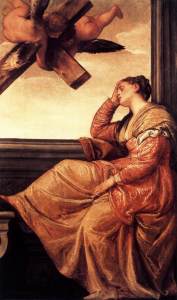
Helena, mother of Constantine (c. 330)
Sunday 24 May
Nicolaus Copernicus (d.1543), Leonhard Euler (d. 1783); scientists
Explore each by following the link!
Going Beyond: Digital Ministry and Recommendation
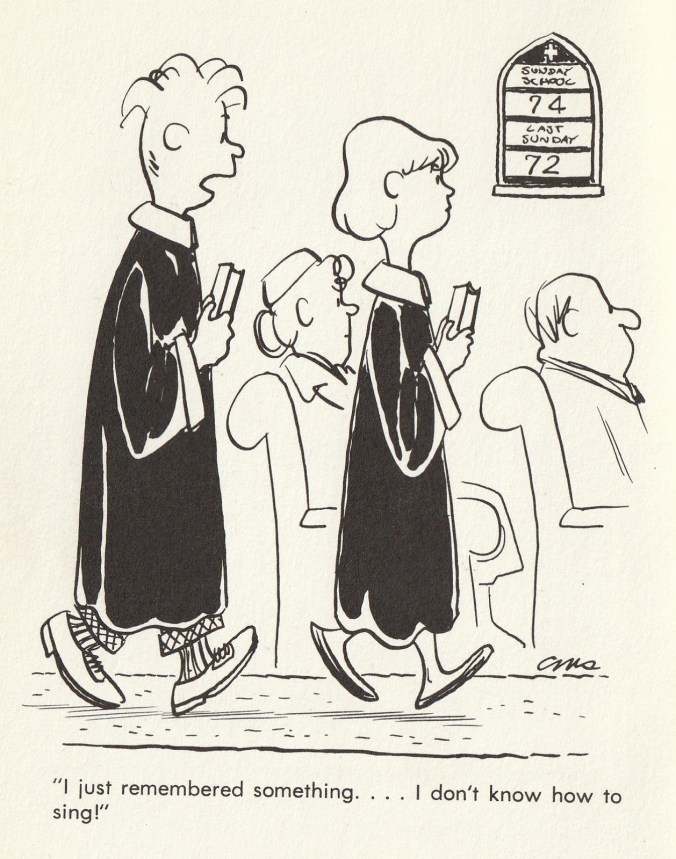
Our in-person Lectionary Discussion Group at ELC will be taking a pause from Memorial Day through Labor Day.
We will use this time to formulate adult education experiences for the fall of 2026 and beyond. Look for further adult education announcements throughout the summer.
by Charles Schultz
Book Recommendation
Tish Harrison Warren’s newest book, What Grows in Weary Lands: on Christian Resilience, reflects on how Christian hope takes root precisely in seasons of exhaustion, disorientation, and cultural fracture. The book ultimately invites readers to trust that even in weary lands, grace is quietly at work, preparing the soil for new growth.
Warren is an Anglican Priest who lives in Austin, Texas.