Thanks for your Visit!
Two Worlds is a digital ministry space featuring the weekly Revised Common Lectionary readings and a brief homily, supported by images, music, and the ELCA’s weekly commemorations. The blog is part of the adult education program at ELC in Black River Falls, Wisconsin.
Note: Image and lay-out tends to land better on a bigger screen.
DISCERNMENT
“Each individual Christian and each community of Christians has a unique call. Everybody can’t do everything. You get out and do what the gospel is saying… There are some people who go to prison, who develop a whole nonviolent strategy around that. There are people who live very simple lives of prayer. Some live in monasteries, some as hermits, some in families. There are doctors and lawyers who live as witnesses. There are people who use their wealth to bring about things that otherwise wouldn’t be possible. We have to get in touch with what is our unique vocation, to be a sign of hope in the world without being fanatical and thinking that everyone should do what we do. I need to trust that God will do God’s work through me if I am faithful to my vocation.“
Henri Nouwen
The Road to Peace (1998)
Navigate the Blog Here
- Pentecost 9 Readings
- Five-Minute Homily
- Image of the Week
- Musical Reflection
- ELCA Commemorations
- Going Beyond
Note: You may listen to this week’s homily — note the link below the heading.
Pentecost 9 Readings
What is the Revised Common Lectionary?
The Revised Common Lectionary grew out of late‑20th‑century ecumenical work, especially the Consultation on Common Texts, which wanted churches to share a common, three‑year rhythm of Scripture shaped by the seasons of the church year. We are currently in Ordinary Time, the longest season of the church year. There are 25 Sundays between Pentecost and Christ the King Sunday, the final Sunday on the church calendar (this year on 22 November).
The weekly readings are meant to speak to one another: the Old Testament reading sets the theme, the psalm responds to that reading, the epistle widens the theological frame, and the Gospel anchors the day. Watch for that as you work your way through the four readings this week.
Pentecost 9 (Year A)
First Reading:
1 Kings 3: 5-12
Psalm 119: 129-136
Second Reading (Epistle)
Romans 8: 26-39
Gospel:
Matthew 13: 31-33, 44-52
Readings are Linked
Common Themes This Week
All four readings this week highlight discernment — the ability to recognize God’s presence and choose wisely in response. Solomon asks for wisdom to govern well, the psalmist celebrates God’s word as the light that guides human choices, and Paul reminds us that the Spirit intercedes when we don’t know how to pray or act. Jesus’ parables reinforce that God’s kingdom often begins small but grows into something life‑changing, and that discerning its value leads people to give up lesser things for what truly matters. Together, these texts invite us to trust God’s guidance, seek wisdom, and recognize the quiet but powerful ways God’s kingdom takes root in our lives.
Five-Minute Homily
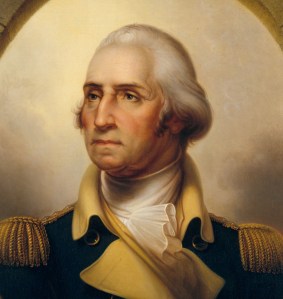
Rembrandt Peale (1778–1860)
Discernment and its connection to leadership has been on my mind this week. Years back, I had the remarkable opportunity to spend a week in a seminar with historian Gordon Wood, one of the leading experts on the Revolution and early Republic. He suggested to us that the most important moment in George Washington’s career came at the end of the Revolutionary War — the day the commanding general and future President gave up power. In the Western world of the late eighteenth century, victorious generals usually moved in the opposite direction. Europe was crowded with monarchs, and within a generation Napoleon would seize control of France. Against that backdrop, Washington’s decision was startling. He could have seized power: the army trusted him, the public revered him, and many assumed he might become a kind of American monarch. Instead, in December of 1783, he walked into the chamber of Congress, surrendered his commission, and returned home to Mount Vernon. As he put it, “Having now finished the work assigned me, I retire from the great theatre of action; and… take my leave of all the employments of public life.” Like all leaders, Washington was complicated — and flawed. He owned enslaved people, and his ruthless policies toward Indigenous nations left deep wounds that remain part of our historical record.** Yet his decision to relinquish power still stands as a moment of discernment: a leader reading the times, recognizing his limits, and choosing restraint for the sake of the republic’s future.

Washington’s story prompts me to think about the centrality of decision‑making in our lives — and about the kind of discernment we should expect from our leaders when we choose them. The word discernment comes from the Latin discernere — to separate, to sift, to judge. It’s not a flashy skill, and it’s not always common among leaders. Discernment requires humility, the willingness to admit limits, and the courage to ask for guidance. This week’s readings from 1 Kings and Romans echo that same need. In 1 Kings, young Solomon has his “dream conversation” with God, and what he asks for is not wealth, not victory, not a long life — but discernment. He knows leadership demands more than ambition or strength; it requires the ability to distinguish wisely, to judge faithfully, to see clearly. That’s remarkable maturity for someone so young, especially given the complicated backstory of his family and the weight of the throne he inherited. His request pleases God precisely because it comes from humility — a recognition that he cannot lead well on his own. The Apostle Paul echoes this same dependence in Romans. He knows we often face decisions that leave us baffled, moments when we don’t even know how to pray or what to ask for. His reassurance is that the Spirit intercedes for us — that God meets us in our uncertainty and helps us carry what we cannot carry alone. And then he gives one of Scripture’s strongest promises: that all things work together for good for those who love God, and that nothing can separate us from the love of God in Christ Jesus.
Washington’s humility, Solomon’s request for discernment, and Paul’s assurance of God’s steadfast love all point toward the same truth: wise decisions grow out of a deep trust in God. Discernment is not only a quality we should seek in our leaders; it is a practice we cultivate in our own lives. When we face choices that matter — in our families, our work, our communities — we are invited to adopt that same posture of humility and dependence, trusting the Spirit to guide, steady, and shape us.
Soli Deo Gloria.
** Washington’s extensive relationship with Indigenous people is explored in Colin Calloway’s 2018 book, The Indian World of George Washington.
Image of the Week
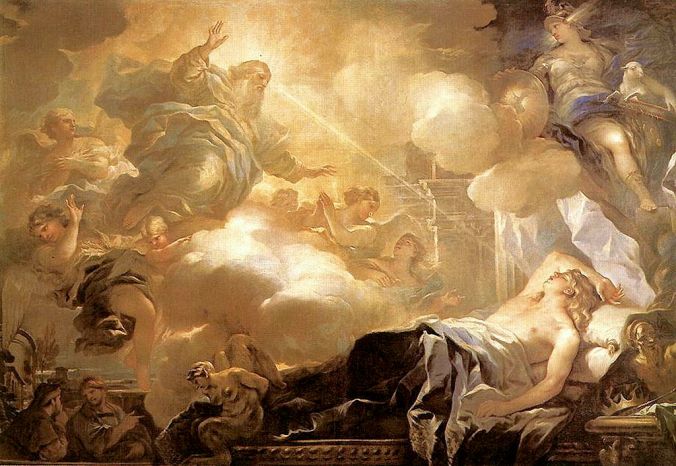
Luca Giordano (1634-1705) was a fast, confident painter from Naples — so quick, in fact, that people nicknamed him Luca fa presto (“Luca works fast”). In The Dream of Solomon, you can see that speed in the fluid brushwork, but the heart of the scene is quiet: Solomon pausing long enough to recognize that wisdom, not power, is the gift he truly needs. Giordano softens the moment with warm light and gentle movement, almost as if the angel is guiding Solomon toward a deeper kind of clarity. The painting becomes a visual lesson in discernment — the kind that shows up when a leader listens carefully and chooses the wiser path instead of the louder one.
Musical Reflection
“Be Thou My Vision” is rooted in an Old Irish prayer called Rop tú mo baile, traditionally linked to the 6th‑century poet St. Dallán Forgaill and often dated to the 8th century. The text survived in medieval manuscripts until 1905, when Mary Elizabeth Byrne translated it into English prose; a few years later, Eleanor Hull shaped that translation into the metered verses familiar today. Paired with the Irish folk tune Slane, the hymn carries the voice of early Celtic Christianity through the careful work of these two early‑20th‑century scholars. Its central petition — asking God to be our vision, wisdom, and true guide — echoes Solomon’s prayer in 1 Kings 3, where he seeks not power or long life but a discerning heart to lead God’s people faithfully. In singing this hymn, we join that ancient posture of humility, asking God to shape our sight and grant the wisdom needed for the work entrusted to us.
I hope you enjoy the jazz version of this familiar hymn as offered below!
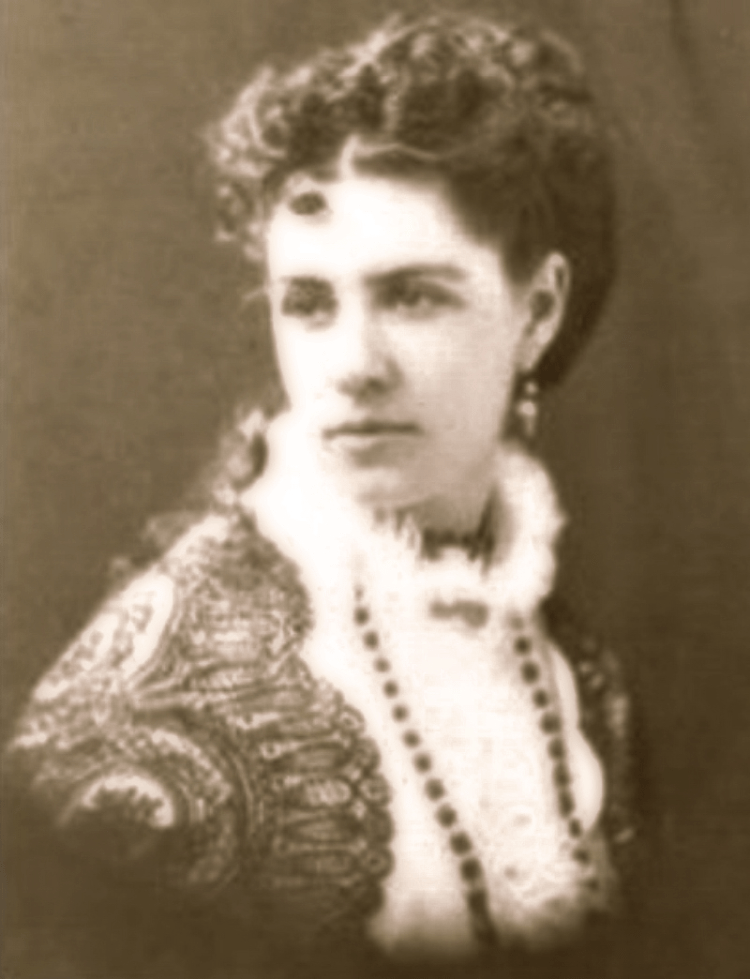
LYRICS
Be Thou my Vision, O Lord of my heart;
Naught be all else to me, save that Thou art;
Thou my best Thought, by day or by night,
Waking or sleeping, Thy presence my light.
Be Thou my Wisdom, and Thou my true Word;
I ever with Thee and Thou with me, Lord;
Thou my great Father, I Thy true son;
Thou in me dwelling, and I with Thee one.
Be Thou my battle Shield, Sword for the fight;
Be Thou my Dignity, Thou my Delight;
Thou my soul’s Shelter, Thou my high Tow’r:
Raise Thou me heav’nward, O Pow’r of my pow’r.
Riches I heed not, nor man’s empty praise,
Thou mine Inheritance, now and always:
Thou and Thou only, first in my heart,
High King of Heaven, my Treasure Thou art.
High King of Heaven, my victory won,
May I reach Heaven’s joys, O bright Heav’n’s Sun!
Heart of my own heart, whatever befall,
Still be my Vision, O Ruler of all.
Saint Dallán Forgaill was a 6th‑century Irish poet and scholar shaped by the vibrant monastic culture of early Celtic Christianity. Renowned for his mastery of Gaelic learning, he became one of Ireland’s most respected early saints. Tradition holds that he was killed when raiders attacked the monastery where he lived and worked. Later legend adds that his severed head was miraculously restored to his body, prompting the attackers to repent. His legacy endures through early Irish hagiographies and the lasting influence of his theological and poetic contributions.
Pamela York (born 1971) is a Canadian‑born jazz pianist who brings a warm, melodic touch to everything she plays. She grew up studying classical piano at the Royal Conservatory, later headed to Berklee for her bachelor’s degree, and finished a master’s in jazz at the University of Tennessee, where she worked closely with pianist and composer Donald Brown. York’s recordings—ranging from straight‑ahead jazz to beautifully reimagined hymns and spirituals—show off her knack for lyrical phrasing and a gentle, singer‑like sense of melody. Now based in San Diego, she performs widely and continues to carve out a thoughtful, expressive voice in the jazz world.
Visit Pamela’s Website
ELCA Commemorations
Note: The ELCA commemorates a wide range of Christians throughout the year as a way of remembering that God has worked through ordinary people in every age. These commemorations — drawn from Scripture, the early church, the Reformation, and more recent history — invite us to see faith lived out in many different vocations and cultures. They aren’t about elevating “heroes,” but about widening our sense of the communion of saints and letting their witness encourage our own. In marking these days, the church pauses to give thanks, to learn, and to be reminded that the Holy Spirit continues to shape faithful lives in every generation.
You will find the full listing of them in the front of the ELW. Explore this week’s commemorations via the links provided under the dates.
Wednesday 22 July
MARY MAGDALENE, APOSTLE
Thursday 23 July
Birgitta of Sweden, renewer of the church
Saturday 25 July
JAMES, APOSTLE
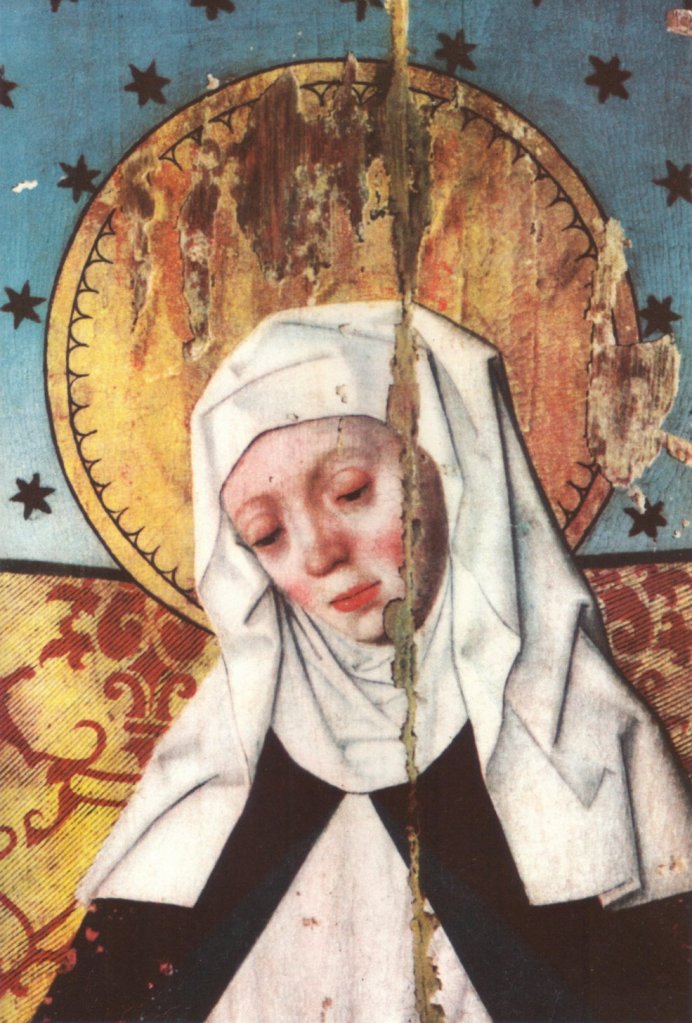
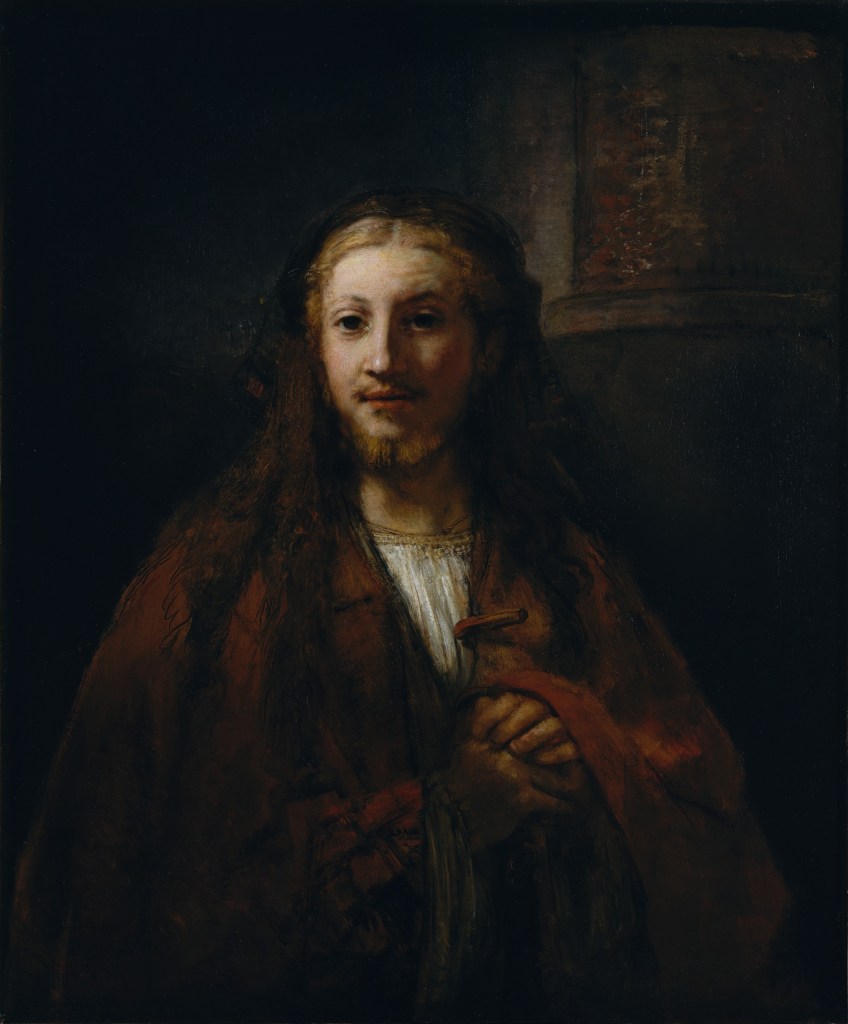
(Rembrandt)

Going Beyond
Explore Living Lutheran
Living Lutheran is the flagship magazine of the Evangelical Lutheran Church in America, offering stories, reflections, and reporting that explore how faith is lived out in daily life. It highlights the people, ministries, and global connections of the ELCA while engaging readers with thoughtful articles on theology, discipleship, justice, and contemporary issues. Designed to inform and inspire, the magazine serves as a gathering place for the diverse voices and experiences that shape Lutheran life today.
Visit the Living Lutheran Magazine Website
If you are seeking a church home or want to participate in our weekly on-line worship, subscribe to our YouTube Channel. All are welcome!
The Journal of Lutheran Ethics
The Journal of Lutheran Ethics is an online publication of the ELCA dedicated to exploring contemporary moral, social, and theological issues through a Lutheran lens. It features essays, case studies, and reflections from pastors, scholars, and practitioners engaged in ethical discernment. The journal aims to help readers think faithfully and critically about the challenges facing church and society. Designed as a resource for both leaders and congregations, it encourages thoughtful conversation grounded in Lutheran theology and public engagement.
Visit the JLE’s Website Here!
(note the podcasts)
