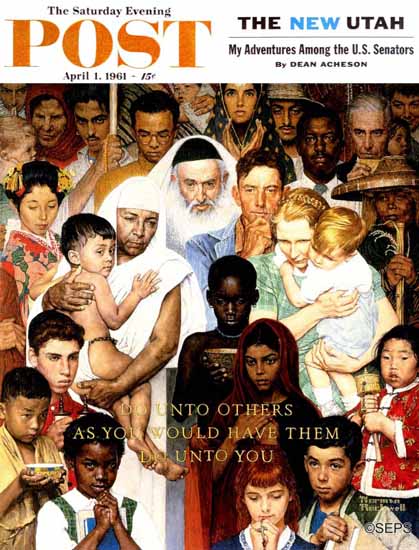
An Introductory Image
The artist Norman Rockwell had an uncanny ability to tap into so many facets of the American character, and that gift came to mind for me during the recent World Cup. Watching that swirl of flags, languages, and sheer human variety, I found myself thinking again of Rockwell’s Golden Rule cover from the April 1961 Saturday Evening Post — one of my all‑time favorites. Soccer really is the world’s game, and that global mix of faces feels like a living echo of Rockwell’s composition. He built the painting around the biblical line “Do unto others as you would have them do unto you,” drawn from Matthew 7:12 and Luke 6:31, then surrounded it with people of different cultures, ages, and backgrounds. The whole thing becomes a kind of visual chorus—ordinary folks gathered around a simple moral idea meant to bind us together. In the energy of the World Cup, with millions celebrating both their differences and their shared love of the sport, you can almost feel Rockwell’s message breathing again.
For further (and fascinating) background on Rockwell’s painting, visit this website.
Welcome and Thanks for your Visit This Week!
Two Worlds is a digital ministry space featuring the weekly Revised Common Lectionary readings and a brief homily, supported by images, music, and the ELCA’s weekly commemorations. The blog is part of the adult education program at ELC in Black River Falls, Wisconsin. Paul Rykken authors the blog in consultation with Pastor Jen Hatleli.
Note: Images and lay-out tend to land better on a bigger screen.
Navigate the Blog Here
Pentecost 10 Readings
Isaiah 55: 1-5
Psalm 145: 8-9, 14-21
Romans 9: 1-5
Matthew 14: 13-21
Readings are Linked
Thrust of the Readings
Isaiah’s invitation to “come to the waters” and receive God’s abundance sets the tone for Pentecost 10, where each reading highlights God’s generous compassion toward a people who often struggle to understand it. Psalm 145 echoes that generosity, praising the Lord who is gracious, merciful, and attentive to all who fall. Paul’s grief in Romans 9 underscores the depth of God’s covenant love—even when human hearts are divided or resistant, God’s faithfulness persists. That same divine generosity comes to life in Matthew’s feeding of the five thousand, where Jesus meets human need with overflowing provision. Together, these texts point to a God who draws people in, sustains them with mercy, and turns scarcity into surprising abundance.
Why the Lectionary?
The Revised Common Lectionary grew out of late‑20th‑century ecumenical work, especially the Consultation on Common Texts, which wanted churches to share a common, three‑year rhythm of Scripture shaped by the seasons of the church year. We are currently in Ordinary Time, the longest season of the church year. There are 25 Sundays between Pentecost and Christ the King Sunday, the final Sunday on the church calendar (this year on 22 November).
The weekly readings are meant to speak to one another: the Old Testament reading sets the theme, the psalm responds to that reading, the epistle widens the theological frame, and the Gospel anchors the day. Watch for that as you work your way through the four readings this week.
Four-Minute Homily
Right now, the World Food Programme estimates that over 282 million people are facing acute hunger worldwide — the largest hunger crisis in modern history.** Conflict, climate shocks, and economic instability are pushing families in places like Sudan, Gaza, Haiti, and the Sahel into deeper food insecurity. It’s a staggering number, and it makes the Gospel’s feeding stories feel less like distant miracles and more like urgent reminders of what compassion looks like in a hungry world. Feeding stories appear all over Scripture. Matthew gives us two (Matthew 14:13–21; 15:32–39), and Mark parallels both (Mark 6:32–44; 8:1–10). Luke offers his version (Luke 9:10–17), and John does too (John 6:1–13). These scenes echo earlier moments in Israel’s story — Elijah and the widow’s jar of meal (1 Kings 17:8–16) and Elisha feeding a crowd with a small offering (2 Kings 4:42–44). “Breaking bread” was one of Jesus’ most consistent ways of revealing who he was.
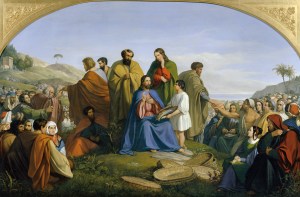
Three parts of this week’s Gospel always stand out to me. First, Matthew connects the feeding of the 5,000 directly to the death of John the Baptist (Matthew 14:1–12). Jesus withdraws to a “deserted place” (14:13), carrying his grief with him. (After visiting our son while he was stationed at Fort Irwin in the Mojave Desert, I have a new appreciation for how harsh such a landscape can be). Yet even there, the crowds follow — people carrying their own wounds and hopes. It’s not hard to see ourselves in that wilderness crowd during seasons when life feels barren or disorienting. Then comes the line that always stops me: “He had compassion for them” (Matthew 14:14). Compassion isn’t pity; it’s suffering‑with. Jesus consistently moved toward people who were pushed aside — children, women, the sick, the poor, anyone whose life had been diminished by power or circumstance. His compassion was embodied and active. And that compassion meets our world right now. When Jesus looks at the wilderness crowd, he sees the same human reality we see today — people longing for stability, healing, and enough food to make it through the day. The global hunger crisis reminds us that the wilderness isn’t just a biblical setting; it’s a present reality for millions.
Finally, this story shows how the Kingdom of God breaks in — not someday, but now. Jesus tells the disciples, “You give them something to eat” (Matthew 14:16), and suddenly the Kingdom looks like shared bread, shared responsibility, shared hope. When the Pharisees asked about the timing of God’s Kingdom, Jesus said, “The kingdom of God is in your midst” (Luke 17:20–21). It’s already here, already moving, already multiplying whatever small offering we bring. For Pentecost 10, the feeding of the 5,000 invites us to see compassion as Kingdom work — to notice the wilderness around us, to recognize the hunger in our communities and across the world, and to trust that God can take what we offer and turn it into abundance.
Soli Deo Gloria.
My source for that statistic was drawn from the World Food Programme website. Try this INTERACTIVE MAP to gain a greater sense of where food insecurity is most problematic. And, if you want to get a sense of the situation in Wisconsin, here is the Feeding Wisconsin website.
Musical Reflection
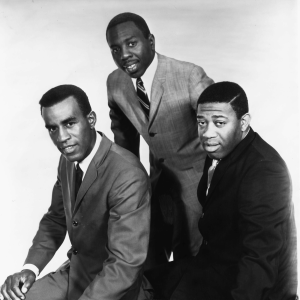
Curtis Mayfield wrote “People Get Ready” in 1964 straight out of the gospel world he grew up in on Chicago’s South Side. You can hear the sermons, the spirituals, and that familiar train imagery from Black freedom songs running through it. When The Impressions released it the next year, their tight harmonies and Mayfield’s soaring falsetto turned what feels like a quiet, prayer‑like meditation into a national anthem of hope. Mayfield later said he was in a “very deep mood of religious inspiration” when he wrote it — and honestly, that comes through in every measure. The heart of the song — “You don’t need no baggage, you just get on board” — lines up beautifully with Isaiah 55’s invitation: “Come, all you who are thirsty… without money and without price.” Both are saying the same thing in different ways: grace is already on the move, and you don’t have to earn it or prove anything. You just open your heart and step toward what’s being offered. One reason the song has lasted so long is how far it’s traveled. Artists from all over the musical map have picked it up — Aretha Franklin, Bob Dylan, Bob Marley, Rod Stewart and Jeff Beck, Eva Cassidy, Kenny Rankin, and plenty more. Each one hears something in it that speaks to their moment. The Impressions’ version is still the anchor, but the sheer number of covers shows how flexible the song is. It can be a prayer, a protest, a lament, or a word of encouragement depending on who’s singing it. For Pentecost 10, “People Get Ready” feels like a modern echo of Isaiah’s feast — a reminder that God’s invitation is wide open, the train of grace is already rolling in, and the only thing we’re asked to bring is a readiness to climb aboard.
Lyrics
People get ready
There’s a train a-coming
You don’t need no baggage
You just get on board
All you need is faith
To hear the diesels humming
Don’t need no ticket
You just thank the Lord
So people get ready
For the train to Jordan
Picking up passengers’ coast to coast
Faith is the key
Open the doors and board ’em
There’s hope for all
Among those loved the most
There ain’t no room for the hopeless sinner
Who would hurt all mankind just to save his own (believe me now)
Have pity on those
Whose chances grow thinner
For there’s no hiding place against the Kingdom’s Throne
So people get ready
There’s a train a-comin’
You don’t need no baggage
You just get on board
All you need is faith
To hear the diesels humming
Don’t need no ticket
You just thank the Lord
The Impressions were a Chicago‑based R&B group whose smooth harmonies and socially aware songwriting helped shape the sound of the 1960s. With Curtis Mayfield at the creative center, they blended gospel roots, soul grooves, and messages of dignity and hope during a decade of huge cultural change. Songs like “Keep On Pushing,” “It’s All Right,” and “People Get Ready” became anthems that reached far beyond the charts. Their influence still echoes today in the work of artists who draw on that mix of musical sweetness and moral clarity.
ELCA Commemorations
Note: The ELCA commemorates a wide range of Christians throughout the year as a way of remembering that God has worked through ordinary people in every age. These commemorations — drawn from Scripture, the early church, the Reformation, and more recent history — invite us to see faith lived out in many different vocations and cultures. They aren’t about elevating “heroes,” but about widening our sense of the communion of saints and letting their witness encourage our own. In marking these days, the church pauses to give thanks, to learn, and to be reminded that the Holy Spirit continues to shape faithful lives in every generation.
You will find the full listing of them in the front of the ELW. Explore this week’s commemorations via the links provided under the dates.
Tuesday 28 July
Johann Sebastian Bach, 1750; Henrich Schutz, 1672; George Frederick Handel, 1759; musicians
Wednesday 29 July
Mary, Martha, and Lazarus of Bethany
Olaf, King of Norway, martyr, 1030
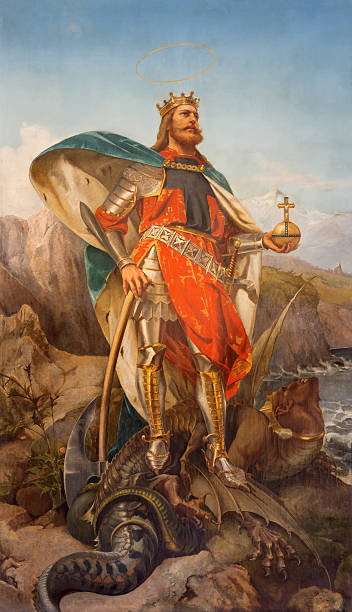

Follow the links if you want to go further into the stories behind the commemorations for this week in our calendar!
Going Beyond
We’re living in a moment when the tools of ministry have expanded far beyond the walls of any building. Digital platforms now allow Scripture, teaching, and community to reach people wherever they are. What once required physical presence can now be shared through video, messaging, and collaborative online study. This new landscape invites congregations to imagine ministry with a wider reach and a deeper sense of connection!
Here are several examples.
Explore Living Lutheran
Living Lutheran is the flagship magazine of the Evangelical Lutheran Church in America, offering stories, reflections, and reporting that explore how faith is lived out in daily life. It highlights the people, ministries, and global connections of the ELCA while engaging readers with thoughtful articles on theology, discipleship, justice, and contemporary issues. Designed to inform and inspire, the magazine serves as a gathering place for the diverse voices and experiences that shape Lutheran life today.
Visit the Living Lutheran Magazine Website
If you are seeking a church home or want to participate in our weekly on-line worship, subscribe to our YouTube Channel. All are welcome!
Main Street Lutherans:
Discussions About the ELCA
Main Street Lutherans is a podcast and online hub that lifts up stories, conversations, and ministries from across the ELCA, all with an easygoing “front‑porch” feel. The site gathers interviews with pastors, musicians, scholars, and everyday church folks, exploring how faith shows up in real life and real communities. It also invites congregations and synods to become “better known,” helping Lutherans connect with one another across geography and experience.
The most recent podcast is a discussion of how churches can utilize their spaces in our changing environment — timely!
