Being Transfomed
“The power of becoming something new with the arrival of each new day is one of the recognized privileges of having Christ live in the lives of those who follow him, or what Dietrich Bonhoeffer once described in personal terms as ‘Jesus Christ incarnate, crucified, glorified, entering my life and taking charge.’ The spectacular idea that we no longer have to make up our lives by the minute — or live under the constraint of our own charm or wit — is one of the blessings of being shaped by God.”
Peter W. Marty
From “All We May Become.” The Christian Century Magazine, page 1. September 2026.
Navigate the Blog
- Pentecost 13 Readings
- Image of the Week
- Five-Minute Homily
- Musical Reflection
- ELCA Commemorations
- Digital Ministry

Two Worlds started in February 2023 as a simple extension of an Intro to Bible Study class and a desire to dig deeper into the Revised Common Lectionary. Today it’s a small digital ministry space that shares the RCL readings, a brief homily, and supporting images, music, and ELCA commemorations.
The blog is authored by Paul Rykken in consultation with Pastor Jen Hatleli of Evangelical Lutheran Church in Black River Falls, Wisconsin.
The full three‑year cycle of the Lectionary is available on the Two Worlds Home Page.
Note: Images and lay-out tend to land better on a bigger screen.
Pentecost 13 Readings
Isaiah 51: 1-6
Psalm 138
Romans 12:1-8
Matthew 16: 13-20
Readings are Linked
Common Themes and Connections
The readings for Pentecost 13 (Year A) share a through-line of identity, vocation, and God’s sustaining faithfulness. Isaiah calls the people to “look to the rock from which you were hewn,” grounding their hope in God’s enduring righteousness and salvation. Psalm 138 echoes that confidence, praising the God who regards the lowly and strengthens the fainthearted. Romans 12 shifts the theme toward lived response, urging believers to offer themselves as a living sacrifice and to embrace their Spirit-given gifts for the sake of the community. In Matthew 16, Peter’s confession reveals the heart of Christian identity—recognizing Jesus as the Messiah—and Jesus responds by naming and commissioning the church for its mission. Together, these texts weave a picture of a people rooted in God’s steadfastness, called into purposeful service, and empowered to confess and embody the gospel in the world.
Image of the Week
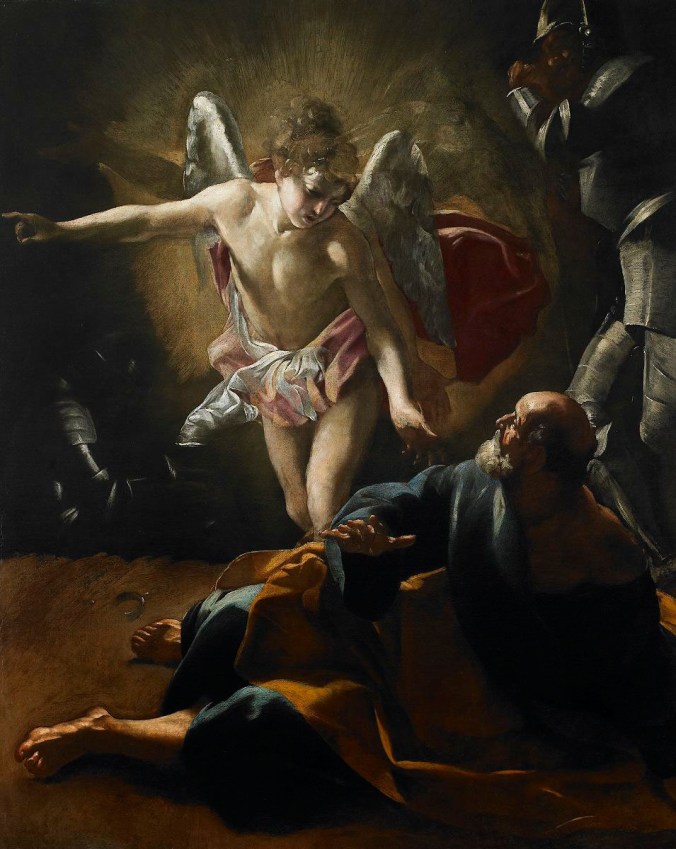
Giovanni Lanfranco’s (1582-1647) Liberation of Saint Peter captures the explosive moment when divine light breaks into human confinement — an angel flooding Peter’s prison cell with radiance, rousing him from chains and leading him past guards who remain trapped in darkness. The painting’s swirling motion and stark chiaroscuro make the rescue feel both urgent and undeserved, a vivid embodiment of God’s power to free, call, and commission. That same dynamic pulses through Matthew 16:13–20. Peter, who will later be liberated (recounted in Acts 12), is here “awakened” in a different way: his confession of Jesus as the Messiah becomes the moment when God reveals, illumines, and entrusts him with a vocation he could never claim on his own. Lanfranco’s scene of physical deliverance mirrors the gospel’s spiritual one — Peter is the rock not because of his strength, but because God’s light breaks in, names him, and sends him.
Five-Minute Homily
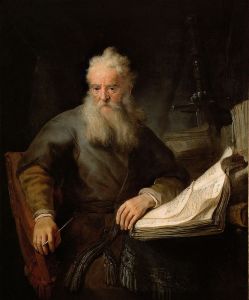
One of the admonitions I offer my history students is simple but important: work to make this knowledge your own. Don’t just memorize it — absorb it, wrestle with it, let it shape how you see the world. That mindset fits our exploration of scripture as well. Romans 12:1–8 was one of those passages that grabbed me in my formative years. It didn’t feel abstract or distant; it felt like Paul was speaking directly to me, inviting me to see scripture not as ancient words but as a guide for how to live a real, everyday life. That early encounter helped me sense that faith isn’t something we hold at arm’s length — it’s something we make our own, something that forms us from the inside out.
To appreciate the force of this passage, a bit of backstory helps. Paul’s Letter to the Romans comes near the end of his ministry, written to a community he has not yet visited but hopes to strengthen for the mission ahead. In chapters 1–11 he lays out a sweeping theological vision: humanity’s universal need for grace, God’s saving action in Christ, and the astonishing inclusion of both Jews and Gentiles in a single covenant family. He traces God’s mercy from Abraham forward, culminating in Christ’s faithfulness and the gift of the Spirit. By the time he reaches chapter 12, Paul has built a grand argument about what God has done; now he turns to what this new life looks like in practice — a transformed community offering itself to God in gratitude.
That shift sets up the heart of today’s reading. Paul moves from proclamation to invitation. After eleven chapters describing God’s mercy, he shows what that mercy does in us. He begins with two forceful ideas: present and transform. Present your whole selves to God. And do not be shaped by the world’s patterns — be transformed by the renewing of your minds. Paul isn’t describing a minor adjustment. He’s naming a deep interior shift that changes how we see, choose, and live. These were radical notions for first‑generation Christians, and they remain radical for us who inhabit the twenty‑first century.
And that’s where discernment enters the picture. A renewed mind allows us to “discern what is the will of God — what is good and acceptable and perfect.” Discernment is the Spirit‑shaped ability to sort through the noise and recognize what aligns with God’s purposes. Transformation and discernment work together: as God reshapes us, we learn to see with clearer eyes and respond with wiser hearts. And it echoes what Peter Marty in that introductory statement above — that Christ’s presence frees us from having to invent our lives moment by moment or rely on our own charm or wit. We are being shaped by God, not driven by self‑construction. And that’s Paul’s point: the Christian life doesn’t run on autopilot. It grows as we offer ourselves to God, allow grace to transform us, and practice the kind of discernment that keeps us aligned with God’s renewing work in the world. This is good news to share this week and beyond!
Soli Deo Gloria!
Musical Reflection
“I Want Jesus to Walk with Me” is an African American spiritual that emerged anonymously in the 19th century among enslaved communities, shaped by lived suffering and a deep trust in God’s companionship. Because spirituals were created and transmitted orally, there is no single composer; the song reflects the collective voice of the Black church. ELW (hymn 325) includes it as part of its commitment to honoring African American sacred music and expanding the church’s sung witness to lament, endurance, and hope.
The arrangement I posted here is a truly fun version of this song by a group from Brazil. Enjoy!
Lyrics
1. I want Jesus to walk with me.
I want Jesus to walk with me.
All along my pilgrim journey,
I want Jesus to walk with me.
2. In my trials, walk with me.
In my trials, walk with me.
When the shades of life are falling,
I want Jesus to walk with me.
3. In my sorrows, walk with me.
In my sorrows, walk with me.
When my heart within is aching.
I want Jesus to walk with me.
4. In my troubles, walk with me.
In my troubles, walk with me.
When my life becomes a burden,
I want Jesus to walk with me.
Jetro Meira de Oliveira is closely connected to Officina Vocalis as one of its central artistic leaders and shapers. He is widely recognized in Brazilian choral circles as a conductor, scholar, and pedagogue with a particular gift for chamber‑choir refinement—clean intonation, expressive clarity, and historically informed interpretation. Officina Vocalis reflects his artistic profile: a small, disciplined ensemble capable of navigating Renaissance polyphony, Baroque works, and contemporary repertoire with precision and warmth.
Visit His Website Here!
ELCA Commemorations
Note: The ELCA commemorates a wide range of Christians throughout the year as a way of remembering that God has worked through ordinary people in every age. These commemorations — drawn from Scripture, the early church, the Reformation, and more recent history — invite us to see faith lived out in many different vocations and cultures. They aren’t about elevating “heroes,” but about widening our sense of the communion of saints and letting their witness encourage our own. In marking these days, the church pauses to give thanks, to learn, and to be reminded that the Holy Spirit continues to shape faithful lives in every generation.
You will find the full listing of them in the front of the ELW. We have only one on the calendar this week.
Commemorations: Week of 17 August
Thursday 20 August
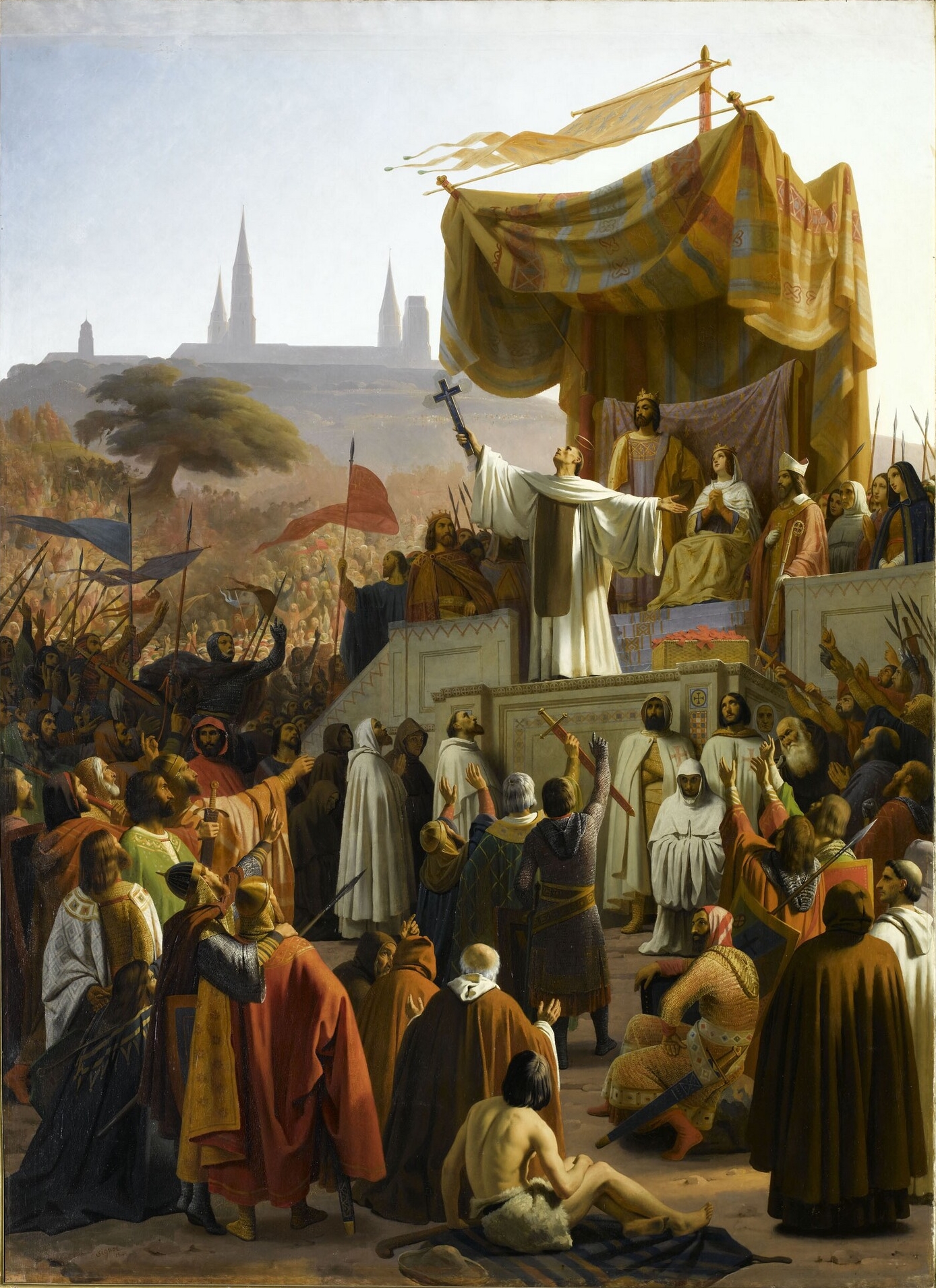
Bernard, Abbott of Clairvaux (d.1153)
Bernard of Clairvaux (1090–1153) was a towering figure of 12th‑century Western Christianity — monk, mystic, reformer, and one of the most influential voices of the Cistercian Movement. Born into a noble family in Burgundy, he entered the newly founded monastery at Cîteaux as a young man and soon helped establish Clairvaux, where his leadership and spiritual intensity shaped a generation of monastic life. Bernard became known for his passionate preaching, his deep devotion to Christ, and his role in major church affairs, including advising popes and inspiring the Second Crusade. His writings, especially on love of God and humility, remain central to Christian spirituality.
Digital Ministry
We’re living in a moment when the tools of ministry have expanded far beyond the walls of any building. Digital platforms now allow Scripture, teaching, and community to reach people wherever they are. What once required physical presence can now be shared through video, messaging, and collaborative online study. This new landscape invites congregations to imagine ministry with a wider reach and a deeper sense of connection!
Explore Living Lutheran
Living Lutheran is the flagship magazine of the Evangelical Lutheran Church in America, offering stories, reflections, and reporting that explore how faith is lived out in daily life. It highlights the people, ministries, and global connections of the ELCA while engaging readers with thoughtful articles on theology, discipleship, justice, and contemporary issues. Designed to inform and inspire, the magazine serves as a gathering place for the diverse voices and experiences that shape Lutheran life today.
Visit the Living Lutheran Magazine Website
If you are seeking a church home or want to participate in our weekly on-line worship, subscribe to our YouTube Channel. All are welcome!
The Bible Project
The Bible Project is a nonprofit, crowdfunded organization that creates free animated videos, podcasts, articles, and classes to help people experience the Bible as a unified story that leads to Jesus. Founded in 2014 by biblical scholar Tim Mackie and filmmaker Jon Collins, the project uses visual storytelling and solid scholarship to make Scripture approachable and transformative. Their resources—covering every book of the Bible, major themes, and key word studies—are available in more than 50 languages and are designed to support both individual study and group learning.
The video posted below is an example of their work — a wonderful explanation of the concept of Shalom.
