Navigate the Blog
- Pentecost 14 Readings
- Image of the Week
- Five-Minute Homily
- Musical Reflection
- Who Are We Commemorating This Week?
- Digital Ministry and Beyond
Two Worlds started in February 2023 as a simple extension of an Intro to Bible Study class and a desire to dig deeper into the Revised Common Lectionary. Today it’s a small digital ministry space that shares the RCL readings, a brief homily, and supporting images, music, and ELCA commemorations. The blog is authored by Paul Rykken in consultation with Pastor Jen Hatleli of Evangelical Lutheran Church in Black River Falls, Wisconsin.
Note: The blog lands more naturally on a larger screen.
Reflect on This . . .
Fewer than half of all adults reported having read a book of any kind in 2022. Only 38% read a novel or short story. Those who read for pleasure on any given day fell from 28% in 2004 to 16% in 2023. 40% prefer to watch or listen to online news rather than read it. Gambling has become a more common leisure activity. Last year, 57% of Americans placed a bet. Clearly, we have entered a different world with respect to how we access and digest information.
Source: “The Age of Reading is Over.” The Atlantic Magazine, August 2026.
Pentecost 14 Readings
Common Themes and Connections
The readings for Pentecost 14 trace the costly but ultimately life‑giving path of faithfulness to God. Jeremiah and the psalmist both appeal to God for vindication, trusting that divine strength sustains those who walk with integrity even when opposed. Paul urges the community to embody sincere love through perseverance, humility, and non‑retaliation, framing discipleship as a lived sacrifice. Jesus then makes the challenge explicit: following him means taking up the cross, losing life in order to find it, and trusting that God’s purposes outweigh fear or self‑protection.
Jeremiah 15:15-21
Psalm 26: 1-8
Romans 12: 9-21
Matthew 16: 21-28
Readings are Linked
Image of the Week
Guercino’s Saint Peter (1650) shows the apostle in a quiet, reflective moment, holding the large, unmistakable key that has become his symbol. Guercino—one of the great Italian Baroque painters—had a gift for capturing human emotion, and here Peter looks both humbled and entrusted, as if he’s still absorbing what Jesus told him. The key itself points directly to Christ’s words in Matthew 16: “I will give you the keys of the kingdom of heaven,” a promise Peter probably didn’t fully understand at the time. In Guercino’s hands, the key isn’t a trophy but a responsibility—something weighty, something that asks for obedience and courage. The painting invites us to see Peter not as a triumphant leader, but as a disciple still learning what it means to carry what Christ has placed in his hands.
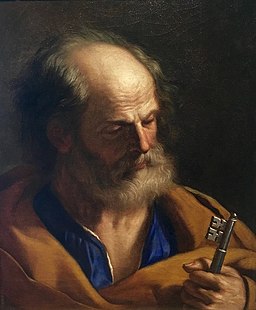
Artist: Guercino (1591–1666)
Five-Minute Homily
Pentecost 14: “Taking Up the Cross (Without Pretending I’m Good at It)”
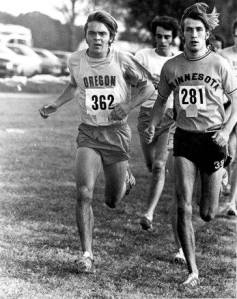
Perseverance has been on my mind this week, in part because we just launched another Cross Country season. No trait matters more in the athletic world than perseverance. You can have talent, good shoes, and perfect weather, but if you don’t have perseverance, the race owns you. Every runner eventually meets that moment when the body wants to quit and the mind has to decide whether it will obey the impulse to stop or obey something deeper — a commitment, a calling, a purpose. And that’s where the connection between perseverance and obedience gets interesting.
OBEDIENCE. Not exactly the word you’d choose for a motivational poster. It’s certainly not trending on Instagram. The Latin root obedire means “to give ear,” which sounds noble enough — until you remember how often we prefer to give ear to…well…ourselves. We live in a culture that treats personal freedom like a competitive sport. If there were an Olympic event for “doing whatever I want,” we would surely win the gold medal. So yes, OBEDIENCE feels old‑fashioned, like something your great‑grandmother might have embroidered on a pillow right next to “Don’t run with scissors.” But Scripture doesn’t seem embarrassed by it. This week, for example, Psalm 26 gives us David “walking in faithfulness” and integrity. I love that line — “I have walked in my integrity.” It sounds like David is giving us a spiritual Fitbit report: “Steps today: faithful. Heart rate: steady. Integrity: 100%.” Romans, meanwhile, reads like Paul’s Christianity 101 — genuine love, ardent service, patient perseverance. The phrase “do not lag in zeal” is especially appealing to me; it feels like something we should add to our daily vocabulary, maybe even shout at the starting line.
Then Matthew’s Gospel arrives and gives us much to think about this week. We meet the disciples right after Peter’s big moment — the “You are the Messiah” declaration that earns him a blessing and a future leadership role. For a brief second, Peter is riding high. Then Jesus starts talking about suffering, rejection, and death. The disciples freeze. This is not the Messiah job description they signed up for. Peter, ever the enthusiastic volunteer, jumps in: “No way, Lord. That must never happen.” And Jesus responds with the spiritual equivalent of a bucket of cold water: “Get behind me, Satan.” It’s harsh. It’s jarring. And honestly, I feel for Peter. He wasn’t trying to sabotage the mission; he was trying to protect his friend. He wanted a Messiah who fit his expectations — strong, victorious, kingly. The idea of a suffering Messiah was unthinkable. We have hindsight and early disciples did not — I always try to keep that in mind. They were living this remarkable story in real time, without knowing the ending. No resurrection yet. No Easter alleluias. Just a beloved teacher telling them the road ahead would be costly.
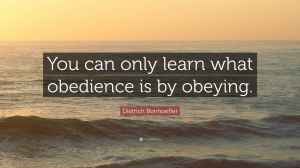
So what do we do with this in 2026? Jesus’ call to “take up the cross” can feel abstract for those of us who are not persecuted for our faith. But maybe “taking up the cross” today looks like OBEDIENCE — giving ear to God instead of our own ego (which, let’s be honest, can be pretty loud). Maybe it means letting the Holy Spirit nudge us into places we wouldn’t choose on our own — places that stretch us, humble us, or require us to care for people we would rather avoid. Maybe it means opening our hearts to the pain around us, even when compassion feels inconvenient. Maybe it means grieving the divisions that fracture our communities and choosing, deliberately and courageously, to show up as a Christian presence anyway. The world is starving for that presence — not louder opinions, but deeper obedience. So, let’s reclaim OBEDIENCE — not as blind submission, but as attentive faith. Let’s “give ear” to God’s call, take up the cross in whatever form it arrives, and walk forward in the light of Christ.
Soli Deo Gloria
Musical Reflection
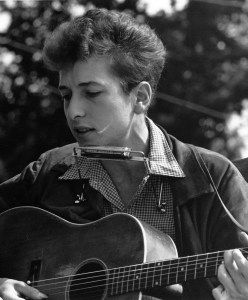
Bob Dylan’s “Ring Them Bells” comes from a season when he was wrestling with faith, fatigue, and the erosion of moral clarity he saw around him. The song’s Christian imagery — saints, judgment, blindness, and the plea for renewed discernment — mirrors the tension in Matthew 16, where Jesus tells the disciples that following him means stepping into a path defined by the cross rather than self‑protection. Dylan’s bells sound like the Gospel’s summons: a call to wake up, to hear God’s voice cutting through confusion, and to recognize that true life is found not in saving ourselves but in losing ourselves for Christ’s sake. In both the song and the Gospel, the message is urgent and unmistakable — clarity comes when we heed the call and follow Jesus into the costly way of discipleship.
Lyrics
Ring them bells, ye heathen
From the city that dreams
Ring them bells from the sanctuaries
Across the valleys and streams
For they’re deep and they’re wide
And the world’s on its side
And time is runnin’ backwards
And so is the bride
Ring them bells St. Peter
Where the four winds blow
Ring them bells with an iron hand
So the people will know
Oh, it’s rush hour now
On the wheel and the plow
And the sun is goin’ down
Upon the sacred cow
Ring them bells Sweet Martha
For the poor man’s son
Ring them bells so the world will know
That God is one
Oh the shepherd is asleep
Where the willows weep
And the mountains are filled
With lost sheep
Ring them bells for the blind and the deaf
Ring them bells for all of us who are left
Ring them bells for the chosen few
Who will judge the many
When the day is through
Ring them bells for the time that flies
For the child that cries
When her innocence dies
Ring them bells St. Catherine
From the top of the room
Ring them bells from the fortress
For the lilies that bloom
Oh, the lines are long
And the fighting is strong
And they’re breakin’ down the distance
Between right and wrong
There are many covers of this song out there, but I’m partial to this one from Joan Baez. Baez and Bob Dylan had a fast, messy, and hugely influential connection in the early ’60s. She was already a star, he was the unique newcomer with astonishing songs, and she basically opened the door for him — bringing him onstage, on tour, and into the spotlight. Their romance and musical partnership burned hot but didn’t last; Dylan’s rising fame and shifting priorities pulled them apart. Even so, their brief time together helped launch Dylan’s career and left a mark on both of them. Dylan has Jewish heritage and experienced a well-documented conversion to Christianity in the late 1970s. Baez was raised in the traditions of Quakerism. Both artists are deeply spiritual and offer interesting stories of faith.
Who Are We Commemorating This Week?
Note: The ELCA commemorates a wide range of Christians throughout the year as a way of remembering that God has worked through ordinary people in every age. These commemorations — drawn from Scripture, the early church, the Reformation, and more recent history — invite us to see faith lived out in many different vocations and cultures. They aren’t about elevating “heroes,” but about widening our sense of the communion of saints and letting their witness encourage our own. In marking these days, the church pauses to give thanks, to learn, and to be reminded that the Holy Spirit continues to shape faithful lives in every generation.
You will find the full listing of them in the front of the ELW.
Commemorations: Week of 24 August
Monday 24 August
BARTHOLOMEW, APOSTLE
Friday 28 August
Augustine, Bishop of Hippo (d. 430)
Moses the Black, Monk, Martyr (c. 400)
Follow the Links for Further Information
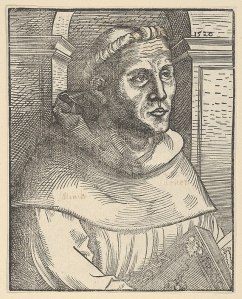
Augustinian Monk
“Holy Christendom has, in my judgment, no better teacher after the apostles than St. Augustine.”
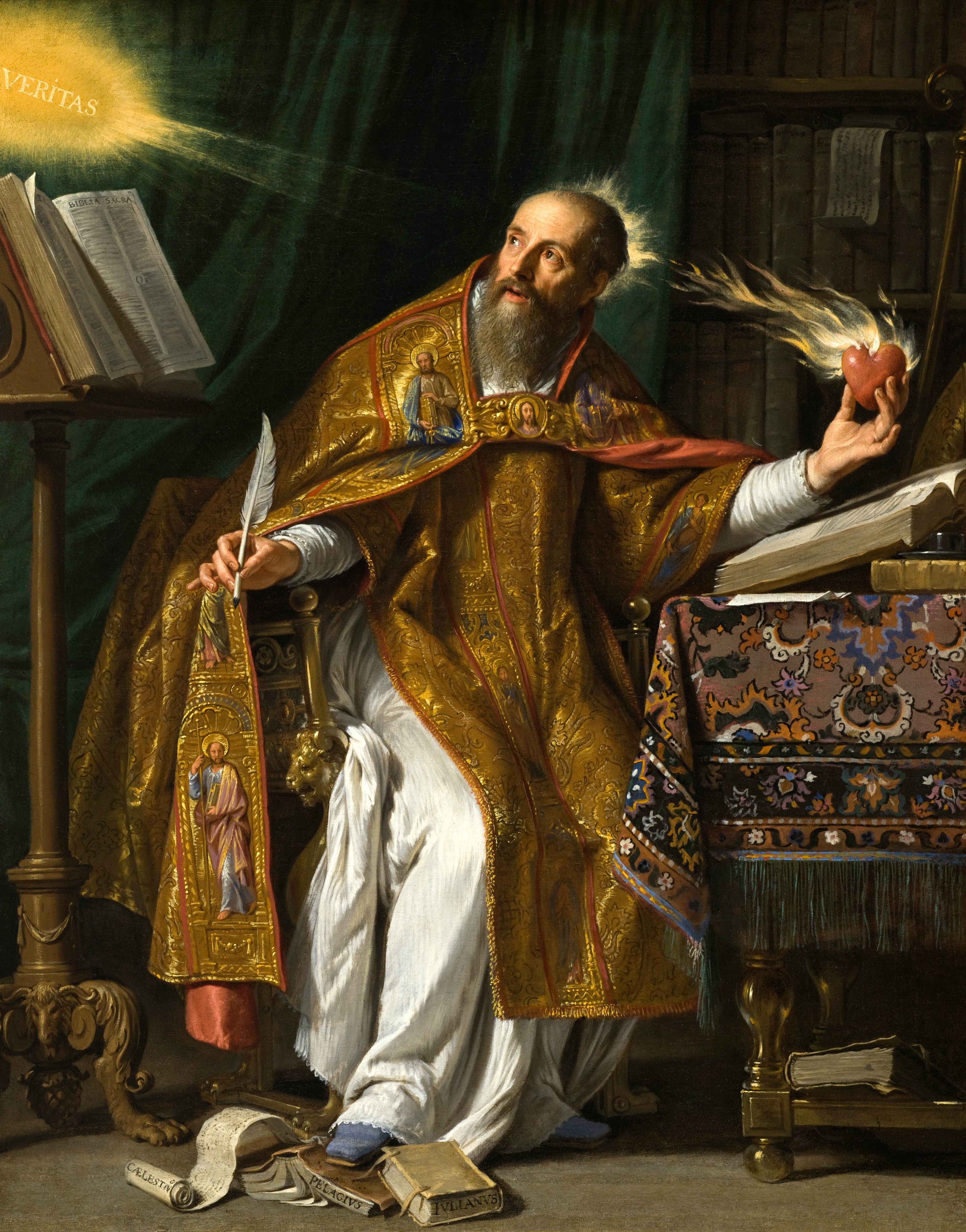
by Philippe de Champaigne
Digital Ministry and Beyond
We’re living in a moment when the tools of ministry have expanded far beyond the walls of any building. Digital platforms now allow Scripture, teaching, and community to reach people wherever they are. What once required physical presence can now be shared through video, messaging, and collaborative online study. This new landscape invites congregations to imagine ministry with a wider reach and a deeper sense of connection. At the same time, we need to find the balance with ongoing in-person efforts!
Explore Living Lutheran
Living Lutheran is the flagship magazine of the Evangelical Lutheran Church in America, offering stories, reflections, and reporting that explore how faith is lived out in daily life. It highlights the people, ministries, and global connections of the ELCA while engaging readers with thoughtful articles on theology, discipleship, justice, and contemporary issues. Designed to inform and inspire, the magazine serves as a gathering place for the diverse voices and experiences that shape Lutheran life today.
Visit the Living Lutheran Magazine Website
If you are seeking a church home or want to participate in our weekly on-line worship, SUBSCRIBE to our YouTube Channel. All are welcome!
In-Person Opportunities
As we turn the page into September, we’re refreshing our adult education opportunities at ELC as we continue creating spaces where members can explore Scripture and connect faith to daily life. Our digital ministry—including Two Worlds, the weekly lectionary blog — remains part of that effort. Beginning in September, Sundays from 11:00–11:45 a.m. will be dedicated to Faithful Conversations, a renewed rhythm of study shaped by three strands: Lutheran Theology, History, and Spiritual Disciplines. We’ll begin with a four‑week book study of Real Faith for Real Life (27 September–18 October), followed by a one‑day Reformation session on Martin Luther (25 October), a four‑week exploration of the lectionary (1–29 November), and a five‑week study of the Augsburg Confession (10 January–7 February 2027).

If you are interested in ordering the book for our first go-round, follow the link below. We will also have several copies available. We will revisit a study the book from three years ago — it remains remarkably relevant.
ORDER YOUR COPY HERE!
