9-11:
A Crack in Time
Twenty‑five years ago this Friday, terrorists hijacked planes and turned them into missiles aimed at the World Trade Center and the Pentagon. History shifted in an instant. The day is etched in my memory not only because of the national trauma unfolding on the screen, but because it was our son Jake’s 17th birthday — a moment that, in part, shaped his life’s trajectory. Ironically, I was mid‑lecture on Martin Luther and the Protestant Reformation when a colleague burst into my classroom: “Turn on your TV — something terrible is happening in New York City.” My history students (including my son) and I watched the unimaginable together. Experiencing that shock with young people sitting in front of me — many of whom would later enter military service — remains one of the flashbulb moments of my teaching career. Like their grandparents and the 1941 attack on Pearl Harbor, 9/11 brought history into starker view.
This week’s lectionary readings center on forgiveness, and the anniversary presses the question with force. How do followers of Christ respond to evil? Can we imagine forgiving the young men who carried out those attacks in 2001? And what would Jesus ask of our hearts as we wrestle with such memories? Pentecost 16 invites us to remember, to reflect, and to listen for the call to mercy.

Navigate the Blog

Christina Ray Stanton is a New York City author, veteran tour guide, and nonprofit founder whose work grows out of firsthand experience with major crises. A Florida native who settled in Manhattan in 1993, she became known for her award‑winning memoir Out of the Shadow of 9/11, recounting her evacuation from her home near Ground Zero. She later wrote about surviving COVID‑19, continuing her focus on resilience and faith. Her essays appear in national outlets and often highlight overlooked stories in New York’s history and humanitarian work.
Read her article about the impact 9-11 had on her faith journey.
Two Worlds started in February 2023 as a simple extension of an Intro to Bible Study class and a desire to dig deeper into the Revised Common Lectionary. Today it’s a small digital ministry space that shares the RCL readings, a brief homily, and supporting images, music, and ELCA commemorations. The blog is authored by Paul Rykken in consultation with Pastor Jen Hatleli of Evangelical Lutheran Church in Black River Falls, Wisconsin.
Note: The blog lands more naturally on a larger screen. Also, hyperlinks are included for further information — they are bolded and italicized.
Pentecost 16 Readings
Genesis 50: 15-21
Psalm 103: (1-7) 8-13
Romans 14: 1-12
Matthew 18: 21-35
Readings are Linked
Common Themes and Connections
The readings for Pentecost 16 draw us into the costly, grace‑filled work of forgiveness. Joseph’s mercy toward his brothers, the psalmist’s portrait of God’s compassion, and Paul’s call to refrain from judging one another all press the community toward a posture shaped by God’s own generosity. Jesus’ parable in Matthew exposes how quickly we forget the mercy we’ve received and how urgently we are called to extend it. Together, these texts remind us that forgiven people are meant to become forgiving people.
Image of the Week
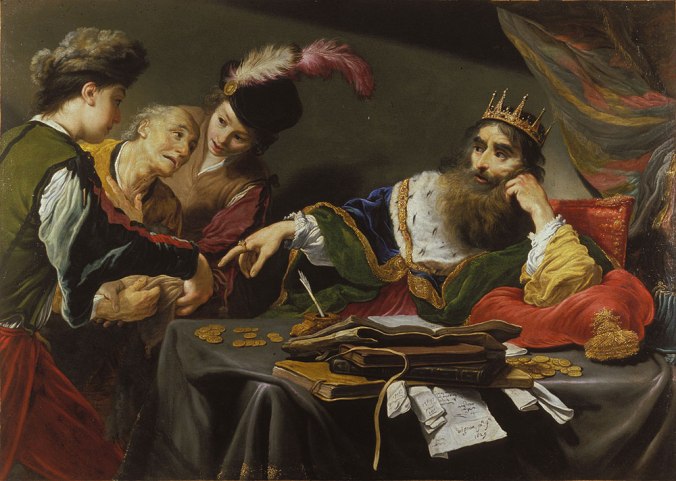
Claude Vignon (1593–1670)
Claude Vignon’s The Unforgiving Servant (1629) shows why he remains one of the most eclectic voices in the French Baroque. His quick, restless brushwork pushes the moment toward us, giving the confrontation an almost urgent immediacy. That urgency fits this week’s lectionary, where forgiveness isn’t an abstract virtue but a lived demand. Vignon’s scene makes the parable feel present tense—a reminder that mercy can evaporate in an instant and that the fallout of withholding it is never small. Born in Tours in 1593, Vignon built his reputation on speed, range, and a willingness to mix styles others kept separate. He traveled widely, worked across genres, and returned to France as one of the most prolific painters of Louis XIII’s era. When he died in Paris in 1670, he left behind a vast body of paintings that still feel energetic and unpredictable.
Five-Minute Homily
Pentecost 16: “When Forgiveness Becomes Freedom“

Archbishop of Canterbury
(1489 – 1556)
We pray the Lord’s Prayer every Sunday — sometimes so often we forget how strange and bold it really is. Our familiar (traditional) version — “trespasses” and all — actually comes from the 1549 Book of Common Prayer, not directly from Matthew 6 or Luke 11. That explains the occasional worship‑committee debates over whether we should be praying about debts or trespasses — turns out we’re mostly arguing with Thomas Cranmer, not the Gospel writers. Still, the heart of the prayer remains the same: we ask for daily bread, mercy, and protection from the turmoil we make.
The Fifth Petition — Forgive us our trespasses, as we forgive those who trespass against us — sits at the center of this week’s theme. Luther’s Small Catechism puts it plainly: we ask God not to count our sins against us, even though we “daily sin much,” and then we turn around and extend that same mercy to others. It’s a confirmation‑class classic: “What does this mean?” It means forgiveness flows in two directions, and neither direction is easy.
That brings us to Jesus’ parable of the Unmerciful Servant. Peter wants to know how far forgiveness goes, and Jesus answers with a story that leaves no wiggle room. A king forgives a servant an impossible debt — years of wages wiped clean in a moment — only to watch that same servant choke a man who owes him pocket change. The king’s fury is justified, and the lesson lands with force: mercy received but not given becomes its own kind of prison.
Most parables unsettle us, and this one surely does. We know forgiveness is central to the Gospel, yet our instincts lean toward payback, score‑keeping, and the kind of rhetoric that fills our newsfeeds. Jesus pushes us in the opposite direction — toward a radical, countercultural mercy that mirrors God’s own heart. When we forgive, something miraculous happens: we remember whose image we bear, and we discover that forgiveness frees both the giver and the receiver. May we keep praying for that miracle — and practicing it!
Soli Deo Gloria
Musical Reflection
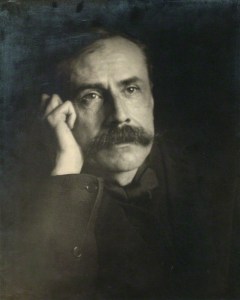
Edward Elgar (1857-1934) is an intriguing character. He came to prominence later in life, after years of feeling like an outsider in Britain’s musical world. He was largely self‑taught, the son of a shopkeeper, and he built his career through persistence rather than pedigree. When he wrote the Enigma Variations in 1899, he used the people closest to him as his raw material — fourteen musical portraits that revealed how deeply he relied on friendship and encouragement. “Nimrod,” the variation honoring his friend August Jaeger, became the emotional heart of the set.
John Cameron (b. 1944) turned Elgar’s beloved “Nimrod” into Lux Aeterna in 1996, giving the melody a new life as a choral prayer. His background as a versatile English arranger helps explain why the piece feels both faithful to Elgar and freshly expressive. In short, Cameron’s version lets voices carry the quiet strength of “Nimrod,” turning a personal tribute into something communal and deeply fitting for moments of remembrance.
As we mark twenty‑five years since 9‑11, this version lands with a quiet honesty. It lets memory rise the way Elgar’s melody rises — gradually, with room for grief, resilience, and the stories that still shape us. Lux Aeterna offers a way to carry those names forward with light.
Lyrics
Lux aeterna luceat eis Domine cum sanctis tuis
In aeternum:
Quia pius es
Requiem aeternam dona eis
Domine; et lux perpetua luceat eis
Cum sanctis tuis in aeternum quia pius es
Translation:
May eternal light shine upon them, O Lord, with Your saints for ever, for You are merciful.
Grant them eternal rest, O Lord, and may perpetual light shine upon them, with Your saints for ever, for You are merciful.
The Toronto Mendelssohn Singers are the chamber‑sized ensemble drawn from the larger Toronto Mendelssohn Choir. They work with a smaller roster, which gives them a clean, flexible sound that suits everything from early music to contemporary pieces. Led by Jean‑Sébastien Vallée, they appear regularly in the Choir’s season and in collaborations across the city. Their performances highlight precision, warmth, and the kind of blend you only get from seasoned choral musicians.
Visit Their Website Here
Who Are We Commemorating This Week?
Note: The ELCA commemorates a wide range of Christians throughout the year as a way of remembering that God has worked through ordinary people in every age. These commemorations — drawn from Scripture, the early church, the Reformation, and more recent history — invite us to see faith lived out in many different vocations and cultures. They aren’t about elevating “heroes,” but about widening our sense of the communion of saints and letting their witness encourage our own. In marking these days, the church pauses to give thanks, to learn, and to be reminded that the Holy Spirit continues to shape faithful lives in every generation.
You will find the full listing of them in the front of the ELW.
Commemorations: Week of 7 September
Wednesday 9 September
Peter Claver, priest, missionary to Colombia (d. 1654)
Sunday 13 September
John Chrysostom, Bishop of Constantinople (d. 407)
Utilize the links for further information!
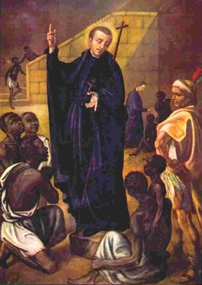
St. Peter Claver (1580–1654) was a Spanish Jesuit who spent nearly his entire ministry in Cartagena, where slave ships arrived by the thousands. He became famous — and sometimes controversial — for boarding those ships the moment they docked, bringing food, water, medicine, and whatever comfort he could offer to people who had endured the Middle Passage. Claver had trained in Spain and was shaped by the Jesuit push toward missionary work, but in the New World he took that calling to an extreme, referring to himself as the “slave of the Africans forever.” He didn’t just care for people in the harbor; he followed them to plantations, advocated for humane treatment, and baptized tens of thousands. His life left such a mark that he’s now remembered as the patron saint of slaves, of Colombia, and of ministry to African Americans.
Digital Ministry and Beyond
We’re living in a moment when the tools of ministry have expanded far beyond the walls of any building. Digital platforms now allow Scripture, teaching, and community to reach people wherever they are. What once required physical presence can now be shared through video, messaging, and collaborative online study. This new landscape invites congregations to imagine ministry with a wider reach and a deeper sense of connection. At the same time, we need to find the balance with ongoing in-person efforts!
Who is Tim Mackie?
Tim Mackie (b. 1976) is a biblical scholar and pastor best known as the co‑founder and main teacher behind The Bible Project, where he turns dense biblical themes into clear, engaging explanations. Several of our members at ELC have been introduced to these through a current Bible Reading challenge we are walking through.
Before earning his Ph.D. at UCLA, he completed his undergraduate and master’s work at UW–Madison, which helped spark his deep interest in Hebrew Bible studies. Mackie blends academic rigor with an easygoing, conversational style that makes ancient texts feel surprisingly accessible. He’s especially drawn to the literary design of Scripture, ancient languages, and the world of Second Temple Judaism. At his core, he’s a guide who helps people see the Bible as a unified story that still speaks with power today.

(b. 1976)
Tim Mackie is prolific and a simple search will verify that!
Access a series of Mackie’s sermons here!
In-Person Opportunities
As we turn the page into September, we’re refreshing our adult education opportunities at ELC as we continue creating spaces where members can explore Scripture and connect faith to daily life. Our digital ministry—including Two Worlds, the weekly lectionary blog — remains part of that effort. Beginning in September, Sundays from 11:00–11:45 a.m. will be dedicated to Faithful Conversations, a renewed rhythm of study shaped by three strands: Lutheran Theology, History, and Spiritual Disciplines. We’ll begin with a four‑week book study of Real Faith for Real Life (27 September–18 October), followed by a one‑day Reformation session on Martin Luther (25 October), a four‑week exploration of the lectionary (1–29 November), and a five‑week study of the Augsburg Confession (10 January–7 February 2027).

If you are interested in ordering the book for our first go-round, follow the link below. We will also have several copies available. We will revisit a study the book from three years ago — it remains remarkably relevant.
ORDER YOUR COPY HERE!
