Use These Tabs to Navigate Two Worlds
Thanks for your visit!
Two Worlds is a digital ministry space where I share the weekly Revised Common Lectionary readings and a brief homily with supporting images and music. As a nod to our history, I also include the ELCA’s commemorations for the week. Most images come from Wikimedia Commons, and I utilize Copilot for some aspects of the research and writing.
The project grows out of ongoing conversation with Pastor Jen Hatleli of ELC in Black River Falls — a dialogue first sparked by a 2023 Bible Study that set this whole thing in motion.
RCL Calendar and Sunday’s Readings
The Bible Project is a nonprofit, crowdfunded organization that creates free videos, podcasts, articles, and classes to help people experience the Bible as a unified story that leads to Jesus. It uses visual storytelling and deep biblical scholarship to explain literary design, key themes, and the historical context of Scripture in an accessible way. Founded by Tim Mackie and Jon Collins in 2014, it has since produced hundreds of resources in more than 50 languages to help people become lifelong students of the Bible.
BibleProject Website
Where Are We in the Lectionary Calendar?
We are at the threshold of Ordinary Time in Year A, where the long green season opens and the church settles into the steady rhythm of discipleship. Year A is anchored in Matthew’s Gospel — practical, grounded, and always asking what it means to live the teachings of Jesus. Across the season, Matthew keeps circling the essentials: call, mission, parable, conflict, and the slow formation of a community learning to trust God’s reign in ordinary life. The supporting readings echo that arc, tracing promise, identity, and faithful response. It’s a year that invites us to pay attention to the long game of spiritual growth.
As an introduction to Matthew, take time to watch the video on the left — this is part two (part 1 was posted last week). If you are not familiar with The Bible Project, Mackie and Collins do an excellent job!
Pentecost 2
First Reading: Genesis 12: 1-9
Psalm: Psalm 50: 7-15
Second Reading: Romans 4: 13-25
Gospel: Matthew 9: 9-13, 18-26
The four readings for Pentecost 2 trace a single arc of call, trust, and God’s life‑giving mercy. In Genesis, Abram steps into an unknown future on the strength of God’s promise, and the psalm echoes that posture by urging God’s people to offer thanksgiving and rely on God in the day of trouble. Paul then lifts up Abraham’s trust as the model of faith—confidence not in human effort but in the God who brings life out of what looks dead. Matthew completes the picture with Jesus calling unlikely disciples and restoring life where hope has collapsed, showing that God’s mercy keeps breaking in through invitation, healing, and new beginnings.
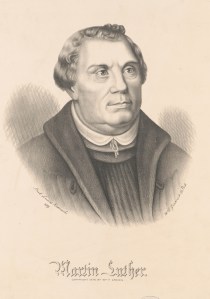
“A Christian is never in a state of completion but always in a process of becoming.”
Martin Luther
Three-Minute Homily: “Imagining the Call“
Are we called by God to do certain things in our lives — certain acts of courage, certain steps of trust, certain movements toward a future we cannot yet see? That’s a great question for us to ponder as we take on the Pentecost 2 readings. One of my favorite lines about history comes from David Blight at Yale: “History must first be imagined to be understood.” Kerry Hasler‑Brooks does exactly that in her recent Christian Century reflection on the call of Abram in Genesis 12. She imagines her way into the silences of the story — the interior lives of those who traveled with Abram, the hopes and fears of people whose voices the text never records. And this week we also hear the call of Matthew, another life interrupted by God’s summons. Like Abram, I’m struck by how Matthew simply leaves his life behind and follows Jesus.
There are many stories of people being called in scripture. Are they offered to us as a metaphor of what it means to be a Christian — to leave our prior lives behind and simply move forward? The very word “call” comes from the Latin vocare, the root of our word vocation, a concept central to Lutheran theology: God calls ordinary people into God’s work in the world. (Sidebar: I recall discussing the notion of “the call” with my father in my formative years — asking him about his sense of call for the ministry — an interesting chat). What I love in Hasler‑Brooks’s interpretation is how she refuses to let the call be a simple, heroic moment. She imagines its impact on the whole community around Abram, especially those without power or choice. That imaginative work doesn’t weaken the story — it makes it more human, more truthful, and more like the calls we know: mixed with courage and fear, trust and trembling, yet still somehow moving us toward God’s future.
Solid Deo Gloria!
Hasler-Brooks article is from June edition of The Christian Century (p. 24). I am indebted to her for this fresh interpretation of the Genesis text! She is an Associate Professor of English, Chair of the Department of Language, Literature, and Writing at Messiah University in Pennsylvania.
Image of the Week: “The Calling of St. Matthew“
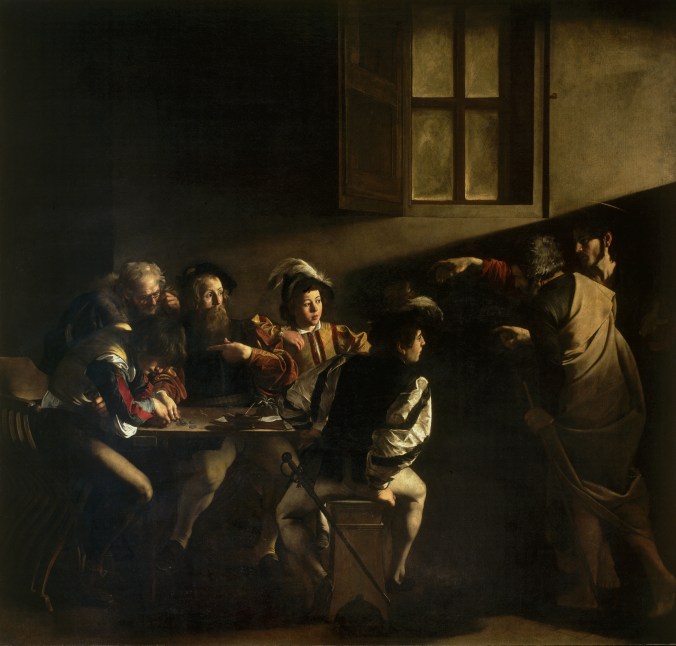
(1599-1600)
Caravaggio’s The Calling of Saint Matthew captures the exact moment grace interrupts ordinary life, with Christ’s quiet gesture cutting through the dim, dusty room of tax collectors. The beam of light that falls across the table works like a second invitation, spotlighting Matthew’s stunned expression as he realizes the call is meant for him. Caravaggio anchors the scene in everyday clothing and gritty realism, making the Gospel feel like it’s happening in the back room of any city street. The painting’s power lies in that tension — the holy stepping straight into the mundane, and a man caught between who he has been and who he is being summoned to become.
Musical Reflection: I’ll Be On My Way
I will return to songs reflecting our nation’s heritage next week, but felt compelled to share this wonderful song this week. We’ve walked through a season of loss lately as a faith community, and it naturally turns our thoughts toward our own mortality — that quiet awareness that our days are gifts, not guarantees. Shawn Kirchner’s wrote this song after witnessing the aftermath of a tragic bus accident, suddenly struck by the truth that any one of us could “be on our way” at any moment. Yet the song doesn’t brood; it lifts. It names the Christian journey for what it is: a long walk with burdens, beauty, sorrow, and grace — all carried toward a home where, as the lyric says, “what pain there might have been will now be past.” In a time when we’re feeling the weight of goodbyes, the song becomes a gentle reminder that our story doesn’t end here, and that the One who walks beside us also leads us safely beyond the horizon. I hope you enjoy this uplifting song about our Christian journey!
Lyrics
When I am gone
Don’t you cry for me
Don’t you pity my sorry soul
What pain there might have been
Will now be passed
And my spirit will be home
I’ll be on my way, I’ll be on my way
I’ll have left my feet of clay upon the ground
I will glory bound
I’ll be on my way
When I am gone
Don’t you cry for me
Don’t my pity my sorry soul
What pain there might have been
Will now be past and my spirit will be home
I’ll be on my way, I’ll be on my way
I’ll have left my feet of clay upon the ground
I will be glory bound
I’ll be on my way
When I am gone
Please forgive the wrong that I might have done to you
There’ll be no room for regrets up there high above
Way beyond the blue
I’ll be on my way, I’ll be on way
I’ll have laid my frown and all my burdens down
I’ll be putting on my crown
I’ll be in my way
When I am gone, don’t you look for me in the places I have been
I’ll be alive but somewhere else I’ll be on my way again
I’ll be on my way, I’ll be on my way
I’ll lift my wings and soar into the air
There’ll be glory everywhere
I’ll be on way
I’ll be on my way, I’ll be on my way
I’ll have laid my from and all my burdens down
I’ll be putting on my crown
I’ll be on my way
I’ll have left my feet of clay upon the ground
I will be glory bound
I’ll be on my way
The Nebraska Wesleyan University Choir is simply a great singing group — warm sound, tight blend, and a real sense of joy in the music. Students from all kinds of majors come together, and you can hear that mix of energy and heart in their performances. They sing everything from early choral music to brand‑new pieces, and whether they’re on campus or out on tour, they’re known for singing with honesty, expression, and a strong sense of community.
Visit Their Website Here
ELCA Commemorations This Week
Note: The ELCA commemorates a wide range of Christians throughout the year as a way of remembering that God has worked through ordinary people in every age. These commemorations—drawn from Scripture, the early church, the Reformation, and more recent history—invite us to see faith lived out in many different vocations and cultures. They aren’t about elevating “heroes,” but about widening our sense of the communion of saints and letting their witness encourage our own. In marking these days, the church pauses to give thanks, to learn, and to be reminded that the Holy Spirit continues to shape faithful lives in every generation. You will find the full listing of them in the front of the ELW. Explore any via the links provided.
Monday 1 June
Justin, martry at Rome (died c. 165)
Wednesday 3 June
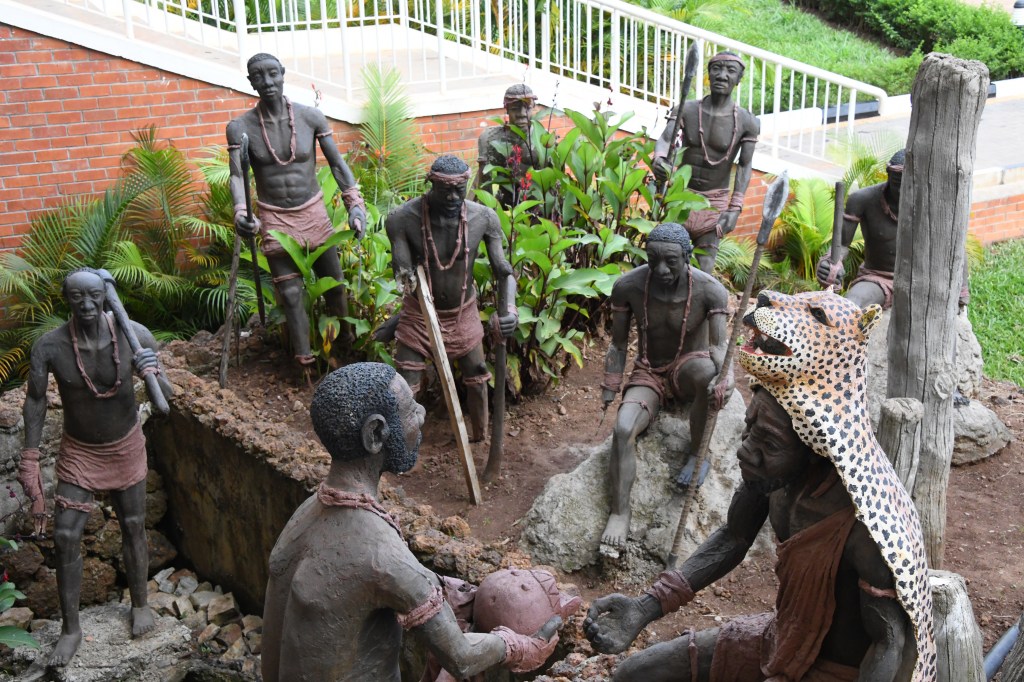
The martyrs of Uganda (d. 1886)
John XXIII, Bishop of Rome (d. 1963)
Friday 5 June
Boniface, Bishop of Mainz, missionary to Germany, martyr (d. 754)
Sunday 7 June
Seattle, Chief of the Duwamish Confederacy (d. 1866)
Information Linked for Background
Going Beyond: In Person and Digital Resources
Are You Looking for a Church Home?
Evangelical Lutheran Church in Black River Falls, is part of the Northwest Synod of Wisconsin (ELCA). We stream our Sunday worship at 9:30 each week. Please feel free to join us!
All are welcome!
Access our YouTube Channel here.
Magnifica Humanitas
Pope Leo XIV released a new encyclical this week on artificial intelligence, Magnifica Humanitas, and it’s a timely read. An encyclical is basically a formal teaching letter from the pope — a way of speaking to the whole Church about something that matters right now. In this one, Leo takes a steady, pastoral look at AI: not panicking about it, not hyping it, but reminding us that any technology we build has to protect human dignity and serve real people. He points out that AI can deepen our compassion or our harm, depending on the values behind it, and he urges Christians to stay rooted in the gospel as we navigate this new terrain. I’ll link to the full text for anyone who wants to explore it further — reading the introduction will give you a sense of the full document.
Explore the Encyclical Here
