Pentecost 2: 7 June 2026

Thanks for your visit!

Two Worlds is a digital ministry space where I share the weekly Revised Common Lectionary readings and a brief homily with supporting images and music. As a nod to our history, I also include the ELCA’s commemorations for the week. Most images come from Wikimedia Commons, and I utilize Copilot for some aspects of the research and writing.

The project grows out of ongoing conversation with Pastor Jen Hatleli of ELC in Black River Falls — a dialogue first sparked by a 2023 Bible Study that set this whole thing in motion.

The Bible Project is a nonprofit, crowdfunded organization that creates free videos, podcasts, articles, and classes to help people experience the Bible as a unified story that leads to Jesus. It uses visual storytelling and deep biblical scholarship to explain literary design, key themes, and the historical context of Scripture in an accessible way. Founded by Tim Mackie and Jon Collins in 2014, it has since produced hundreds of resources in more than 50 languages to help people become lifelong students of the Bible.

BibleProject Website

Where Are We in the Lectionary Calendar?

We are at the threshold of Ordinary Time in Year A, where the long green season opens and the church settles into the steady rhythm of discipleship. Year A is anchored in Matthew’s Gospel — practical, grounded, and always asking what it means to live the teachings of Jesus. Across the season, Matthew keeps circling the essentials: call, mission, parable, conflict, and the slow formation of a community learning to trust God’s reign in ordinary life. The supporting readings echo that arc, tracing promise, identity, and faithful response. It’s a year that invites us to pay attention to the long game of spiritual growth.

As an introduction to Matthew, take time to watch the video on the left — this is part two (part 1 was posted last week). If you are not familiar with The Bible Project, Mackie and Collins do an excellent job!

Pentecost 2

First Reading: Genesis 12: 1-9

Psalm: Psalm 50: 7-15

Second Reading: Romans 4: 13-25


Gospel: Matthew 9: 9-13, 18-26

The four readings for Pentecost 2 trace a single arc of call, trust, and God’s life‑giving mercy. In Genesis, Abram steps into an unknown future on the strength of God’s promise, and the psalm echoes that posture by urging God’s people to offer thanksgiving and rely on God in the day of trouble. Paul then lifts up Abraham’s trust as the model of faith—confidence not in human effort but in the God who brings life out of what looks dead. Matthew completes the picture with Jesus calling unlikely disciples and restoring life where hope has collapsed, showing that God’s mercy keeps breaking in through invitation, healing, and new beginnings.

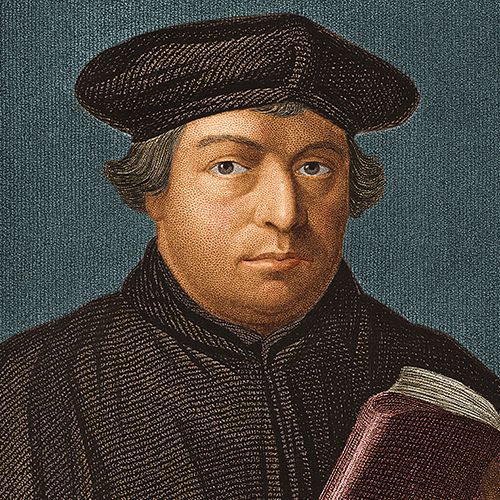
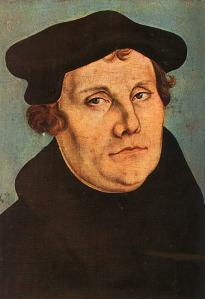
“A Christian is never in a state of completion but always in a process of becoming.”

Martin Luther

Kerry Hasler-Brooks

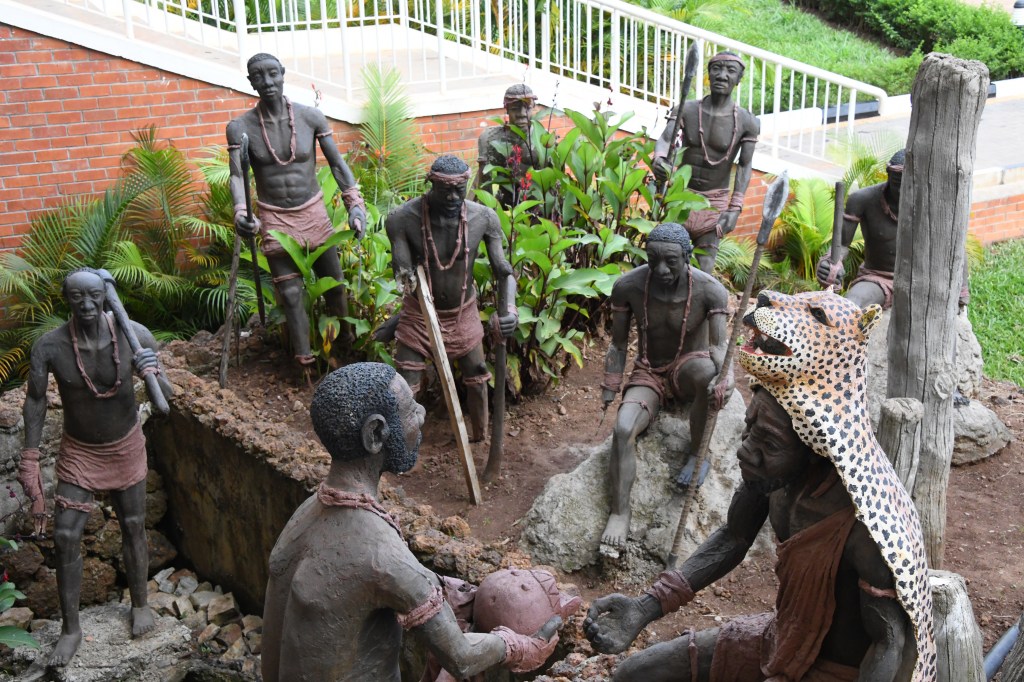
Are we called by God to do certain things in our lives — certain acts of courage, certain steps of trust, certain movements toward a future we cannot yet see? That’s a great question for us to ponder as we take on the Pentecost 2 readings. One of my favorite lines about history comes from David Blight at Yale: “History must first be imagined to be understood.” Kerry Hasler‑Brooks does exactly that in her recent Christian Century reflection on the call of Abram in Genesis 12. She imagines her way into the silences of the story — the interior lives of those who traveled with Abram, the hopes and fears of people whose voices the text never records. And this week we also hear the call of Matthew, another life interrupted by God’s summons. Like Abram, I’m struck by how Matthew simply leaves his life behind and follows Jesus.

There are many stories of people being called in scripture. Are they offered to us as a metaphor of what it means to be a Christian — to leave our prior lives behind and simply move forward? The very word “call” comes from the Latin vocare, the root of our word vocation, a concept central to Lutheran theology: God calls ordinary people into God’s work in the world. (Sidebar: I recall discussing the notion of “the call” with my father in my formative years — asking him about his sense of call for the ministry — an interesting chat). What I love in Hasler‑Brooks’s interpretation is how she refuses to let the call be a simple, heroic moment. She imagines its impact on the whole community around Abram, especially those without power or choice. That imaginative work doesn’t weaken the story — it makes it more human, more truthful, and more like the calls we know: mixed with courage and fear, trust and trembling, yet still somehow moving us toward God’s future.

Solid Deo Gloria!

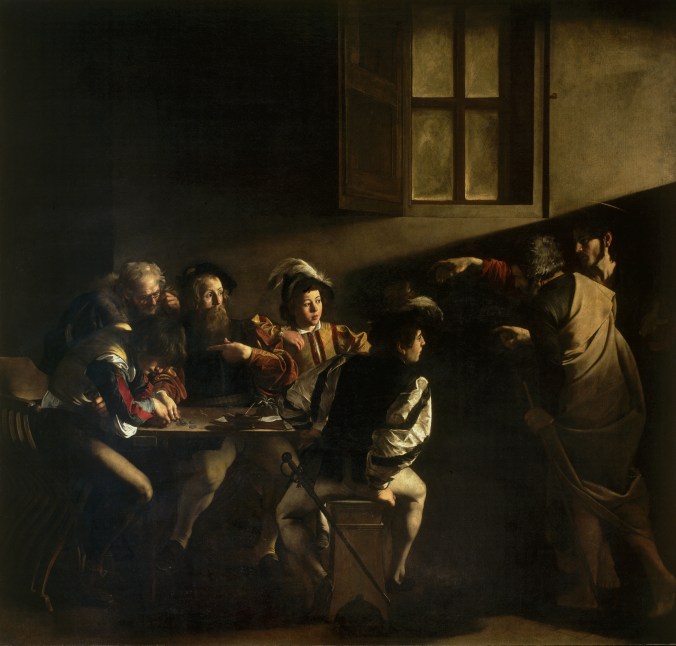
“The Calling of Saint Matthew” by Caravaggio
(1599-1600)

Caravaggio’s The Calling of Saint Matthew captures the exact moment grace interrupts ordinary life, with Christ’s quiet gesture cutting through the dim, dusty room of tax collectors. The beam of light that falls across the table works like a second invitation, spotlighting Matthew’s stunned expression as he realizes the call is meant for him. Caravaggio anchors the scene in everyday clothing and gritty realism, making the Gospel feel like it’s happening in the back room of any city street. The painting’s power lies in that tension — the holy stepping straight into the mundane, and a man caught between who he has been and who he is being summoned to become.

I will return to songs reflecting our nation’s heritage next week, but felt compelled to share this wonderful song this week. We’ve walked through a season of loss lately as a faith community, and it naturally turns our thoughts toward our own mortality — that quiet awareness that our days are gifts, not guarantees. Shawn Kirchner’s wrote this song after witnessing the aftermath of a tragic bus accident, suddenly struck by the truth that any one of us could “be on our way” at any moment. Yet the song doesn’t brood; it lifts. It names the Christian journey for what it is: a long walk with burdens, beauty, sorrow, and grace — all carried toward a home where, as the lyric says, “what pain there might have been will now be past.” In a time when we’re feeling the weight of goodbyes, the song becomes a gentle reminder that our story doesn’t end here, and that the One who walks beside us also leads us safely beyond the horizon. I hope you enjoy this uplifting song about our Christian journey!

Lyrics

When I am gone
Don’t you cry for me
Don’t you pity my sorry soul
What pain there might have been
Will now be passed
And my spirit will be home

I’ll be on my way, I’ll be on my way
I’ll have left my feet of clay upon the ground
I will glory bound
I’ll be on my way

When I am gone
Don’t you cry for me
Don’t my pity my sorry soul
What pain there might have been
Will now be past and my spirit will be home

I’ll be on my way, I’ll be on my way
I’ll have left my feet of clay upon the ground
I will be glory bound
I’ll be on my way

When I am gone
Please forgive the wrong that I might have done to you
There’ll be no room for regrets up there high above
Way beyond the blue

I’ll be on my way, I’ll be on way
I’ll have laid my frown and all my burdens down
I’ll be putting on my crown
I’ll be in my way

When I am gone, don’t you look for me in the places I have been
I’ll be alive but somewhere else I’ll be on my way again
I’ll be on my way, I’ll be on my way
I’ll lift my wings and soar into the air
There’ll be glory everywhere
I’ll be on way
I’ll be on my way, I’ll be on my way
I’ll have laid my from and all my burdens down
I’ll be putting on my crown
I’ll be on my way
I’ll have left my feet of clay upon the ground
I will be glory bound
I’ll be on my way

The Nebraska Wesleyan University Choir is simply a great singing group — warm sound, tight blend, and a real sense of joy in the music. Students from all kinds of majors come together, and you can hear that mix of energy and heart in their performances. They sing everything from early choral music to brand‑new pieces, and whether they’re on campus or out on tour, they’re known for singing with honesty, expression, and a strong sense of community.

Visit Their Website Here

Note: The ELCA commemorates a wide range of Christians throughout the year as a way of remembering that God has worked through ordinary people in every age. These commemorations—drawn from Scripture, the early church, the Reformation, and more recent history—invite us to see faith lived out in many different vocations and cultures. They aren’t about elevating “heroes,” but about widening our sense of the communion of saints and letting their witness encourage our own. In marking these days, the church pauses to give thanks, to learn, and to be reminded that the Holy Spirit continues to shape faithful lives in every generation. You will find the full listing of them in the front of the ELW. Explore any via the links provided.

Are You Looking for a Church Home?

Evangelical Lutheran Church in Black River Falls, is part of the Northwest Synod of Wisconsin (ELCA). We stream our Sunday worship at 9:30 each week. Please feel free to join us!
All are welcome!

Access our YouTube Channel here.

Magnifica Humanitas

Pope Leo XIV released a new encyclical this week on artificial intelligence, Magnifica Humanitas, and it’s a timely read. An encyclical is basically a formal teaching letter from the pope — a way of speaking to the whole Church about something that matters right now. In this one, Leo takes a steady, pastoral look at AI: not panicking about it, not hyping it, but reminding us that any technology we build has to protect human dignity and serve real people. He points out that AI can deepen our compassion or our harm, depending on the values behind it, and he urges Christians to stay rooted in the gospel as we navigate this new terrain. I’ll link to the full text for anyone who wants to explore it further — reading the introduction will give you a sense of the full document.

Explore the Encyclical Here

The Holy Trinity: 31 May 2026

Where Are We in the Lectionary Calendar?

Next Sunday we celebrate The Holy Trinity. Beyond that, we have entered the Season of Pentecost, or Ordinary Time, which stretches across the entire second half of the Lectionary year until Advent begins Year B. This long green season focuses on growth, mission, and the Spirit‑shaped life of the church.

Matthew is highlighted in Year A, so nearly all the Gospel readings between now and the end of November come from the first of the Gospels. As an introduction to Matthew, take time to watch the video here — this is part one and I will post part two next week. If you are not familiar with The Bible Project, Mackie and Collins do an excellent job!

The Liturgical Calendar

The Bible Project is a nonprofit, crowdfunded organization that creates free videos, podcasts, articles, and classes to help people experience the Bible as a unified story that leads to Jesus. It uses visual storytelling and deep biblical scholarship to explain literary design, key themes, and the historical context of Scripture in an accessible way. Founded by Tim Mackie and Jon Collins in 2014, it has since produced hundreds of resources in more than 50 languages to help people become lifelong students of the Bible.

BibleProject Website

Thanks for your visit!

Two Worlds is a digital ministry space where I share the weekly Revised Common Lectionary readings and a brief homily with supporting images and music. As a nod to our history, I also include the ELCA’s commemorations for the week. Most images come from Wikimedia Commons, and I utilize Copilot for some aspects of the research and writing.

The project grows out of ongoing conversation with Pastor Jen Hatleli of ELC in Black River Falls — a dialogue first sparked by a 2023 Bible Study that set this whole thing in motion.

The Holy Trinity

Genesis 1:1 – 2:4a

Psalm 8

2 Corinthians 13: 11-13

Matthew 28: 16-20

The Trinity readings trace a single arc: God creates, crowns humanity with dignity, and then sends the Church into the world wrapped in divine presence. Genesis 1 reveals the relational God whose Word and Spirit bring creation to life, while Psalm 8 marvels that this majestic Creator entrusts such glory to human beings. 2 Corinthians 13 turns that wonder into a blessing, naming the grace of Christ, the love of God, and the fellowship of the Spirit as the Church’s shared life. And in Matthew 28, Jesus commissions his followers to baptize into the name—singular—of Father, Son, and Holy Spirit, completing the picture of a God who creates, redeems, and accompanies his people.

Luther Commenting on the Trinity

“Therefore, we should not dispute about how it can be that God the Father, the Son, and the Holy Spirit are One God, for it is by its very nature beyond all reason, but it should be enough for us that God speaks thus about Himself and reveals Himself thus in His Word. This is a strengthening message, and it should make our hearts joyful towards God. For we see that all three Persons, the whole Godhead, turns Himself to us in order that we poor wretched people should be helped against sin, death, and the devil, that we may be brought to justification, the Kingdom of God, and eternal life.”


(From Luther’s sermon on John 3)

Martin Luther
(1483-1546)

God of heaven and earth, before the foundation of the universe and the beginning of time you are the triune God: Author of creation, eternal Word of salvation, life-giving Spirit of wisdom. Guide us to all truth by your Spirit, that we may proclaim all that Christ has revealed and rejoice in the glory he shares with us. Glory and praise to you, Father, Son, and Holy Spirit, now and forever. Amen.” (ELW, p. 37)

Holy Trinity Sunday drops us right into the deep end. One God. Three persons. A mystery we name every week but never quite pin down. The prayer offered above, rooted in the old Anglican Collects and carried into our ELW, reminds us that when we speak of the Trinity, we’re stepping into a centuries‑long conversation. Working with these texts this week took me back to my Concordia College religion classes in the mid‑70s, where early church debates swirled far above my teenage understanding. One of the fiercest was Arianism — the claim that Jesus was created by God and not fully one with God. For those of us raised in Lutheran pews, the unity of Father, Son, and Holy Spirit can feel like background music. But it wasn’t. It was contested, defended, and eventually confessed as the heart of Christian faith.

That’s why the creeds matter. In the ELCA, we adhere to the three ecumenical creeds. The Apostles’ Creed gives us the basic frame. The Nicene Creed, hammered out in 325, sharpens it: the Son is “of one being with the Father,” the Spirit “the giver of life.” And the Athanasian Creed — our most detailed and demanding — insists that the Three are not blended, not divided, but one God in perfect unity. I’m grateful we don’t recite that one every Sunday, but its very intensity shows how central the Trinity is to Christian identity. Still, doctrine alone can’t carry the whole weight. Martin Marty puts it simply: the Trinity teaches us about relationship.** God is not solitary. God is communion — Creator, Redeemer, Advocate — love shared and overflowing. And when we invoke the Trinity, we’re drawn into that divine life so we can live it out with one another. And this isn’t just ancient history. Our own Lutheran World Federation continues dialogues with Roman Catholic and Orthodox churches — conversations that have already borne fruit, like the Joint Declaration on the Doctrine of Justification. These dialogues still take up Trinitarian questions: the Holy Spirit, the nature of the Church. In other words, the Trinity still shapes the Church’s life today.

So on this Holy Trinity Sunday, we don’t try to solve the mystery. We let it shape us. We let the creeds, the prayer, and the long witness of the Church remind us that God’s very being is relationship — endless joy and love shared among Father, Son, and Holy Spirit, and poured out for the life of the world. One God. Three persons. And a love big enough to hold us all.

Soli Deo Gloria!

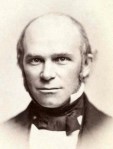
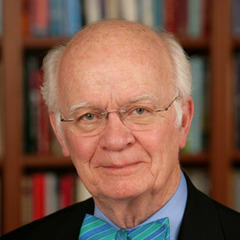
**My reference to Martin Marty (1928-2025) comes from his terrific book, Lutheran Questions, Lutheran Answers (Augsburg Fortress, 2007). Marty, pictured here, was a remarkable theologian and writer. His son, Peter Marty, is the editor The Christian Century.

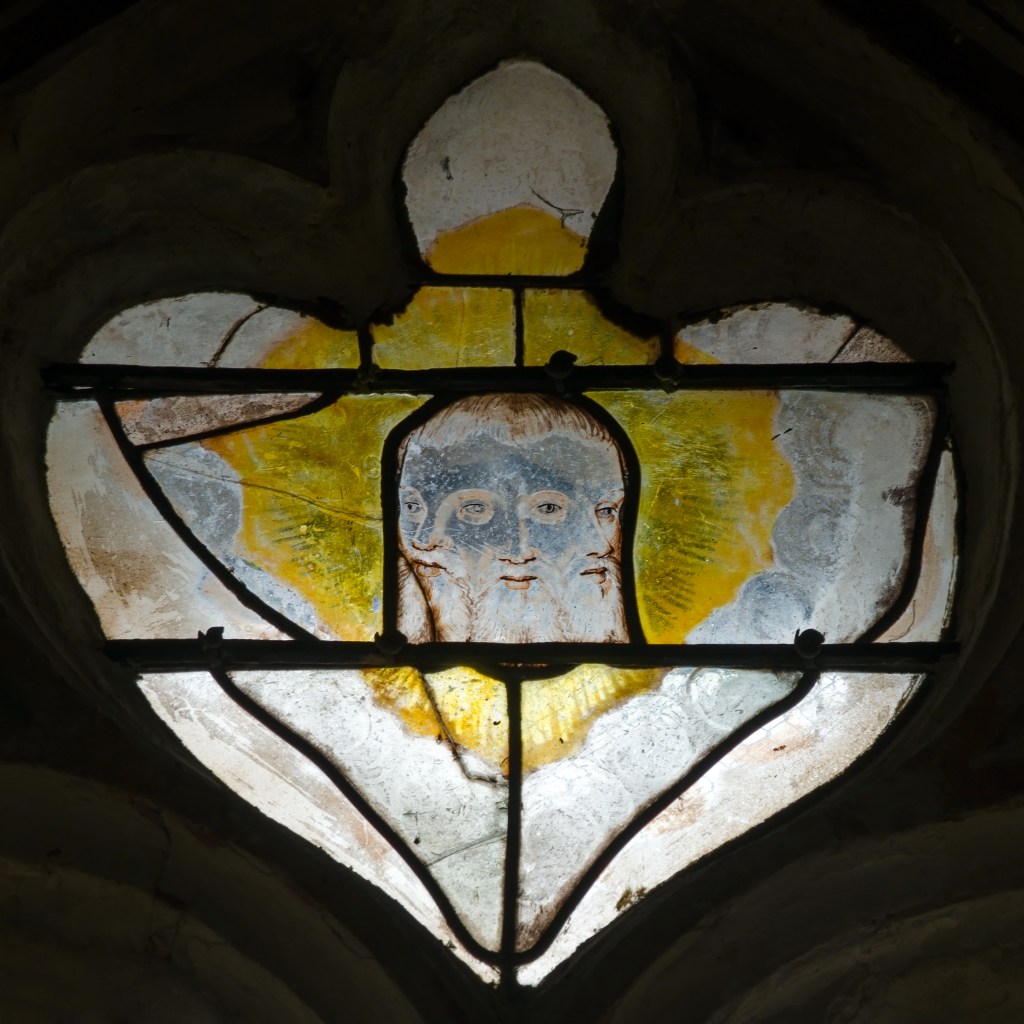
This window from the church in Courgenard — a small village in the Sarthe region of northwestern France — shows a classic medieval way of picturing the Trinity known as the “Throne of Grace.” Beginning in the 1100s, Western artists used this image of God the Father holding the crucified Christ with the Holy Spirit as a dove to help ordinary worshipers visualize the mystery of God’s self‑giving love. It grew out of a period when the Church was working hard to express the unity of the Trinity while still honoring the distinct roles of Father, Son, and Spirit. The fact that this window survives in a rural parish reminds us how even small communities were shaped by the major theological currents of the Middle Ages.

In the lead-up to July 4th, I plan to feature music drawn, in part, from the National Songs section of Evangelical Lutheran Worship (Hymns 887–893), or other songs that have that flavor.

As we approach the 250th anniversary of the Declaration of Independence, this feels like a fitting season to pause, listen, and reflect on our nation’s story—its beauty, its complexity, and the ongoing work of shaping a more just and generous common life. These hymns give us a way to hold together gratitude for our homeland with a wider, prayerful awareness of the world God loves.
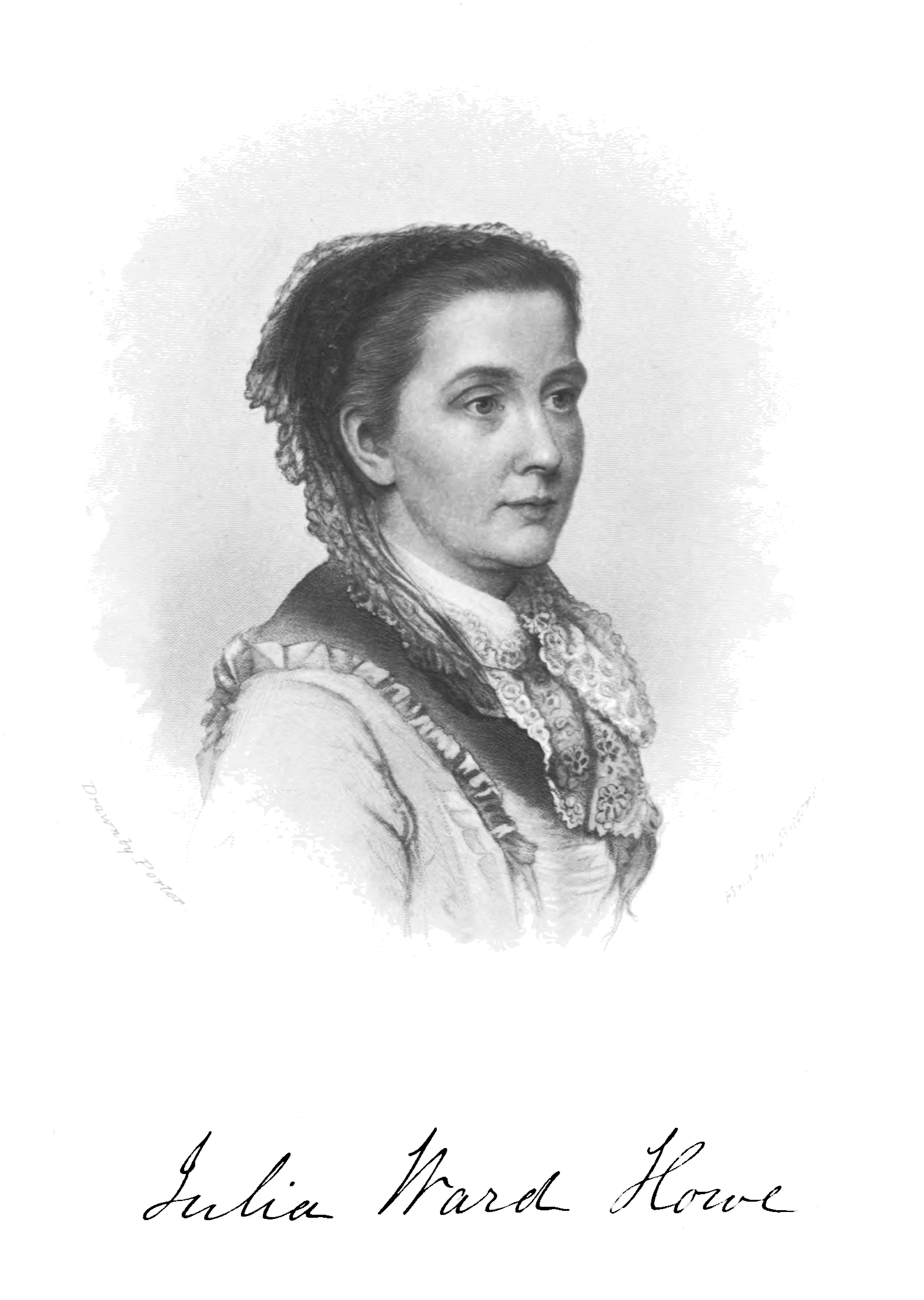
The Battle Hymn of the Republic was born in the early days of the Civil War, when Julia Ward Howe heard Union soldiers belting out the rough‑and‑ready marching tune John Brown’s Body. She loved the energy but thought the lyrics could use an upgrade, so later that night she woke up with lines “singing” in her head and wrote a new text that wrapped the Union cause in bold, biblical language. When her version appeared in The Atlantic Monthly in 1862, it instantly reframed the war as a moral crusade, pairing a revival‑style melody with a sense of divine purpose. That mix of faith, fire, and patriotism helped the song take on a life of its own — echoing through rallies, churches, and even state funerals for generations. I hope you will appreciate this beautiful piano interpretation by Sangah Noona.

Sangah Noona is a South Korean–born pianist (born 1987) whose blend of classical training and wide‑ranging musical taste has made her a standout presence on YouTube. She built her early career in Seoul as a session musician and hotel pianist before moving to the United States, where her livestreams and genre‑spanning performances drew a large, loyal following. Known for her expressive touch and easy rapport with listeners, she moves comfortably from Chopin to jazz standards to rock requests without losing her signature warmth.

Visit Noona’s Website Here

Note: The ELCA commemorates a wide range of Christians throughout the year as a way of remembering that God has worked through ordinary people in every age. These commemorations—drawn from Scripture, the early church, the Reformation, and more recent history—invite us to see faith lived out in many different vocations and cultures. They aren’t about elevating “heroes,” but about widening our sense of the communion of saints and letting their witness encourage our own. In marking these days, the church pauses to give thanks, to learn, and to be reminded that the Holy Spirit continues to shape faithful lives in every generation. You will find the full listing of them in the front of the ELW.

Wednesday 27 May
John Calvin, renewer of the church (d. 1564)

Friday 29 May
Jiri Tranovsky, hymnwriter (d. 1637)


Sunday 31 May
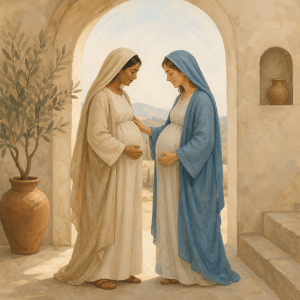
Visit of Mary to Elizabeth

Explore each by following the link!

Mary Visits Elizabeth
(A.I. Generated Image, 2026)

From Henri Nouwen

“Celebrating means the affirmation of the present, which becomes fully possible only by remembering the past and expecting more to come in the future. But celebrating in this sense very seldom takes place. Nothing is as difficult as really accepting one’s own life. More often than not the present is denied, the past becomes a source of complaints, and the future is looked upon as a reason for despair or apathy. When Jesus came to redeem mankind, he came to free us from the boundaries of time. Through him it became clear not only that God is with us wherever our presence is in time or space, but also that our past does not have to be denied but can be remembered and forgiven, and that we are still waiting for him to come back and reveal to us what remains unseen.

Visit the Henri Nouwen Society Website

Our in-person Lectionary Discussion Group at ELC will be taking a pause from Memorial Day through Labor Day.

We will use this time to formulate adult education experiences for the fall of 2026 and beyond. Look for further adult education announcements throughout the summer.

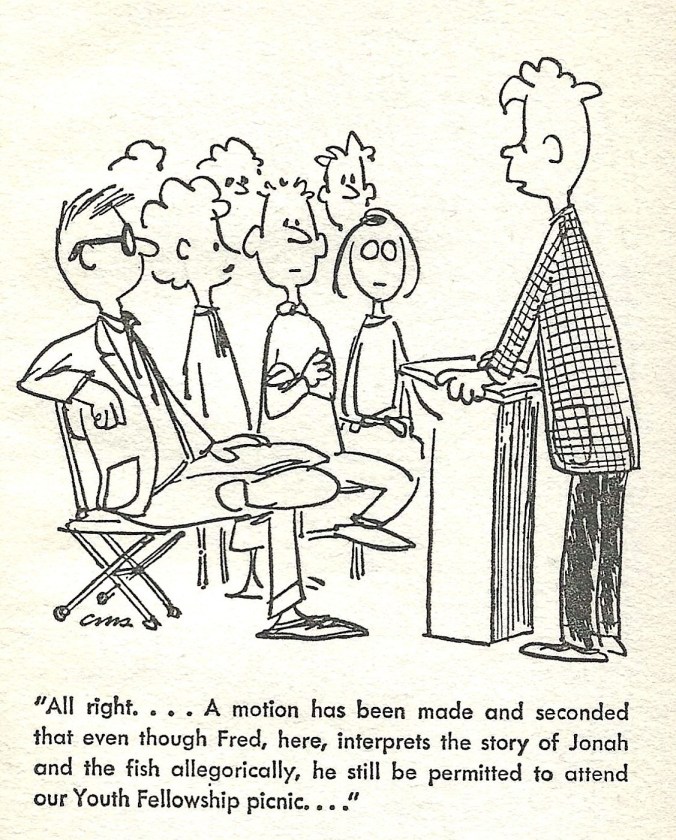
1960s Protestant Humor
(Charles Schulz)

15 June 2025: The Holy Trinity

Introduction to Readers

Eleanor at the U.N. 1946

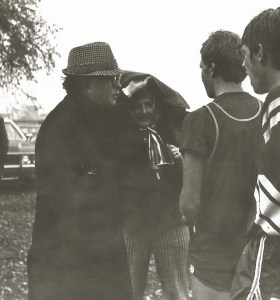
Character has been on my mind this week, stirred by Paul’s words in Romans for Trinity Sunday. The word immediately brings my mother, Cathy, to mind. Let me explain. For 60 years, I have immersed myself in athletics, either as a competitor or a coach. This particular photo—one of the few I have from my athletic days—captures a moment in 1974. My parents stood on the sidelines, enduring brutal weather to watch me compete in a Cross Country race during my senior year at West Fargo High School. Cathy never missed a chance to cheer me on, but beneath her unwavering support ran a fierce competitive streak. If she sensed I wasn’t pushing hard enough or thought I had slipped into self-pity, she wasted no time in setting me straight — she pushed me to persevere. My coaches appreciated her enthusiasm, I have no doubt! She would have wholeheartedly agreed with Eleanor Roosevelt, as she prepared me to face a challenging world. And, incidentally, wisdom often appears in Scripture as a personified woman—this week’s passage from Proverbs is an example. That image, much like the concept of character itself, reminds me of my mother. As part of my reflections this week, I’ll delve into how Paul frames character and how this applies to our lives as Christians.

As always, thanks for your continued interest in exploring the scriptures! And, a shout-out this week to all the fathers or father-figures in our lives. Thanks for everything that you do! We are now beyond the half-year of seasons (Advent, Christmas, Epiphany, Lent, and Easter) and are on the front end of the long season of Pentecost with this question guiding our reading: What does it mean to live out Jesus’ teachings in our chaotic and turmoil-filled world? The blog this week includes some thoughts on the Holy Trinity, Luther’s Trinitarian Prayer, and a joyful organ selection of a Trinity-inspired hymn. And one note: I sprinkle in a few hyperlinks throughout the blog if you care to do further reading — there are italicized and bolded.

Check out this introductory segment on Romans for background on this week’s passage. This comes from our friends at the Bible Project. There is a segment on Romans 5-16 as well, if you’re interested. You can find that here, along with many other guides.

TRY LUTHER’S METHOD OF BIBLE READING

A Revision of the Lectio Divina, a method he learned in his Augustinian training (Three Steps)

Oratio (Prayer): This is the starting point, where one humbly prays for the Holy Spirit’s guidance to understand God’s Word. Luther emphasized that prayer prepares the heart and mind to receive divine wisdom.

Meditatio (Meditation): This involves deeply engaging with Scripture, not just reading it but reflecting on it repeatedly. Luther encouraged believers to “chew on” the Word, allowing its meaning to sink in and shape their thoughts and actions.

Tentatio (Struggle): Often translated as “trial” or “temptation,” this refers to the challenges and spiritual battles that arise as one seeks to live according to God’s Word. Luther saw these struggles as a way God refines faith, making it more resilient and authentic.

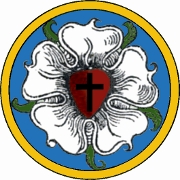
Luther’s Seal

Here are a few things to think about this week regarding the Holy Trinity. Many Christian traditions follow a structured liturgy, shaping worship through prayers and rituals passed down over generations. Some parts of the liturgy, known as Propers, change based on the calendar, aligning with the Revised Common Lectionary and marking special observances like Epiphany or Pentecost. The Prayer of the Day for Holy Trinity Sunday (above), found on page 37 of the ELW (Evangelical Lutheran Worship hymnal), continues a tradition that traces back to the 16th-century Book of Common Prayer. I included this prayer to encourage reflection on the Holy Trinity, often called “the central mystery of the Christian faith and life.”

Martin Marty (1928-2025)

Many volumes explore the Trinity, but words alone struggle to capture its full meaning. Still, as theologian Martin Marty suggests, the Trinity teaches us about relationship—not just between God and humanity, but in how we interact with each other. He writes: “The Trinity is the model of the relational life, and invoking the Trinity draws us into thinking and experiencing divine-human relations that we can then carry into human-to-human relations . . . God. Father. Creator. Son. Redeemer. Savior. Spirit. Advocate. Comforter . . . the Trinity opens the door of imagination and the focusing power of prayer to much more than if we do not invoke the Trinity” (Lutheran Questions, Lutheran Answers, p. 42).

The discussion around the Trinity isn’t just a relic of history. I learned this week, for example, that The Lutheran World Federation (LWF), which includes our church, continues theological dialogues with Roman Catholic and Orthodox traditions, working toward greater understanding and unity. Decades of conversation with the Catholic Church led to the Joint Declaration on the Doctrine of Justification, a major step in bridging doctrinal differences. Likewise, dialogues with Orthodox churches have addressed topics such as the Holy Spirit, the nature of the Church, and historical disputes like the Filioque controversy. These ongoing conversations remind us that the doctrine of the Trinity remains deeply relevant in shaping faith today. Check out this joint statement from June 2025.

Like many passages in Romans, this week’s second reading packs a punch. Paul proclaims a bold truth: through faith, we stand justified and reconciled with God. Christ grants us access to grace, and we rejoice in the hope of His glory. But our confidence is not limited to moments of triumph—we find glory even in suffering, knowing it refines us. Hardships build endurance, endurance shapes character, and character fuels unwavering hope. This hope never fails us because God has poured His love into our hearts through the Holy Spirit, His gift to us. We are strengthened, sustained, and assured by the power of divine love.

Seminary Professor Chrystal Hall offers a compelling interpretation of this passage, highlighting how Paul grapples with integrating vastly different peoples—Gentiles and Jews—into the church despite their cultural, legal, and religious differences. Even in 2025, unity remains a challenge for the Christian community. Hall also emphasizes the Trinity’s presence in this passage, showing how its three Persons intertwine in relationship. Followers of the Anointed One experience God’s peace through Jesus and receive God’s love through the Holy Spirit, who pours that love into their hearts. This interdependence reflects our own relationship with one another and with God—a model suggested by Martin Marty (note Part 1 of my Reflections).

Finally, as alluded to in my blog introduction this week, I’ve always been struck by the language in verses 3-4: “suffering produces perseverance; perseverance, character; and character, hope.” The Greek word for “endurance” conveys resilient perseverance, while “character” implies steadfast reliability, especially in God’s eyes. These words resonate deeply in 2025, reminding us to remain strong as we navigate a challenging world. May the Holy Spirit inscribe them on our hearts!

Soli Deo Gloria!

O God the Father,
graciously give us
all that we need
for body and soul.

O Son of God,
deliver us from sin,
be gracious to us,
and give us your Spirit.

O God, Holy Spirit,
heal, comfort
and strengthen us
against the devil,
and give us endless victory
and resurrection from death.
Amen.

Martin Luther
(1483-1546)

Come, Join the Dance of Trinity

Come, join the dance of Trinity,
before all worlds begun–
the interweaving of the Three,
the Father, Spirit, Son.
The universe of space and time
did not arise by chance,
but as the Three, in love and hope,
made room within their dance.

Come, see the face of Trinity,
newborn in Bethlehem;
then bloodied by a crown of thorns
outside Jerusalem.
The dance of Trinity is meant
for human flesh and bone;
when fear confines the dance in death,
God rolls away the stone.

Come, speak aloud of Trinity,
as wind and tongues of flame
set people free at Pentecost
to tell the Savior’s name.
We know the yoke of sin and death,
our necks have worn it smooth;
go tell the world of weight and woe
that we are free to move!

Within the dance of Trinity,
before all worlds begun,
we sing the praises of the Three,
the Father, Spirit, Son.
Let voices rise and interweave,
by love and hope set free,
to shape in song this joy, this life:
the dance of Trinit
y.

“Come, Join the Dance of Trinity” is a hymn written by Richard Leach, known for his ability to craft texts that are both biblically grounded and theologically rich. The hymn draws on the ancient concept of perichoresis, an early theological term describing the interrelationship of the Father, Son, and Holy Spirit—often likened to a divine dance. The hymn’s four stanzas explore the Trinity’s role in creation, redemption, and the Spirit’s ongoing work, culminating in an invitation for believers to join in the dance of faith. It is commonly set to the KINGSFOLD tune, a melody with medieval roots that has been adapted for various hymns. The organist you’re hearing is Jeffrey Dexter of Zion Lutheran Church in Ohio. The visuals are interesting throughout the song.

Zion is a congregation of the Evangelical Lutheran Church in America (ELCA), part of the Northeastern Ohio Synod of the ELCA, founded in 1840 and located in downtown Wooster.

Update on “Faithful Conversations”

Our regular gatherings for discussing the weekly lectionary are on a pause. Summer worship at ELC is at 8:30 in town and 10:15 at Hatfield by the lake. The 8:30 service will be streamed. Please stay in touch!

Recent News Regarding the Lutheran Study Bible!

This is something you may be interested to know. In 2009, the Lutheran Study Bible was published by Augsburg Fortress. It featured the New Revised Standard Version (NRSV) translation and included introductions, notes, and articles written by ELCA Lutheran pastors and theologians. It provided historical and cultural context, theological insights, and faith reflection prompts to help readers engage deeply with Scripture. I have used if for a number of years. A second edition, featuring the NRSV Updated Edition (NRSVue), is set to release in July 2025, expanding on the original with contributions from over seventy Lutheran scholars. If you’re looking for a Bible that connects well with the ELCA, check it out.