Use These Tabs to Navigate
Two Worlds
THANKS FOR YOUR VISIT THIS WEEK!
Two Worlds is a digital ministry space where I share the weekly Revised Common Lectionary readings and a brief homily with supporting images and music. As a nod to our history, I also include the ELCA’s commemorations for the week. Most images come from Wikimedia Commons, and I utilize Copilot for some aspects of the research and writing.
The project grows out of ongoing conversation with Pastor Jen Hatleli of ELC in Black River Falls — a dialogue first sparked by a 2023 Bible Study that set this whole thing in motion.
Something to think about this week . . . .
“Many claim to have been born again, but the evidence for mature Christian discipleship is slim. In our kind of culture anything, even news about God, can be sold if it is packaged freshly; but when it loses its novelty, it goes on the garbage heap. There is a great market for religious experience in our world; there is little enthusiasm for the patient acquisition of virtue, little inclination to sign up for a long apprenticeship in what earlier generations of Christians called holiness.” (Eugene H. Peterson)
Source: I drew this quote from Tish Harrison Warren’s book, What Grows in Weary Lands: On Christian Resilience, (2026).
RCL Calendar and Sunday’s Readings
Pentecost 3
First Reading:
Exodus 19: 2-8a
Psalm 100
Second Reading:
Romans 5: 1-8
Gospel: Matthew
9:35-10:8 (9-23)
Readings are Linked
Common Themes This Week
God gathers a people, forms them, and sends them—this thread runs through all four readings. At Sinai, Israel is called to be a treasured possession and a priestly kingdom, a vocation echoed in Psalm 100’s joyful summons to serve the Lord with gladness. Paul grounds that calling in grace, reminding us that God’s love meets us “while we were still sinners,” creating a people shaped not by merit but by mercy. Jesus then embodies that mercy by sending disciples into the world to heal, proclaim, and restore, turning God’s gathered people into God’s sent people for the sake of others.
The Lectionary Journey
We are currently in Ordinary Time (the Time after Pentecost) within the ELCA. Following the major festivals of Pentecost and Trinity Sunday, the church has entered this long, “green” season focused on the steady rhythm of discipleship in everyday life. Because we are in Year A of the Revised Common Lectionary, our Sunday readings are anchored primarily in Matthew’s Gospel, highlighting themes of call and mission.
Three-Minute Homily: “The Antidote to Despair”

“Harassed and helpless.” Matthew’s phrase catches my attention this week — and, like so many of these episodes in the story of those first Christians, is remarkably timely. You can hear it in our public conversations, in the brittle tone of our politics, in the fatigue that hangs over so many people. Scroll social media for five minutes and you’ll see it: a culture running on fumes, anxious, cynical, and often despairing. Harassed and helpless.
As a Christian, I feel two things at once. First, a kind of shame. We live with abundance, freedom, and opportunity that most of the world can only imagine. My parents’ generation knew real deprivation; they carried that memory with them throughout their lives. They understood how fortunate we are. Our complaints, by comparison, are small. May God give us the humility to see that clearly. But second, I’m not surprised by the despair and much of it is entirely warranted. These currents run deep. They’re ancient. What we’re witnessing now is not just political exhaustion — it’s spiritual emptiness. A hollowing out. Many have stepped away from the practices and communities that once gave them meaning. They’re adrift, and the result is exactly what Matthew describes: harassed and helpless.
That’s why today’s reading from Exodus matters. Israel stands at the foot of Sinai, newly freed but not yet formed. God reminds them who they are and what they’re for: “You shall be my treasured possession… a kingdom of priests and a holy nation.” Before they receive a single commandment, they receive a calling. Their identity comes first. Their mission flows from it. And that’s our story too. In a moment when the world feels frayed, God gathers us again — like those Israelites at the mountain — and reminds us who we are. Not spectators. Not cynics. Not consumers of outrage. A people set apart for mercy, justice, and hope.
Jesus sent his disciples into a world every bit as troubled as ours. He tells them to be wise as serpents and innocent as doves. He equips them with compassion, not contempt. He sends them not to win arguments but to heal wounds, to announce good news, to make God credible in the world. Will it be easy? Of course not. But Paul offers that marvelous roadmap: affliction produces endurance, endurance produces character, and character produces hope. And hope — real hope, not the thin optimism of the moment — is the antidote to despair. That’s our gift. That’s our calling. In a culture that feels harassed and helpless, we carry a hope that does not disappoint. So let’s share it — boldly, humbly, and with the compassion of the One who sends us. The world needs our voice.
Soli Deo Gloria!
Image of the Week: “Head of Christ”
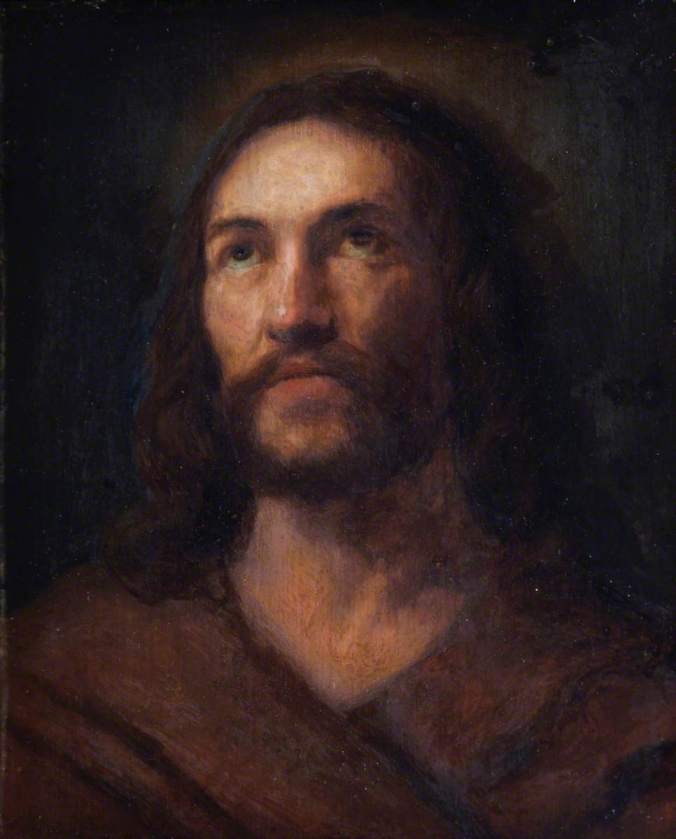
This small portrait of Christ, painted around 1650 by an anonymous Dutch artist, reflects the era’s shift toward intimate, humanized images of Jesus. Instead of a grand, dramatic scene, we get a quiet, contemplative face — soft light, gentle modeling, and a realism that feels almost like someone you could meet on the street in 17th‑century Amsterdam. (We tend to picture Christ using our own time and place).
Dutch painters of this period often used live models for studies of Christ, hoping to capture both his humanity and his inner calm. You can sense that here: the steady gaze, the understated dignity, the warmth in the eyes. It’s a simple image, but it carries a surprising emotional weight, as if inviting the viewer into a moment of stillness.
Musical Reflection: Hymn to the Eternal Flame (Stephen Paulus)
Every so often I stumble on a piece of music that stops me in my tracks, and that happened this week when I revisited Stephen Paulus’ Hymn to the Eternal Flame. The timing felt uncanny, because we just observed the 82nd anniversary of the D‑Day landings — 6 June 1944 — a day when the world pivoted toward liberation and the long, brutal work of stopping the Nazi war machine. Paulus’ piece, written for To Be Certain of the Dawn, sits right inside that moral landscape, carrying the memory of the millions of Jewish people (and others) who were annihilated in the Holocaust. Its quiet opening feels like a single candle being lit in a dark room, and the repeated line “Each small candle lights a corner of the dark” becomes a kind of vow. By the time the voices swell together, the music feels like an act of remembrance and resistance — an echo of the same courage that pushed ashore at Normandy.
I hope you enjoy this powerful interpretation from “The Singers,” a Minnesota based group under the direction of Matthew Culloton (who now directs the Concordia Choir in Moorhead).
Lyrics
Every face is in you, every voice,
Every sorrow in you.
Every pity, every love,
Every memory, woven into fire.
Every breath is in you, every cry,
Every longing in you.
Every singing, every hope,
Every healing, woven into fire.
Every heart is in you, every tongue,
Every trembling in you,
Every blessing, every soul,
Every shining, woven into fire.
ELCA Commemorations This Week
Note: The ELCA commemorates a wide range of Christians throughout the year as a way of remembering that God has worked through ordinary people in every age. These commemorations — drawn from Scripture, the early church, the Reformation, and more recent history — invite us to see faith lived out in many different vocations and cultures. They aren’t about elevating “heroes,” but about widening our sense of the communion of saints and letting their witness encourage our own. In marking these days, the church pauses to give thanks, to learn, and to be reminded that the Holy Spirit continues to shape faithful lives in every generation. You will find the full listing of them in the front of the ELW. Explore any via the links provided.
Tuesday 9 June
Columba (d. 597), Aidan (d. 651), Bede (d. 735)
Thursday 11 June
Barnabas, APOSTLE
Sunday 14 June
Basil the Great, Bishop of Caesarea (d. 379)
Gregory, Bishop of Nyssa (d. 385)
Gregory of Nazianzus, Bishop of Constantinople (d. 389)
Macrina, teacher (d. 379)
Information Linked for Background
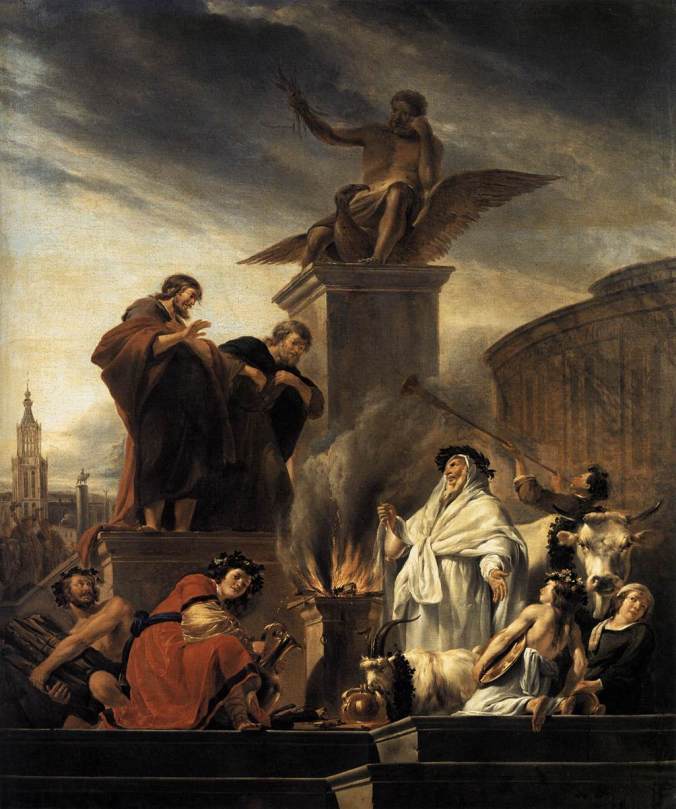
(c. 1650)
Going Beyond: In Person and Digital Resources
Indigenous Ministries
The ELCA’s Indigenous Ministries and Tribal Relations initiative exists to walk alongside Indigenous peoples in truth, healing, and genuine partnership. It lifts up Indigenous leadership, confronts the church’s own colonial history, and supports reconciliation through the Truth and Healing Movement. At its heart, the initiative encourages relationships rooted in respect, justice, and shared commitment so that Indigenous communities and the wider church can flourish together.
More Information Available Here!
Are You Looking for a Church Home?
Evangelical Lutheran Church in Black River Falls, is part of the Northwest Synod of Wisconsin (ELCA). We stream our Sunday worship at 9:30 each week. Please feel free to join us!
All are welcome!
Access our YouTube Channel here.
New and Improved Web Site!
The ELCA’s refreshed website (ELCA.org) feels a lot more welcoming, like someone finally cleared off the cluttered desk and laid out what you need right where you’d look for it. It’s easier to move around, easier to find stories and resources, and the whole thing just feels more grounded in the church’s real-life ministry. The new guided search is a nice touch too—it pulls everything together so you’re not hunting in four different places anymore.
Check it out here!
