Navigate the Two Worlds Blog Here
From Tish Harrison Warren
(Anglican priest and author)
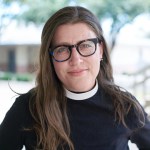
“There was a time when, in my imagination, the story of Christianity went something like this: Jesus died on the cross for my sins. And now, jumping over two thousand years, I believe in him and ‘ask him into my heart.’ It was almost an entirely individual story. There was no need for anything other than simply me and Jesus. No need for a church. But this story makes smaller what Christ has done. Those who brace the wall of our faith are not only those we personally know. We learn the craft of faith from countless other Christians who have walked this way ahead of us.“
What Grows in Weary Lands: On Christian Resilience (2026)
RCL Calendar and Sunday’s Readings
Pentecost 4 (Year A)
First Reading:
Jeremiah 20: 7-13
Psalm 69: 7-10 (11-15) 16-18
Second Reading (Epistle)
Romans 6: 1b-11
Gospel:
Matthew 10: 24-39
Readings are Linked
Common Themes This Week
Pentecost 4 (Year A) gathers around the tension between God’s call and the cost of faithful witness. Jeremiah’s lament and the psalmist’s cry show how obedience can draw misunderstanding, rejection, and even danger, yet both voices cling fiercely to God’s saving help. Paul reframes this struggle by insisting that those baptized into Christ already share his death and resurrection, which means they can live with a new, unshakable freedom from sin’s power. Jesus then names the hard edge of discipleship in Matthew—loyalties are reordered, risks are real, but the life found in him is worth everything.
The Revised Common Lectionary (RCL) is a three‑year, ecumenical cycle of Scripture readings designed to guide Christian worship through the seasons of the church year. It assigns an Old Testament reading, a psalm, an epistle, and a Gospel text for every Sunday and festival, following a pattern that highlights Matthew in Year A, Mark in Year B, and Luke in Year C, with John interwoven at key moments. Developed by the Consultation on Common Texts and released in 1994 after extensive trial use, it draws from earlier Protestant and Roman Catholic lectionary reforms. Its aim is to give congregations a balanced, shared immersion in the breadth of Scripture across time.
Four-Minute Homily: “Losing the Old Life, Finding the New”
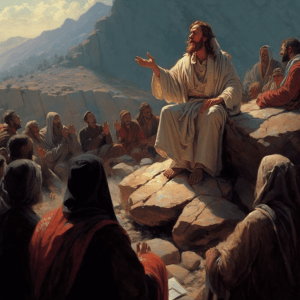
(A.I. Generated)
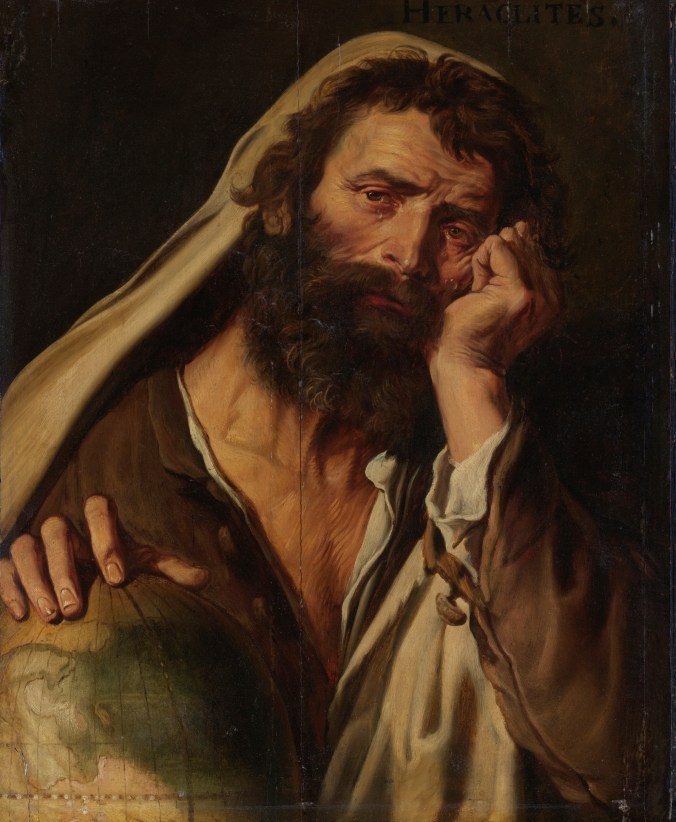
One of my favorite lines about history comes from Heraclitus: “No man ever steps in the same river twice. For it’s not the same river and he’s not the same man” (more on Heraclitus below). Change is the constant in human experience. After several read-throughs of this week’s Gospel from Matthew, the words of the philosopher rose to the surface and reminded me how faith works in us. In Matthew 4-9, we walk beside Jesus as he calls disciples, teaches on the mountain, and heals with authority. Then chapter 10 shifts the scene. Jesus now coaches his apostles as they prepare to carry his message into the surrounding towns. He gives them clear instructions (5-15) and then, in stark language, warns them about the opposition they will face (16-23). Their fears were real; they were stepping into a world where religious tensions could turn deadly — much like the risks many Christians still face in parts of the world today.
Then we reach this week’s Gospel. At first glance, Jesus’ words in 24-39 sound harsh, even jarring. Division? A sword? Loss of life? It’s the last thing any of us want to hear in a fractured world. And how do we reconcile verse 34 with the seventh Beatitude: “Blessed are the peacemakers, for they will be called children of God”? What do we do with talk of families splitting apart and losing our lives for his sake? Before we take Jesus literally, we should ask what he’s actually doing. As he sends his disciples into unfamiliar territory, he presses a hard truth on them: they must separate themselves from their former lives and their former ways of thinking. That separation will sting. People will misunderstand them. Some will reject them outright. But this break from the old self is essential if they are to carry the Gospel with integrity. The mission matters that much.

Now return to that river. Our faith journey keeps moving. Sometimes it meanders. At other times, the current rages and we’re hanging on for dear life. But it always moves. And this is where Heraclitus comes back into view. Our faith journey is not static. Like the “coming‑of‑age” moments that shaped us — often through painful separations — our Christian life calls us to grow, to shed what holds us back, to become the person God intends us to be. The river changes us as we move through it, and we are not the same people who first stepped into its waters.
The message we carry is radical and life‑altering, and not everyone wants to hear it. Paul captures this in 2 Corinthians 5:17: “If anyone is in Christ, there is a new creation; everything old has passed away; see, everything has become new.” Like any healthy relationship, our walk with Jesus is dynamic. He keeps nudging us toward courage, toward deeper trust, toward a willingness to speak the Gospel with clarity and love (note 26–31). He keeps shaping us into our truer selves. And that work — thankfully — takes a lifetime.
Soli Deo Gloria.
Image of the Week: Hericlitus
First‑generation Christians lived in a world shaped by Greek philosophy. Its language and ideas filled the air of the first‑century Mediterranean, and Paul, for example, knew how to move in that world. We don’t know that he read directly from those ancient texts, but it seems likely. For example, when he writes in 1 Corinthians 13:12 that we “see in a mirror, dimly,” he’s drawing on imagery that echoes long‑standing Platonic themes about limited vision and partial understanding –not because he’s quoting Plato, but because those ideas were already part of the culture. Paul speaks the language of his world, but he turns it toward something new: the revelation of Christ.
Musical Reflection: America the Beautiful

As we are nearing the 250th Anniversary of the issuing of the Declaration of Independence, here’s another hymn from the section of National Songs in the ELW (#888).
America the Beautiful began as a poem Katharine Lee Bates wrote in 1893 while she was teaching English at Wellesley College. That summer she traveled west for a lecture assignment, and the trip — from the Kansas wheat fields to the breathtaking view atop Pikes Peak — left her so moved that the words poured out soon after. The tune we now know, Materna, had been written earlier by Samuel A. Ward for a different hymn, but after his death it was paired with Bates’s text, and the two fit together as if they’d been meant for each other all along. Over time, the song has become something like a national prayer, holding together gratitude for the country’s beauty and a hope that we might grow into the virtues Bates imagined — a reminder of the aspirational aspect of our story.
I hope you enjoy this great interpretation of the song by the Canadian Brass.
The Canadian Brass has this uncanny ability to make brass music feel both playful and downright irresistible. Ever since they started back in 1970, they’ve mixed top‑tier musicianship with a light touch—cracking a smile, telling a story, and pulling the audience right into the fun. Their playlist is all over the map in the best way: Bach one minute, the Beatles the next, with jazz, gospel, and Renaissance tunes sprinkled in for good measure. Their rendition of this magnificent song captures the hymn in full.
AMERICA THE BEAUTIFUL
O beautiful for spacious skies,
For amber waves of grain,
For purple mountain majesties
Above the fruited plain!
America! America!
God shed His grace on thee
And crown thy good with brotherhood
From sea to shining sea!
O beautiful for pilgrim feet,
Whose stern, impassioned stress
A thoroughfare for freedom beat
Across the wilderness!
America! America!
God mend thine every flaw,
Confirm thy soul in self-control,
Thy liberty in law!
O beautiful for heroes proved
In liberating strife,
Who more than self their country loved,
And mercy more than life!
America! America!
May God thy gold refine
Till all success be nobleness,
And every gain divine!
O beautiful for patriot dream
That sees beyond the years
Thine alabaster cities gleam
Undimmed by human tears!
America! America!
God shed His grace on thee,
And crown thy good with brotherhood
From sea to shining sea!
ELCA Commemoration This Week
Note: The ELCA commemorates a wide range of Christians throughout the year as a way of remembering that God has worked through ordinary people in every age. These commemorations — drawn from Scripture, the early church, the Reformation, and more recent history — invite us to see faith lived out in many different vocations and cultures. They aren’t about elevating “heroes,” but about widening our sense of the communion of saints and letting their witness encourage our own. In marking these days, the church pauses to give thanks, to learn, and to be reminded that the Holy Spirit continues to shape faithful lives in every generation. You will find the full listing of them in the front of the ELW. Explore any via the links provide
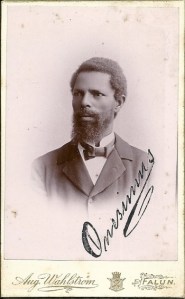
Sunday 21 June
Onesimos Nesib, translator, evangelist
(d. 1931)
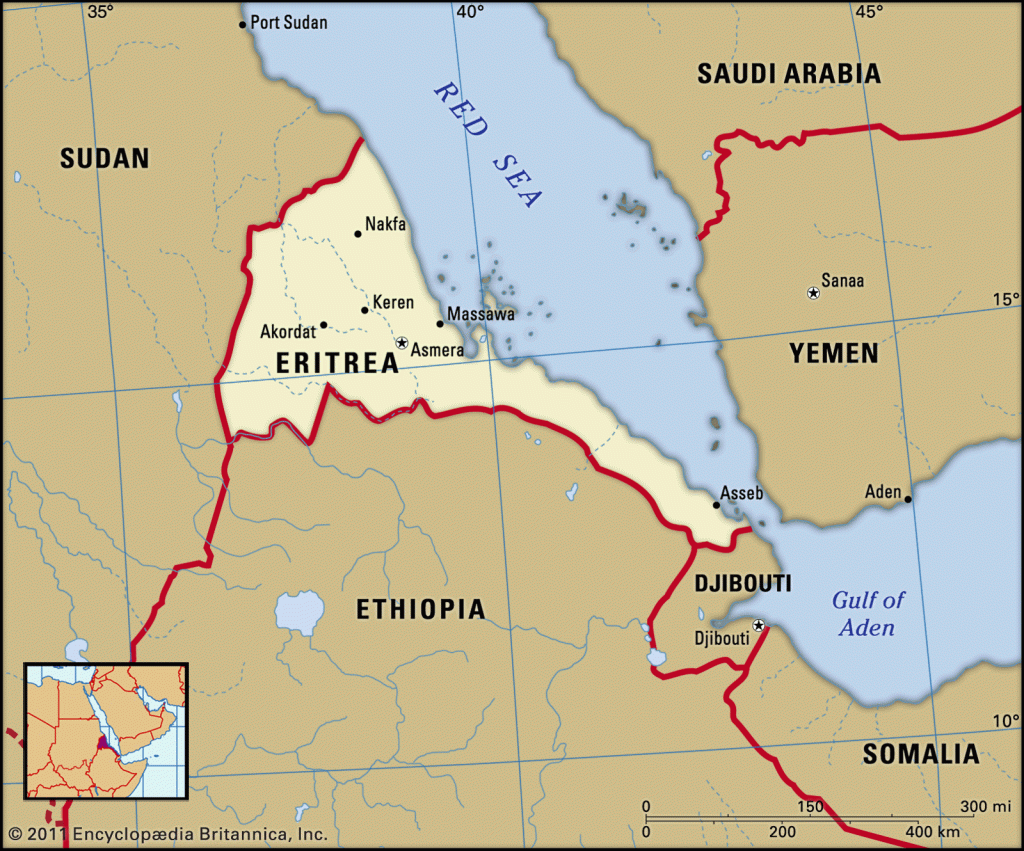
Onesimos Nesib (c. 1856–1931) was an Oromo boy enslaved as a child, freed by Swedish missionaries in Massawa, and educated in their school. He became one of the most influential translators in East Africa, rendering the entire Bible into Oromo—a landmark achievement that helped preserve and elevate the language. Ordained in the Evangelical Missionary Society of Sweden, he returned to his homeland to teach, preach, and establish schools despite political suspicion and repeated exile. His life stands as a remarkable story of resilience, scholarship, and a deep commitment to bringing Scripture to his own people.
Going Beyond: In Person and Digital Resources
THANKS FOR YOUR VISIT THIS WEEK!
Two Worlds is a digital ministry space where I share the weekly Revised Common Lectionary readings and a brief homily with supporting images and music. As a nod to our history, I also include the ELCA’s commemorations for the week. Most images come from Wikimedia Commons, and I utilize Copilot for some aspects of the research and writing.
The project grows out of ongoing conversation with Pastor Jen Hatleli of ELC in Black River Falls — a dialogue first sparked by a 2023 Bible Study that set this whole thing in motion.
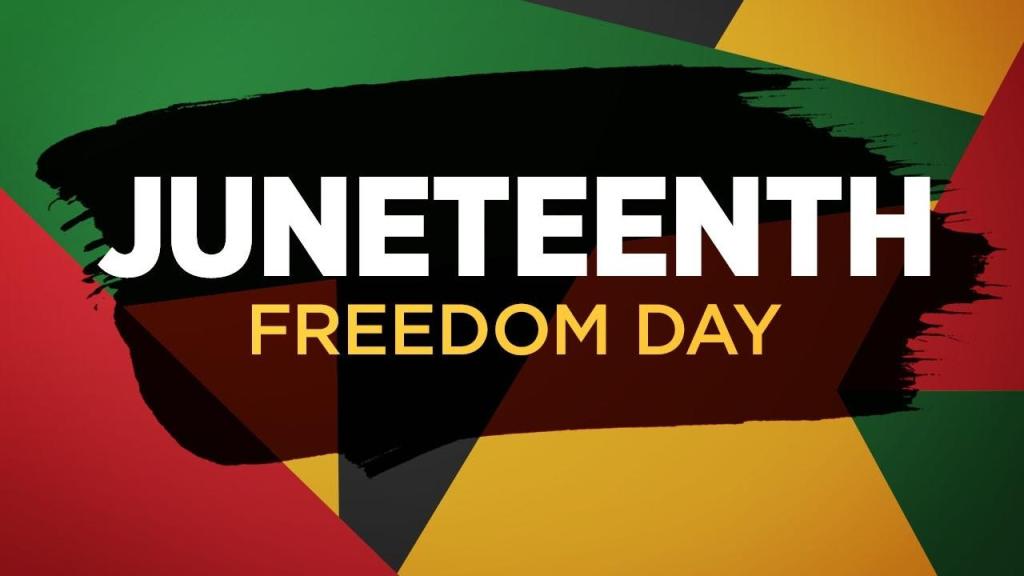
Friday (19 June) is “Juneteenth.” The day invites us to remember a hard truth: freedom didn’t arrive all at once, and it didn’t arrive for everyone at the same time. The ELCA marks this day with worship and witness—lifting up the stories, songs, and ancestors who carried the long struggle toward liberation. It’s a celebration rooted in honesty, holding joy and lament in the same breath, and reminding us that God’s work of justice is still unfolding. As we honor Juneteenth, we commit ourselves again to walking that road of freedom with courage, clarity, and hope.
Explore the History of Juneteenth Here!
